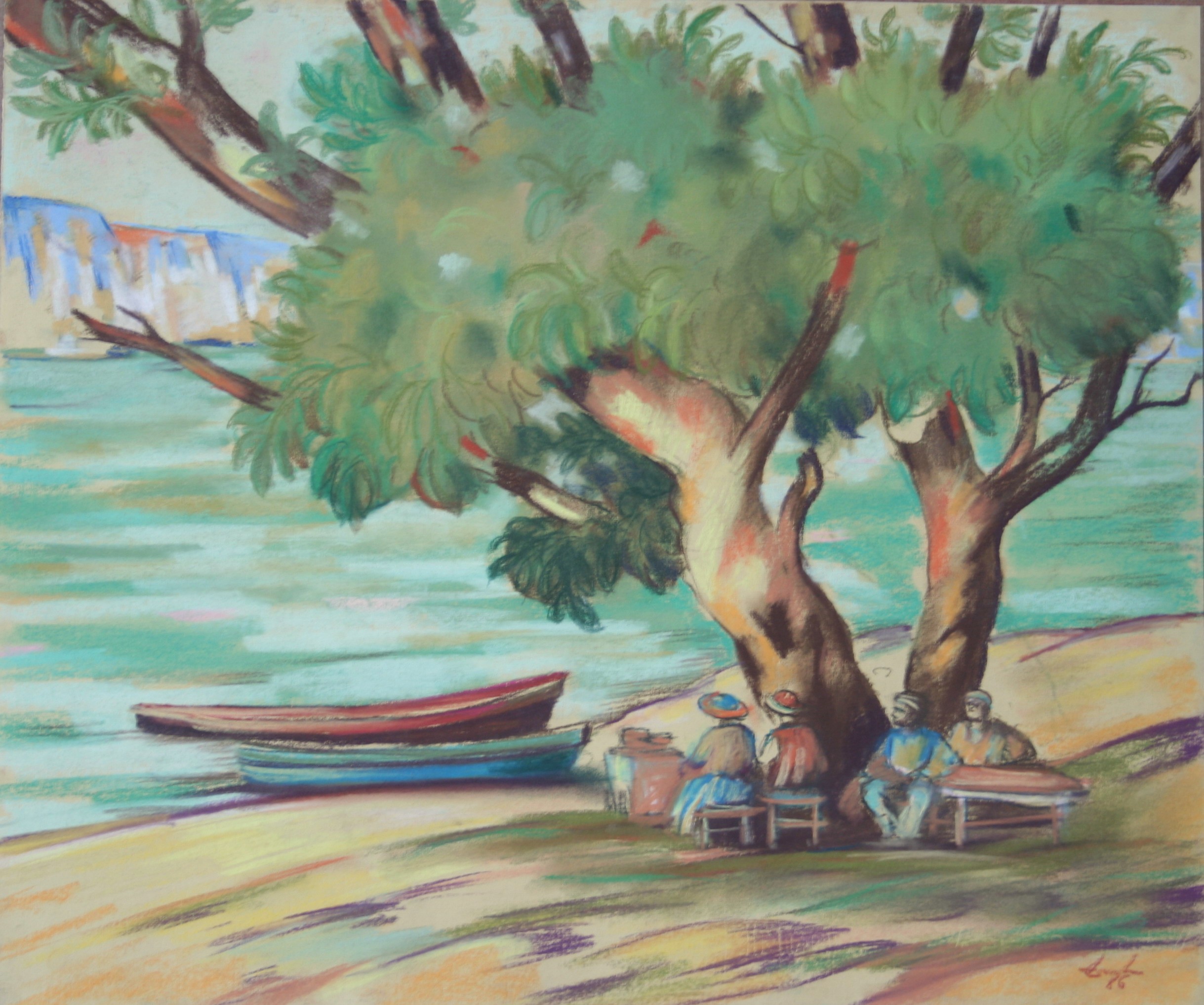
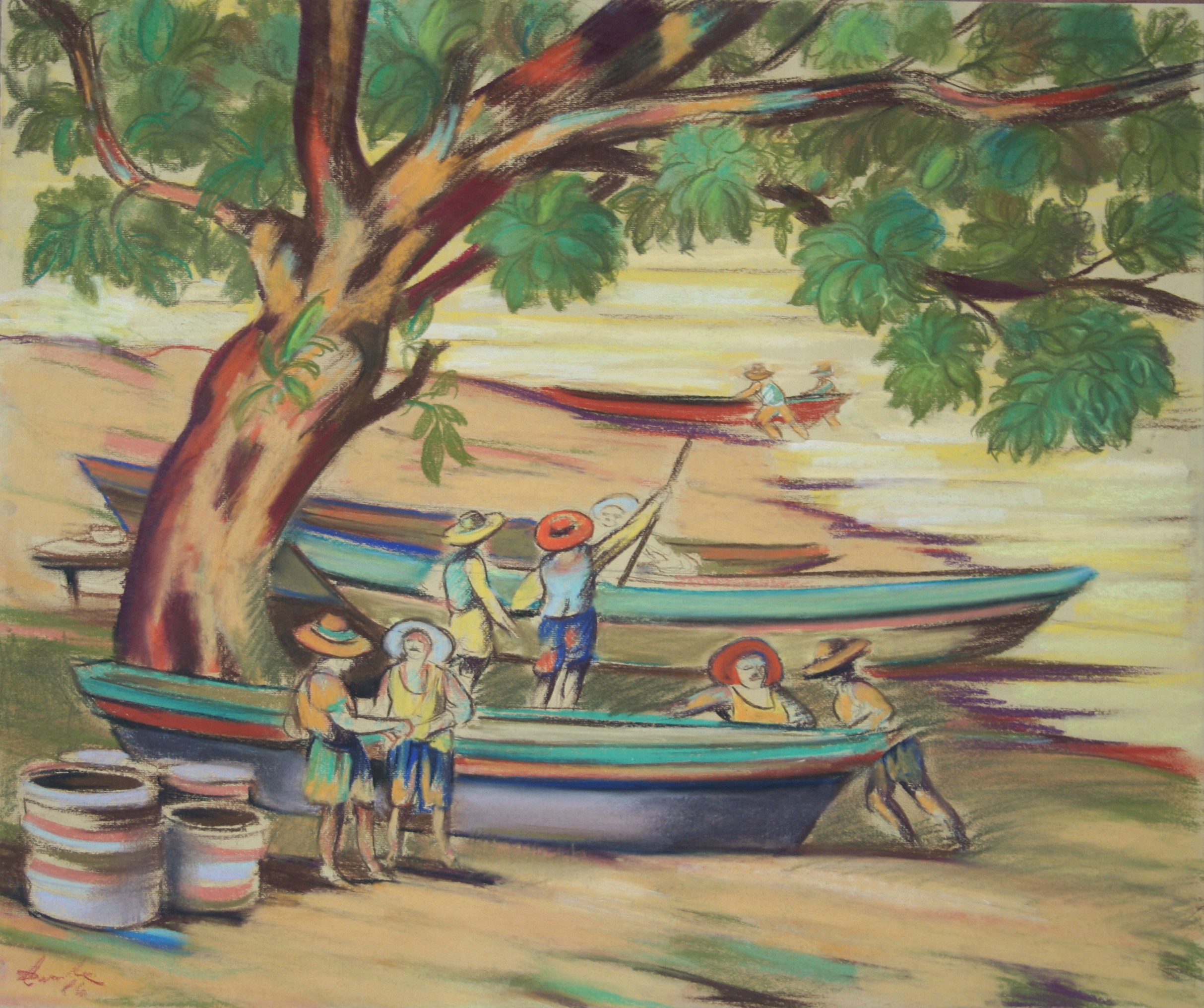
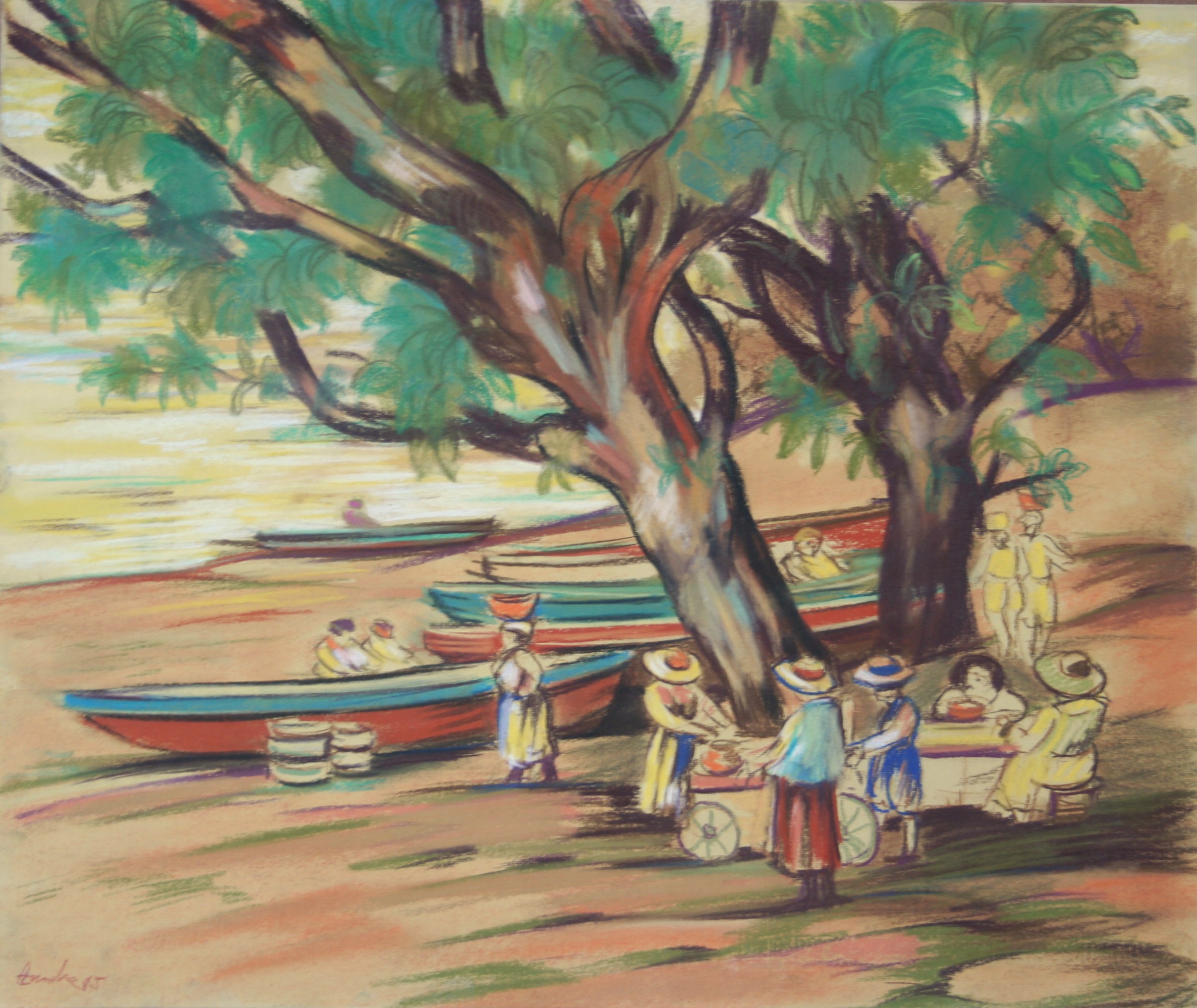
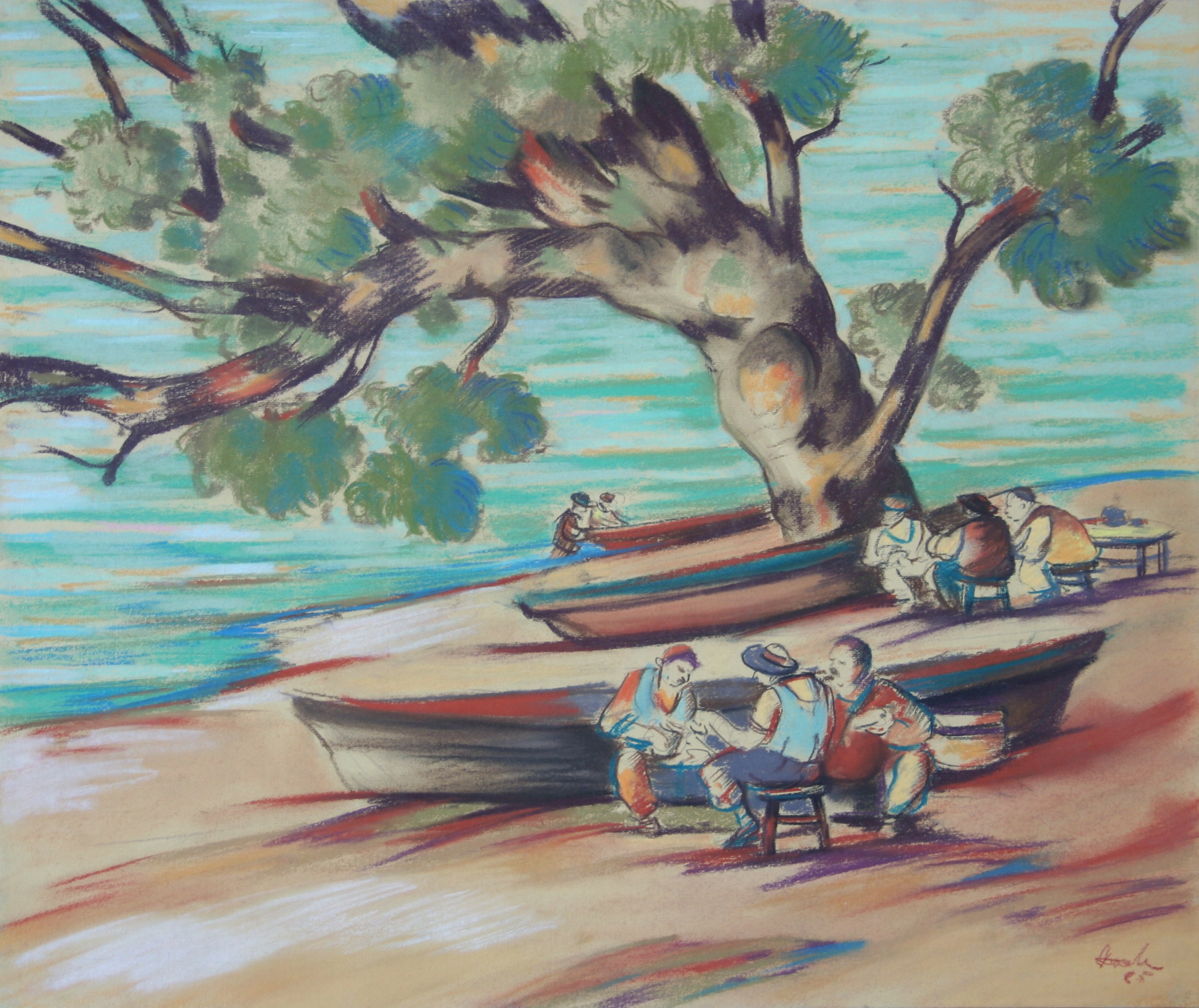
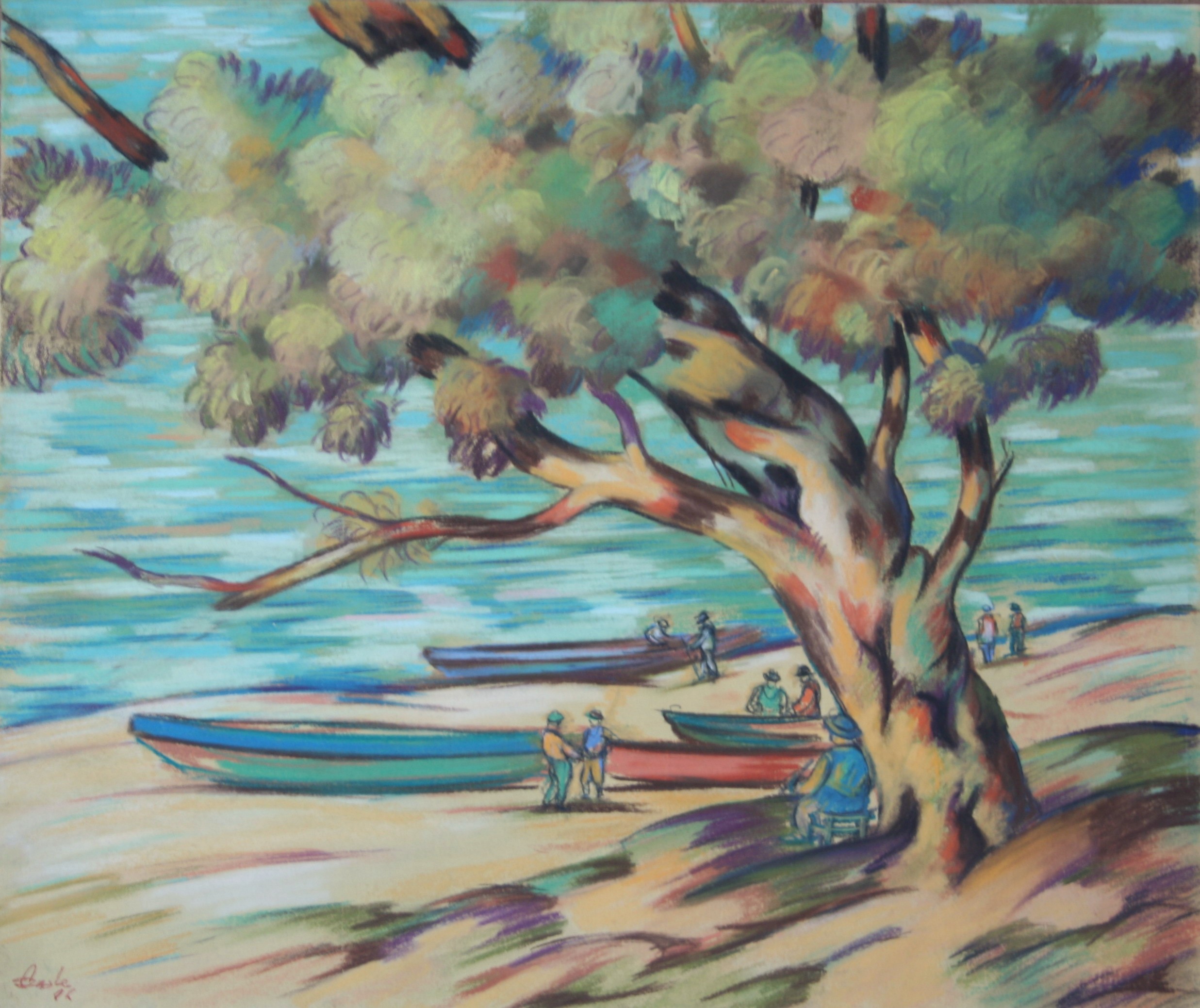
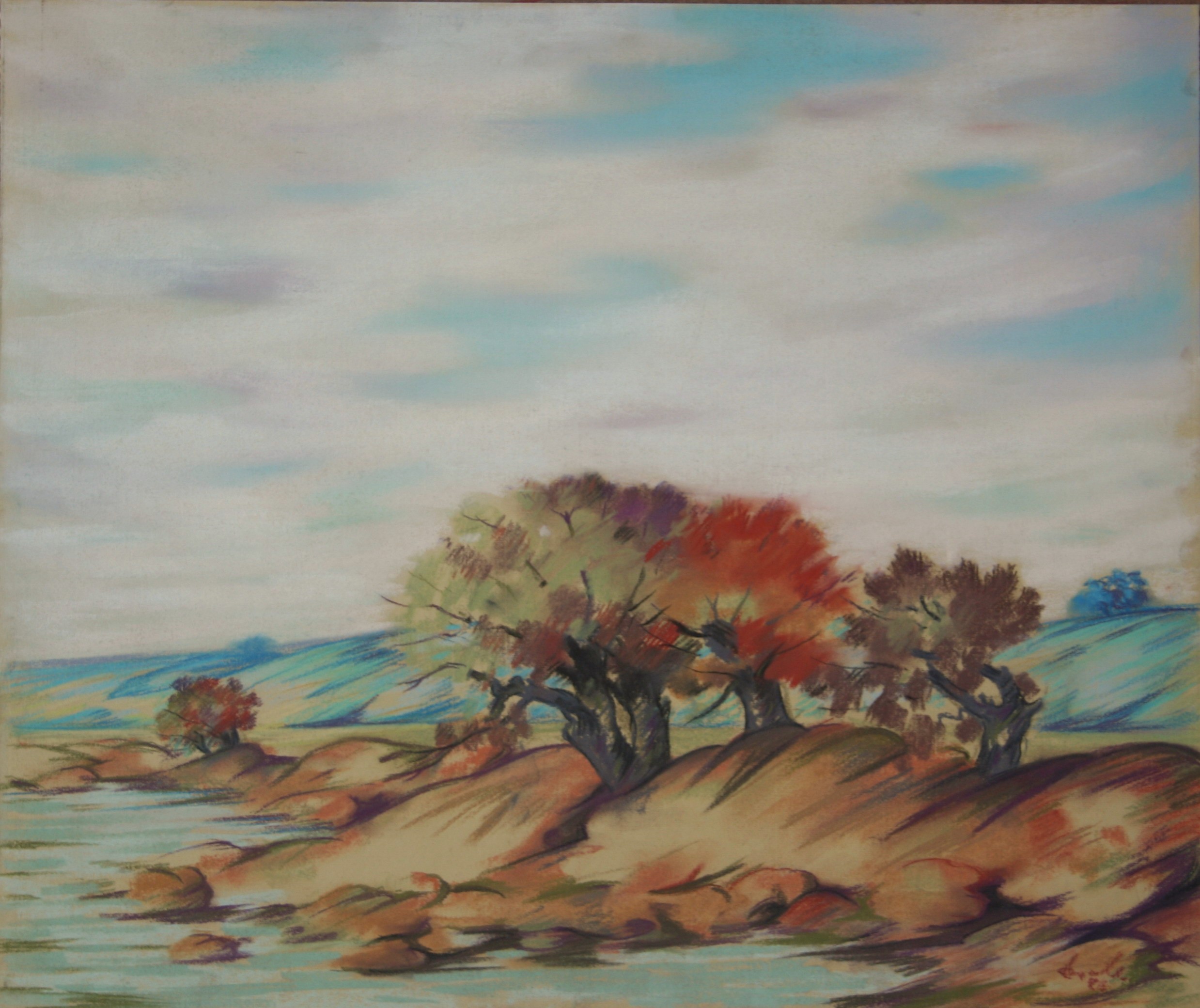
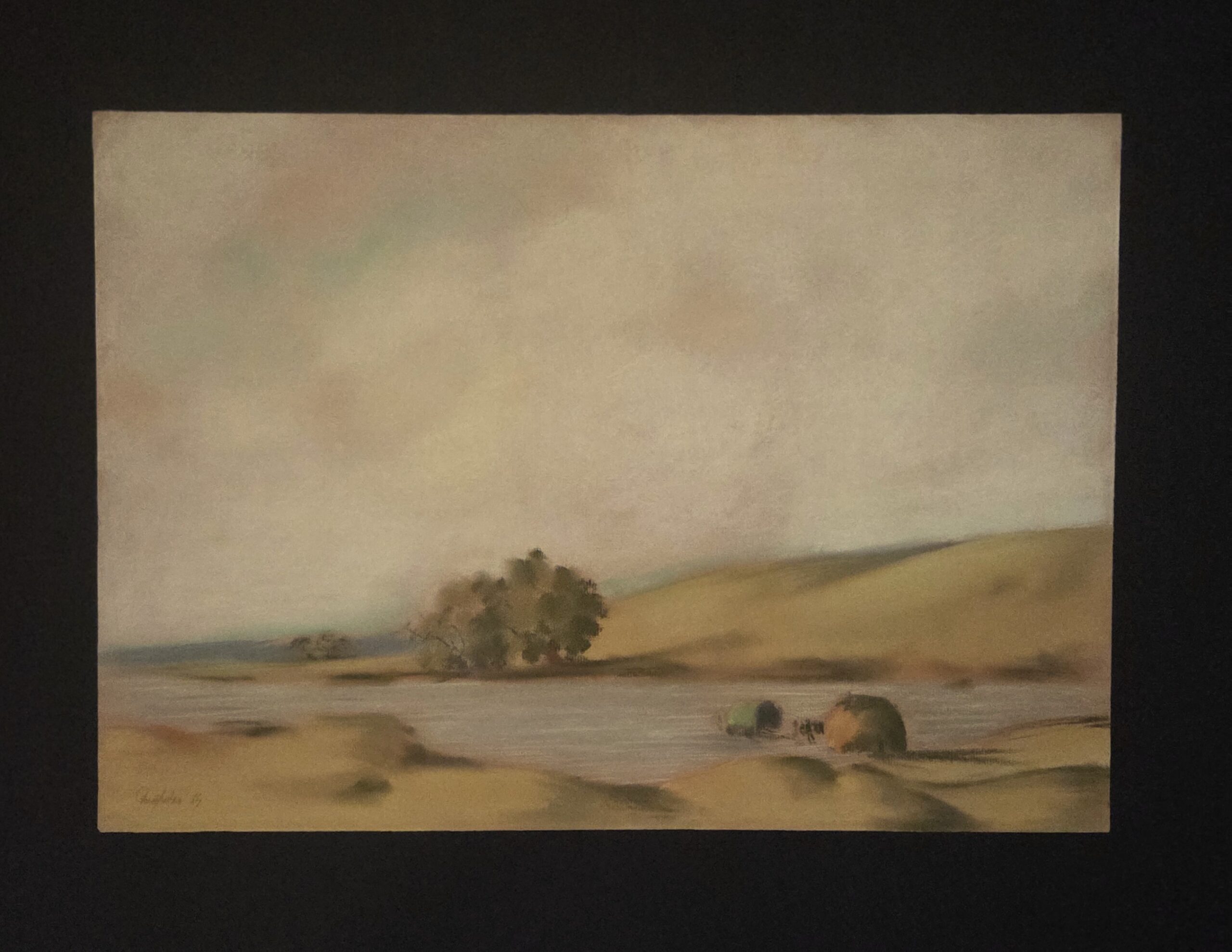
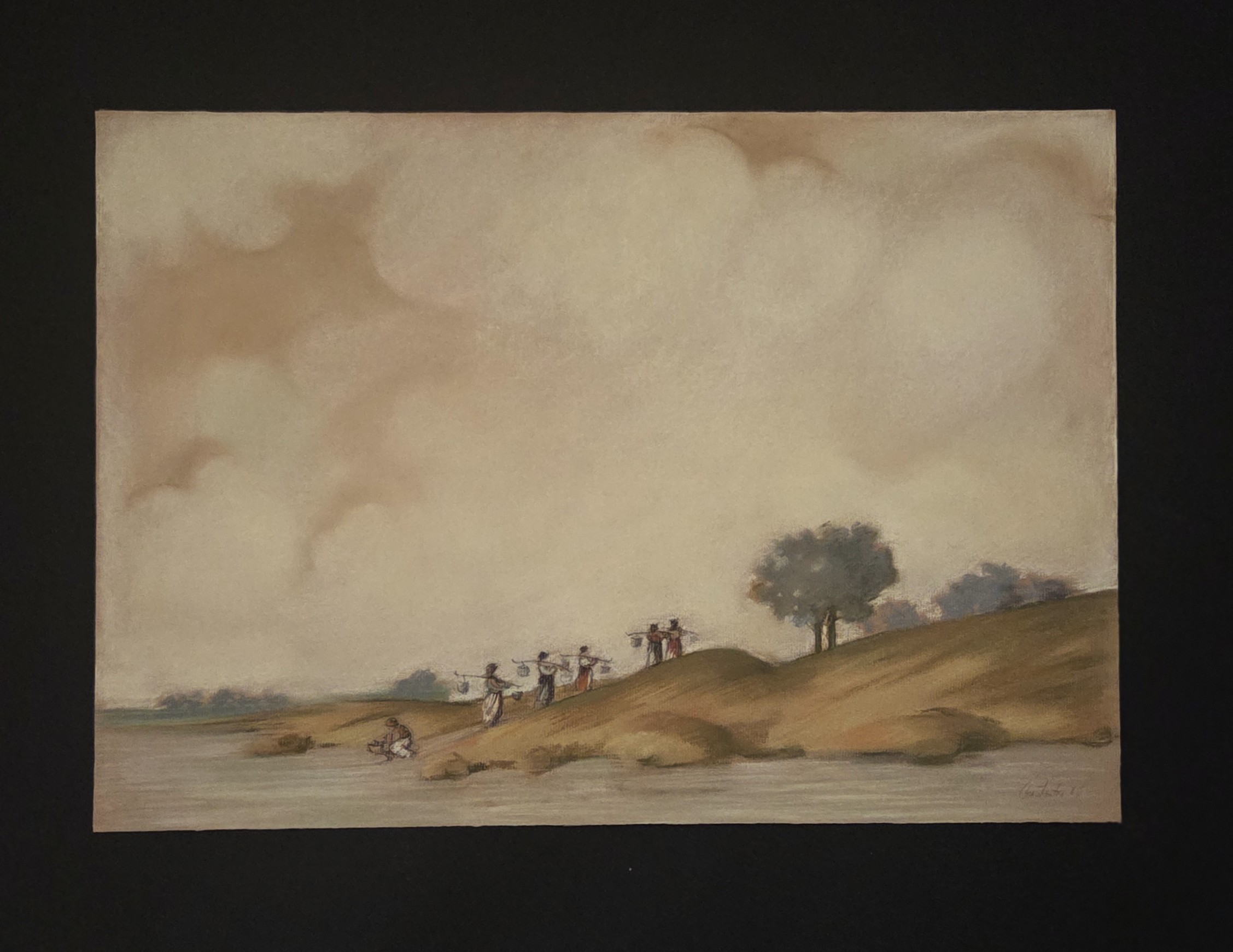
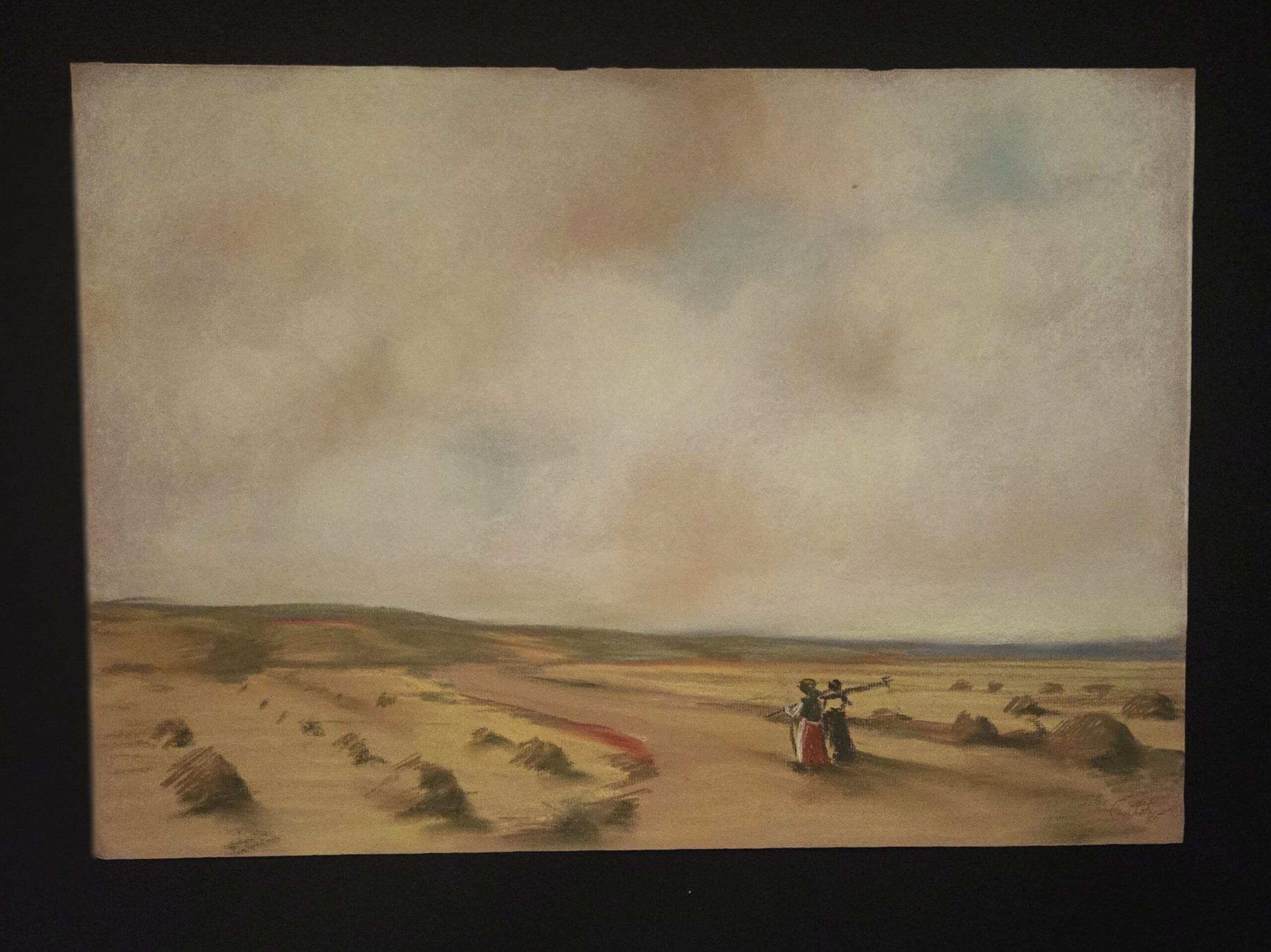
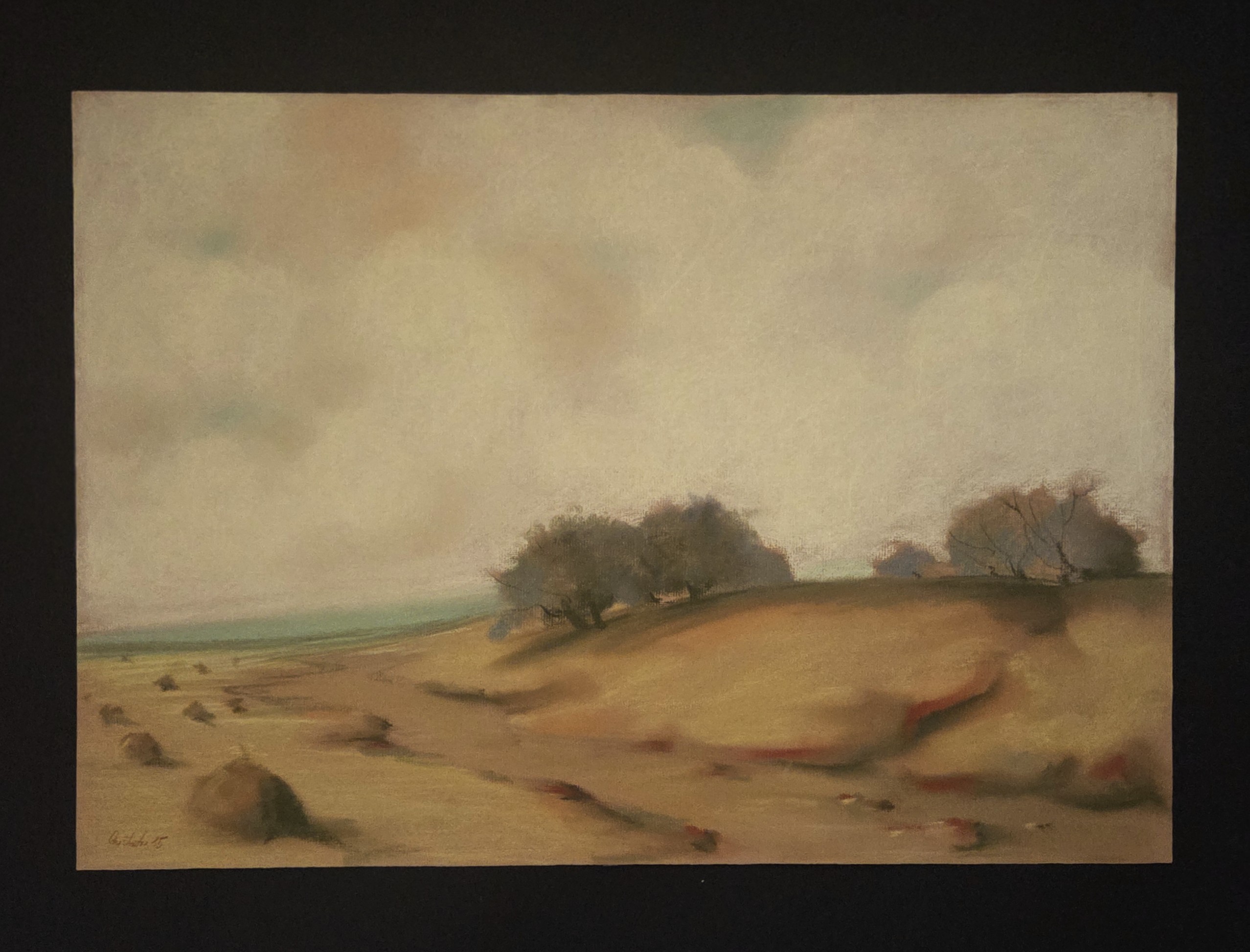
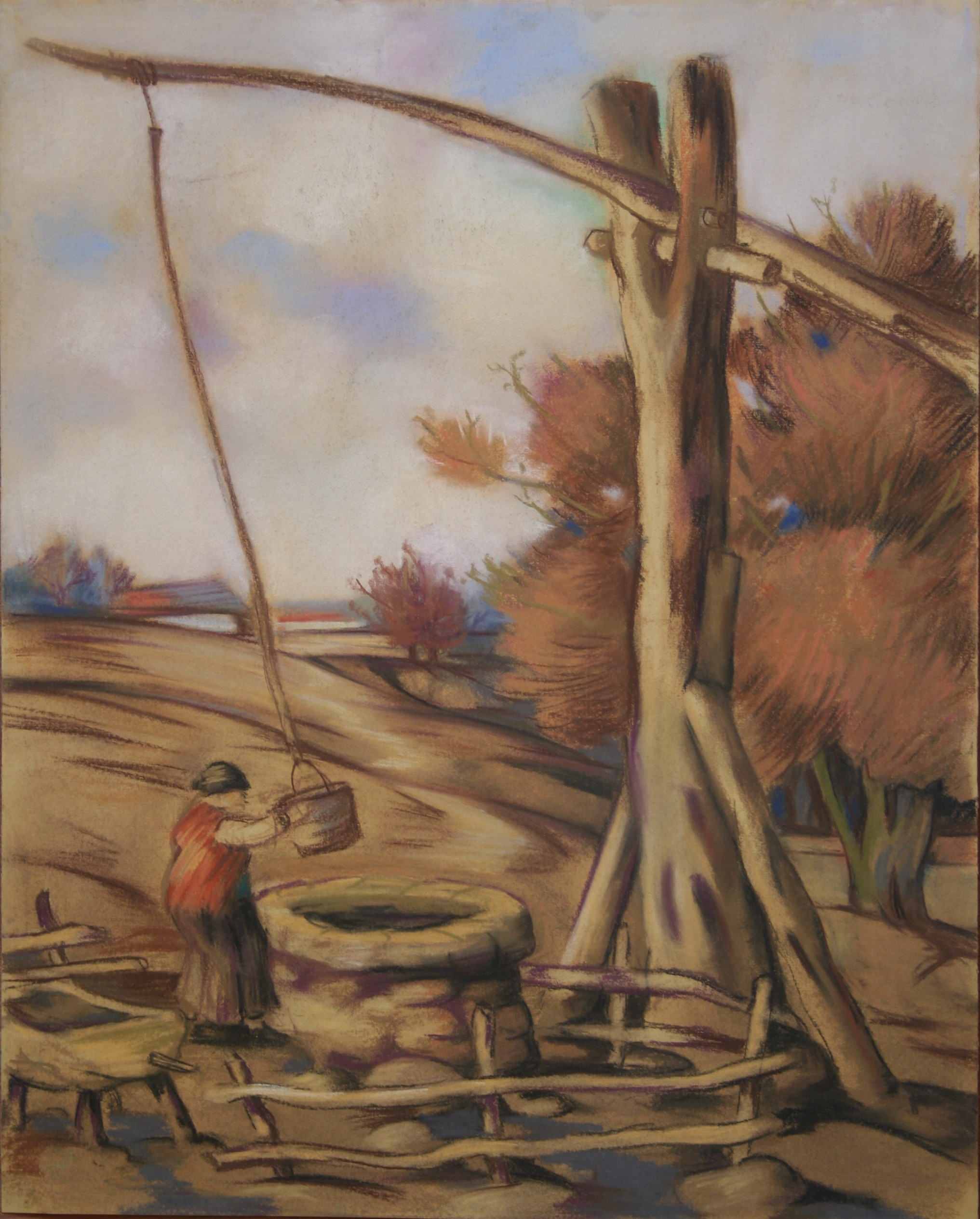
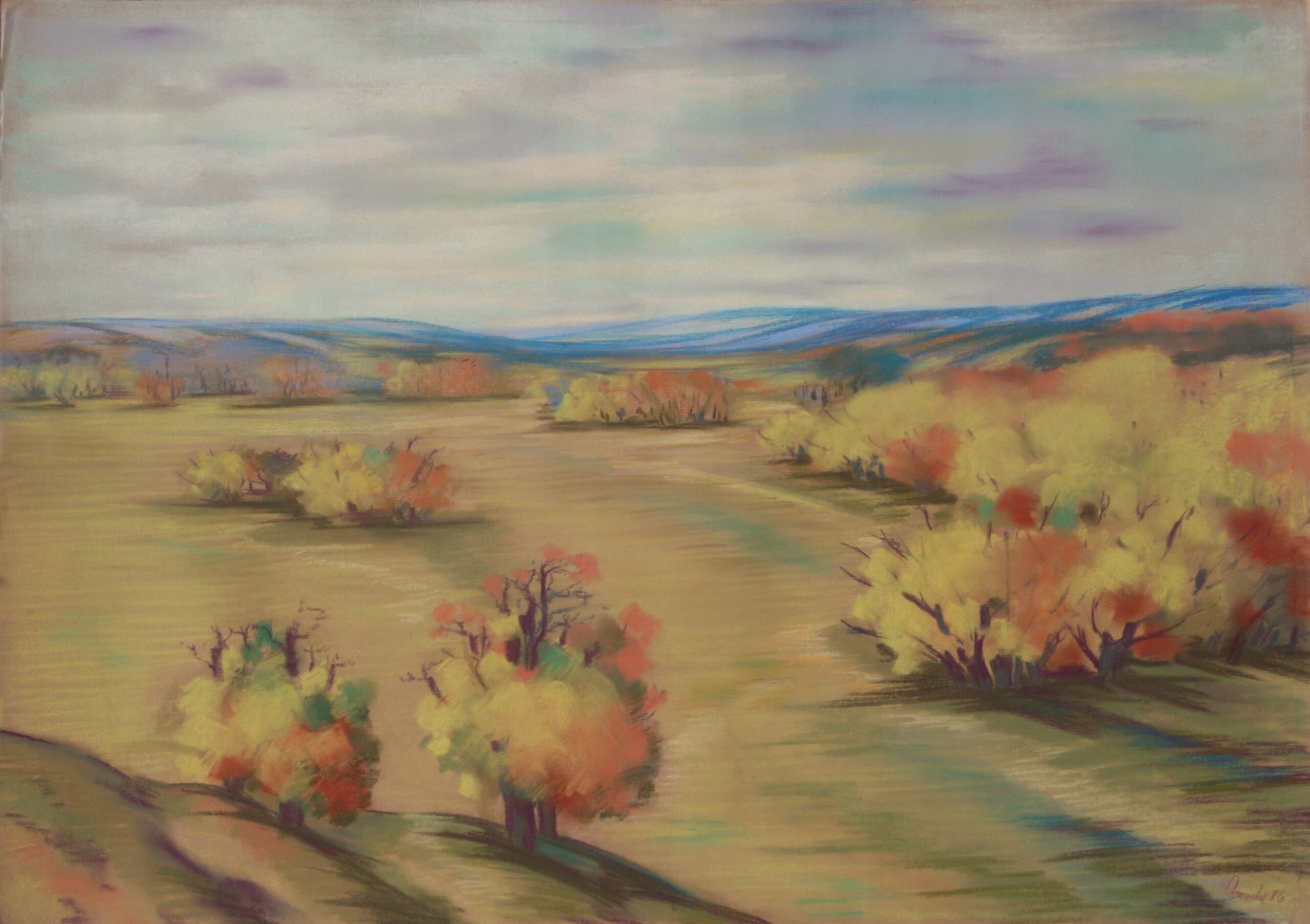
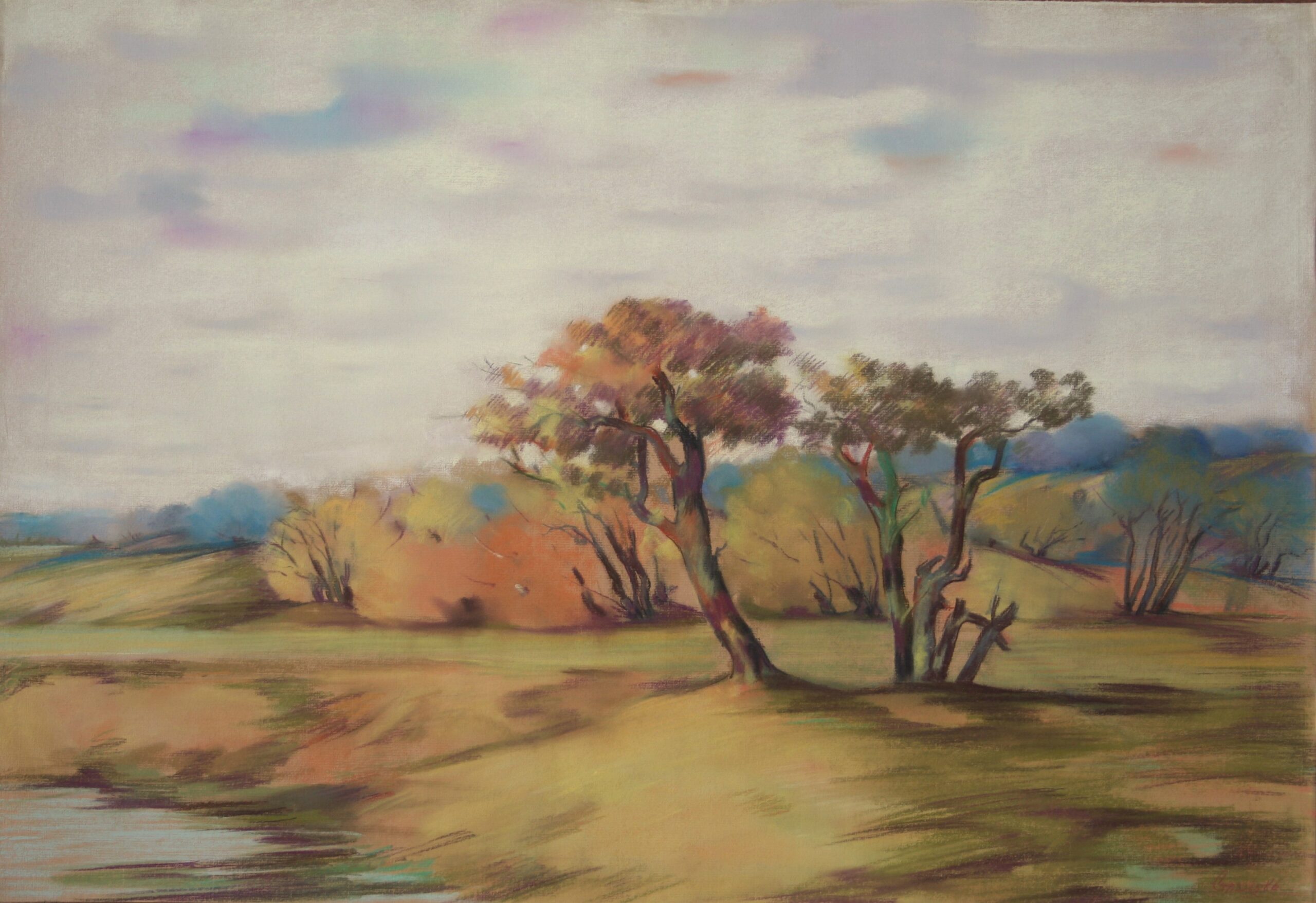
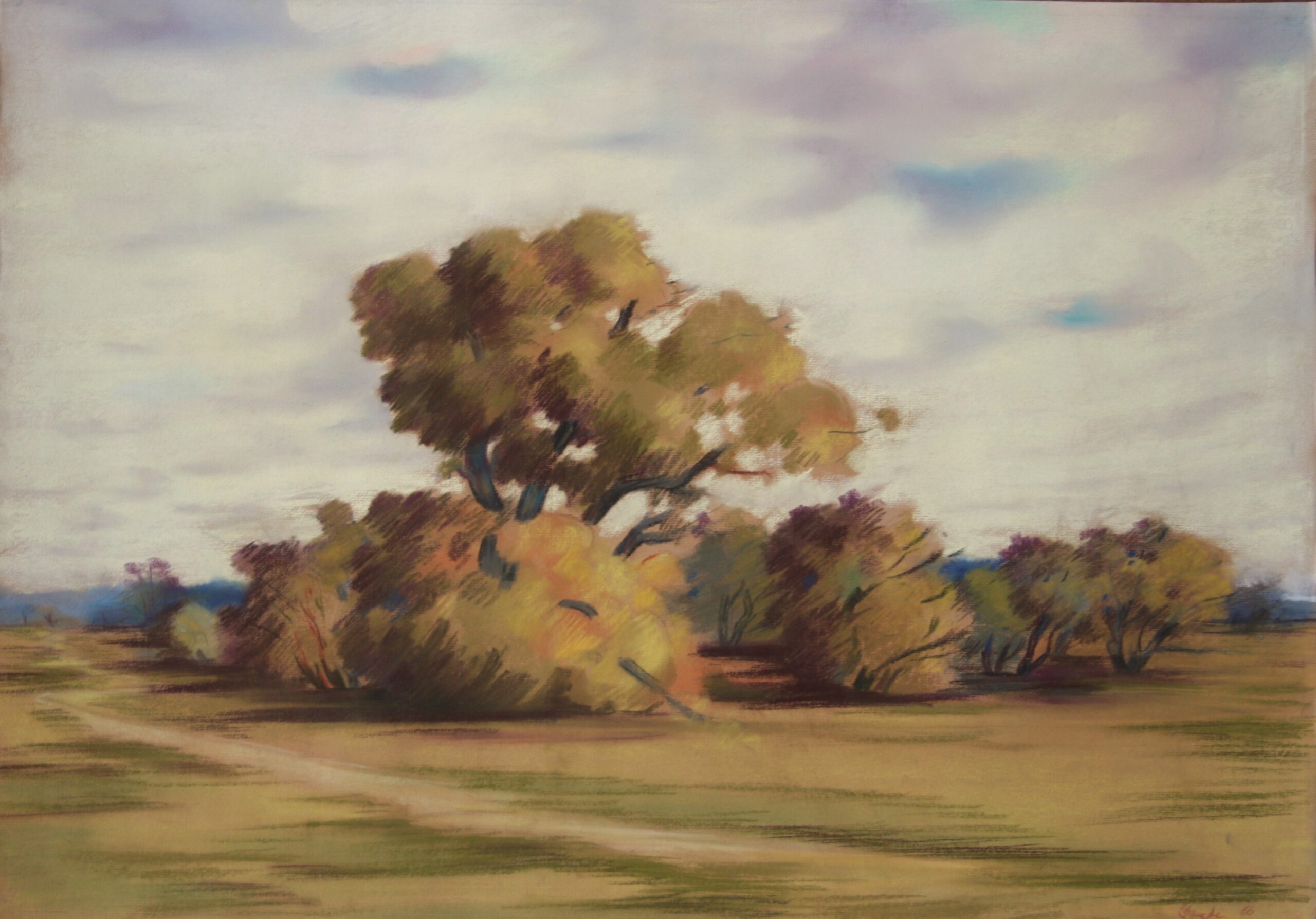
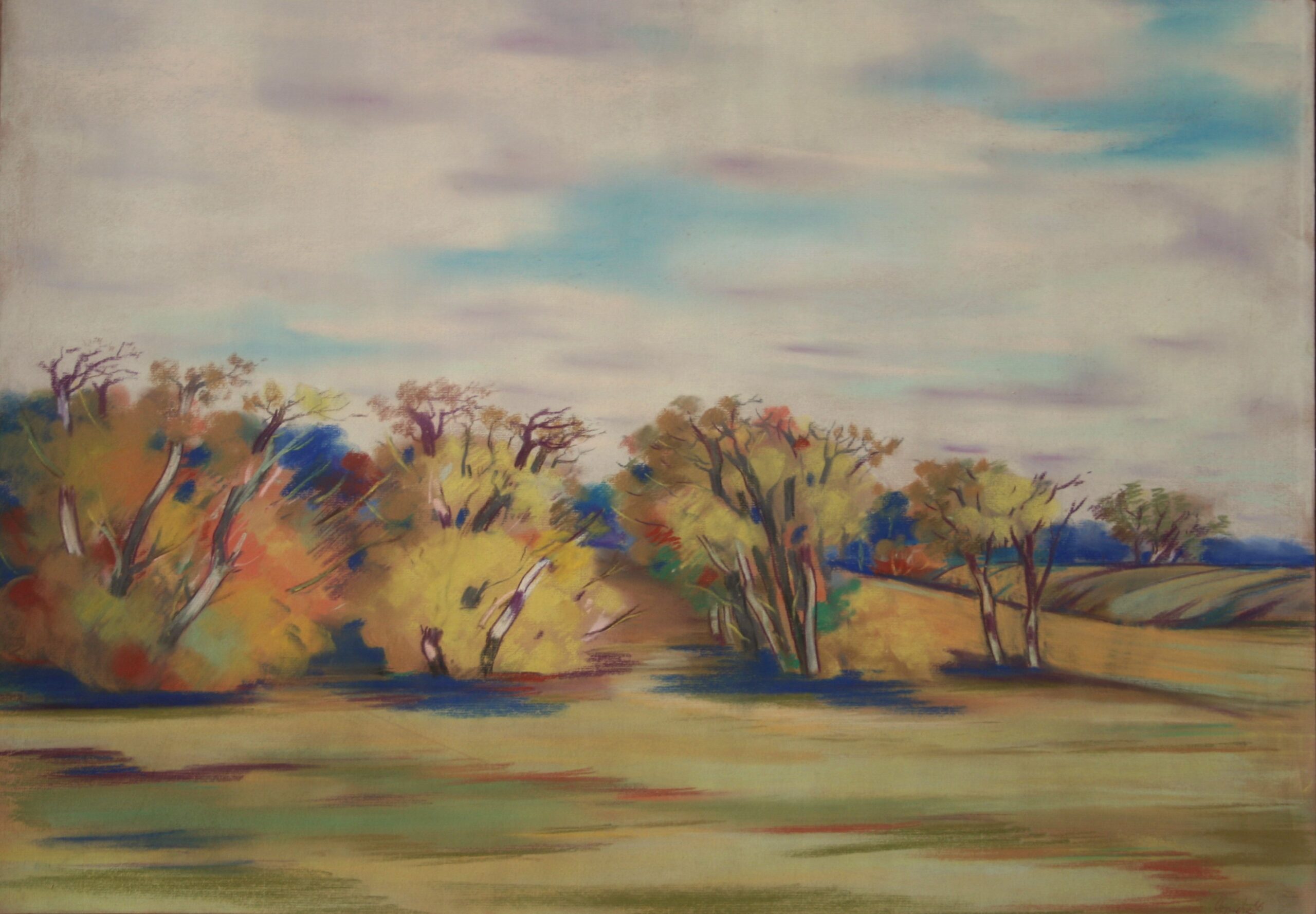
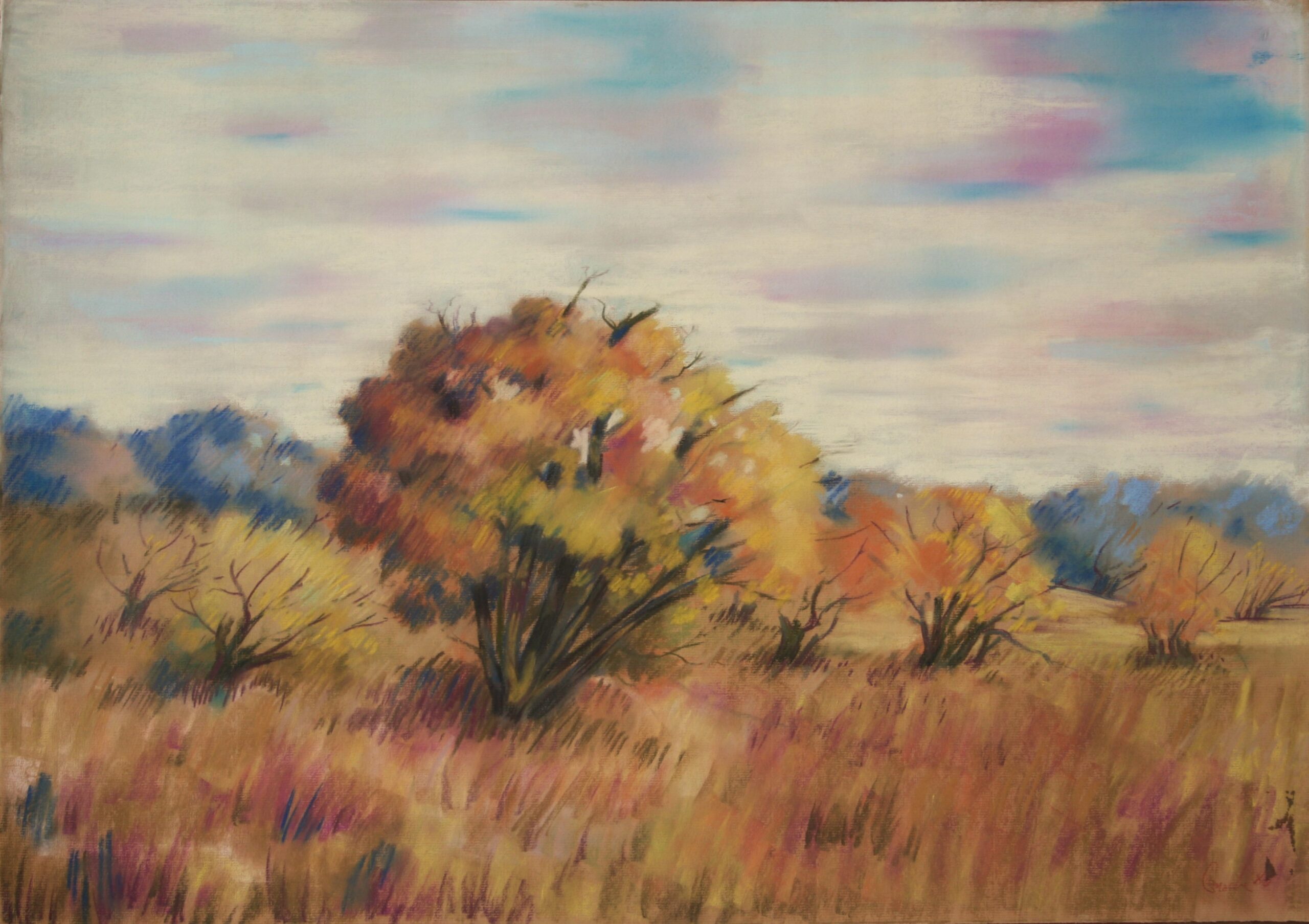
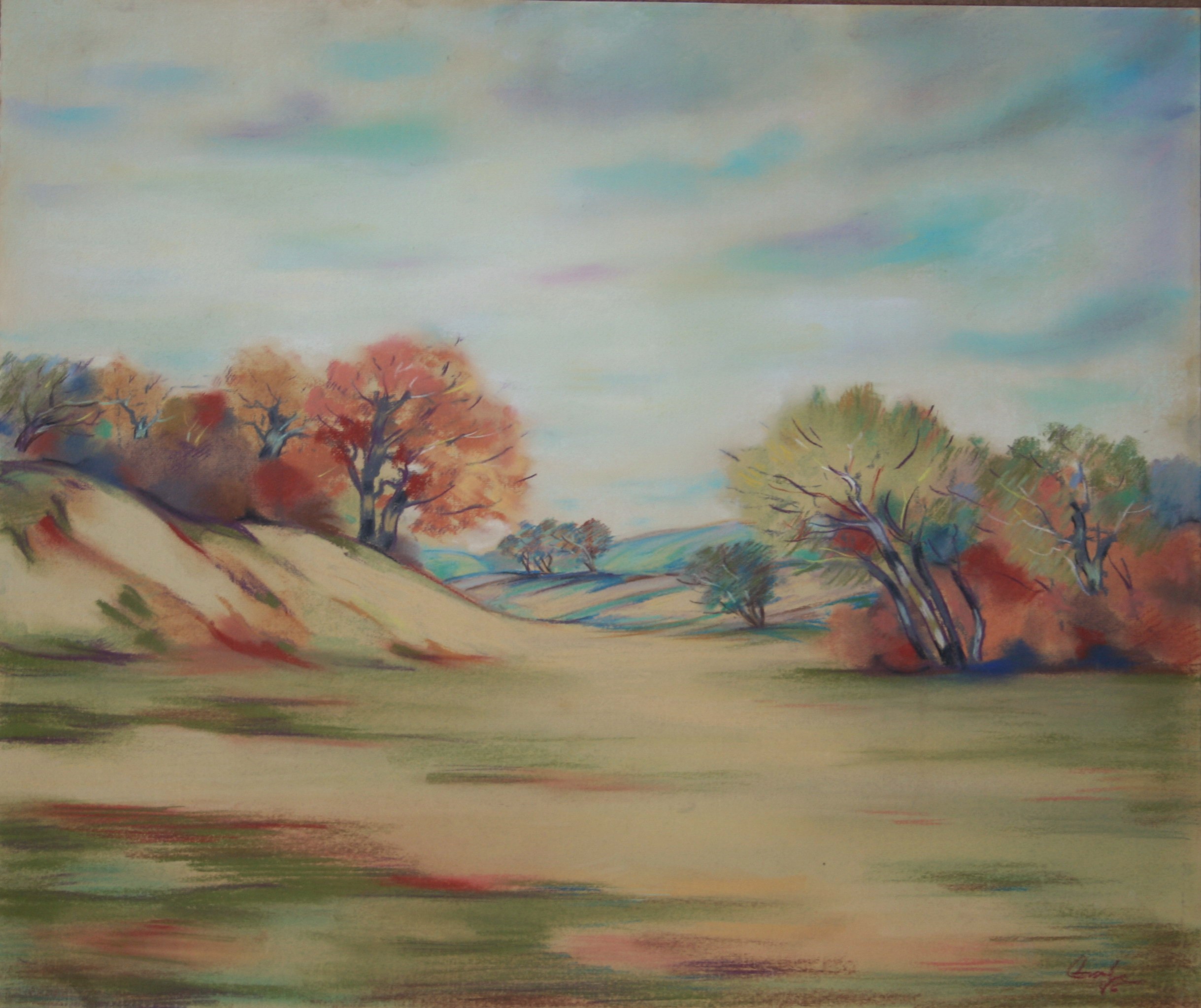
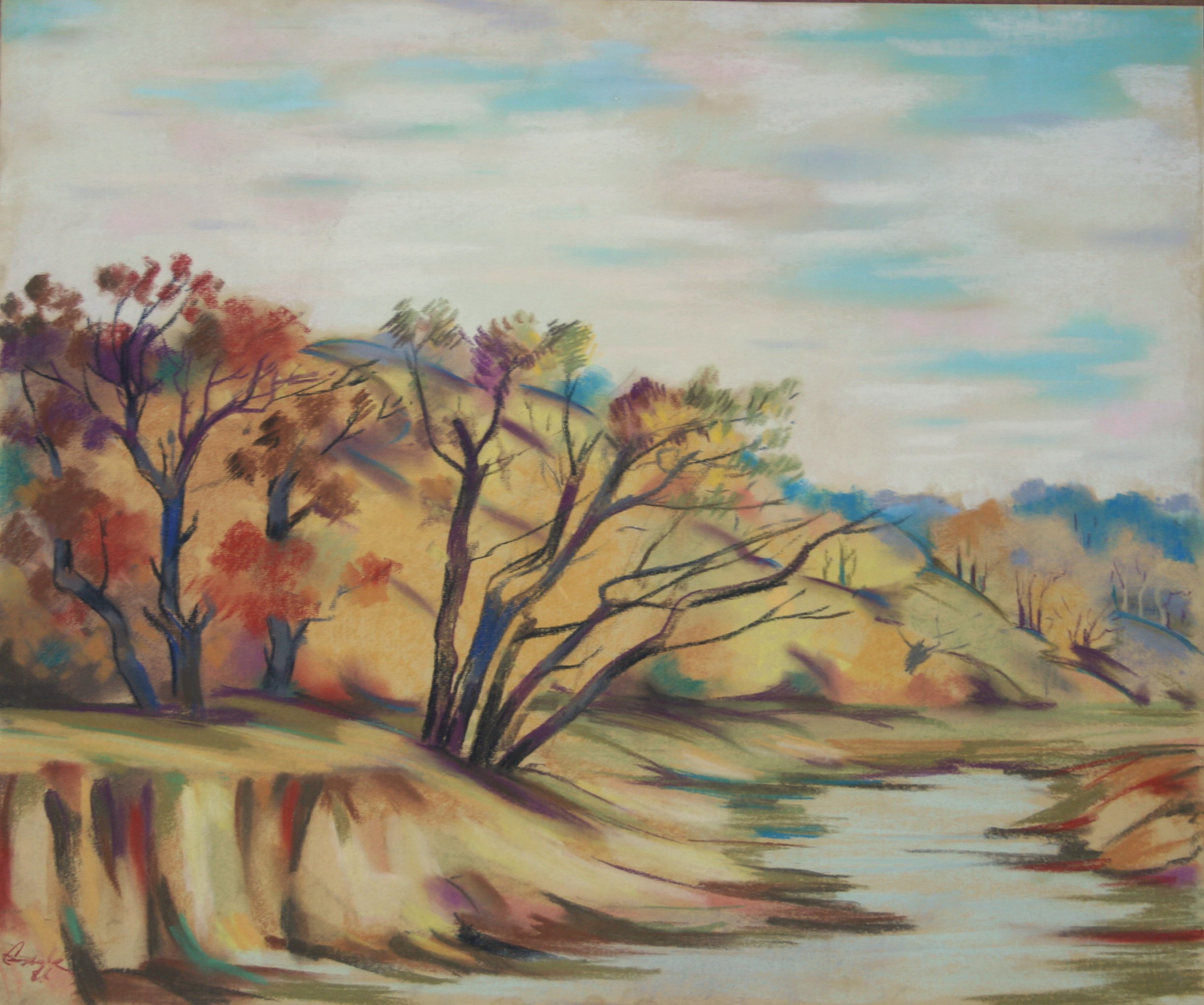
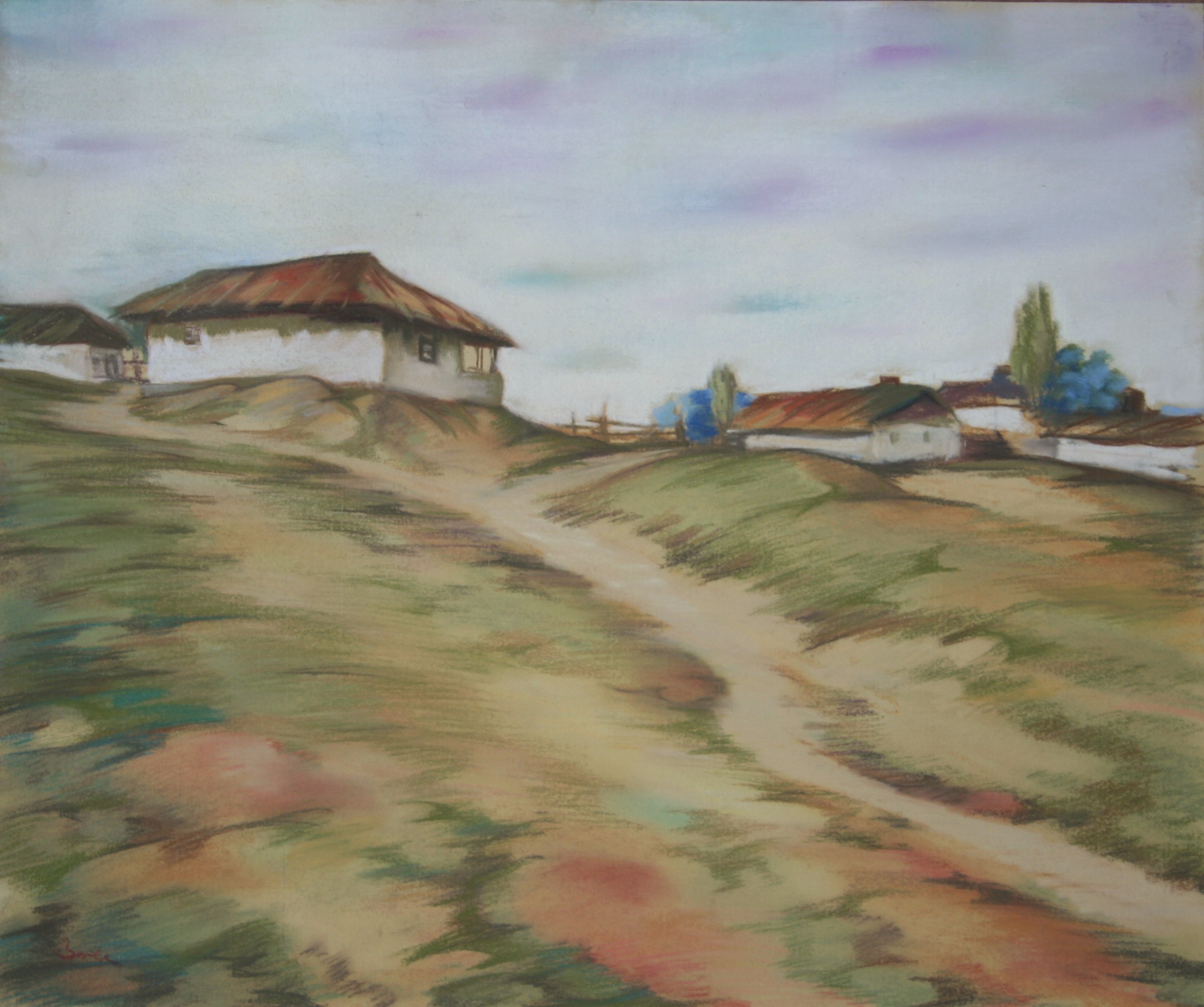
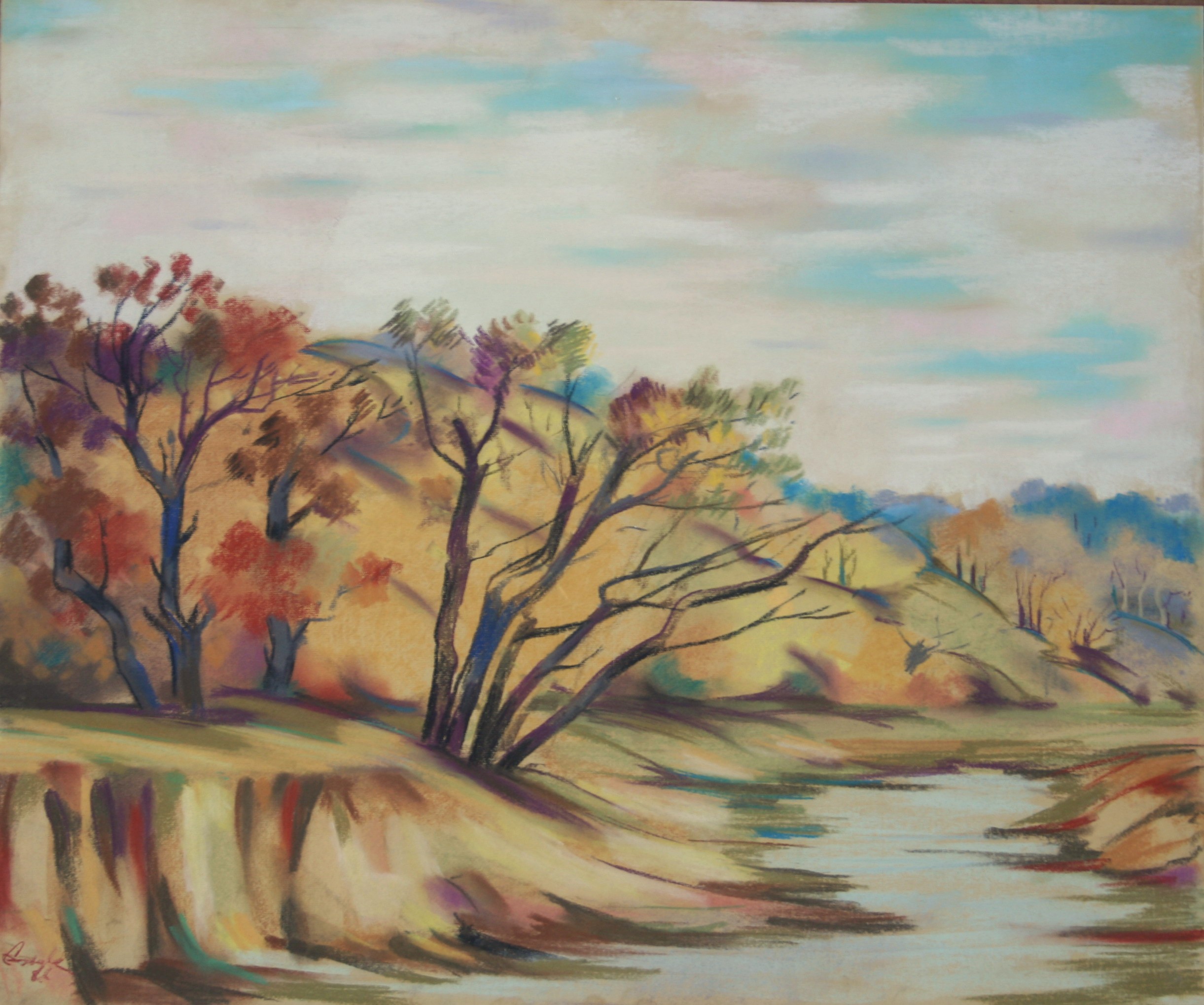
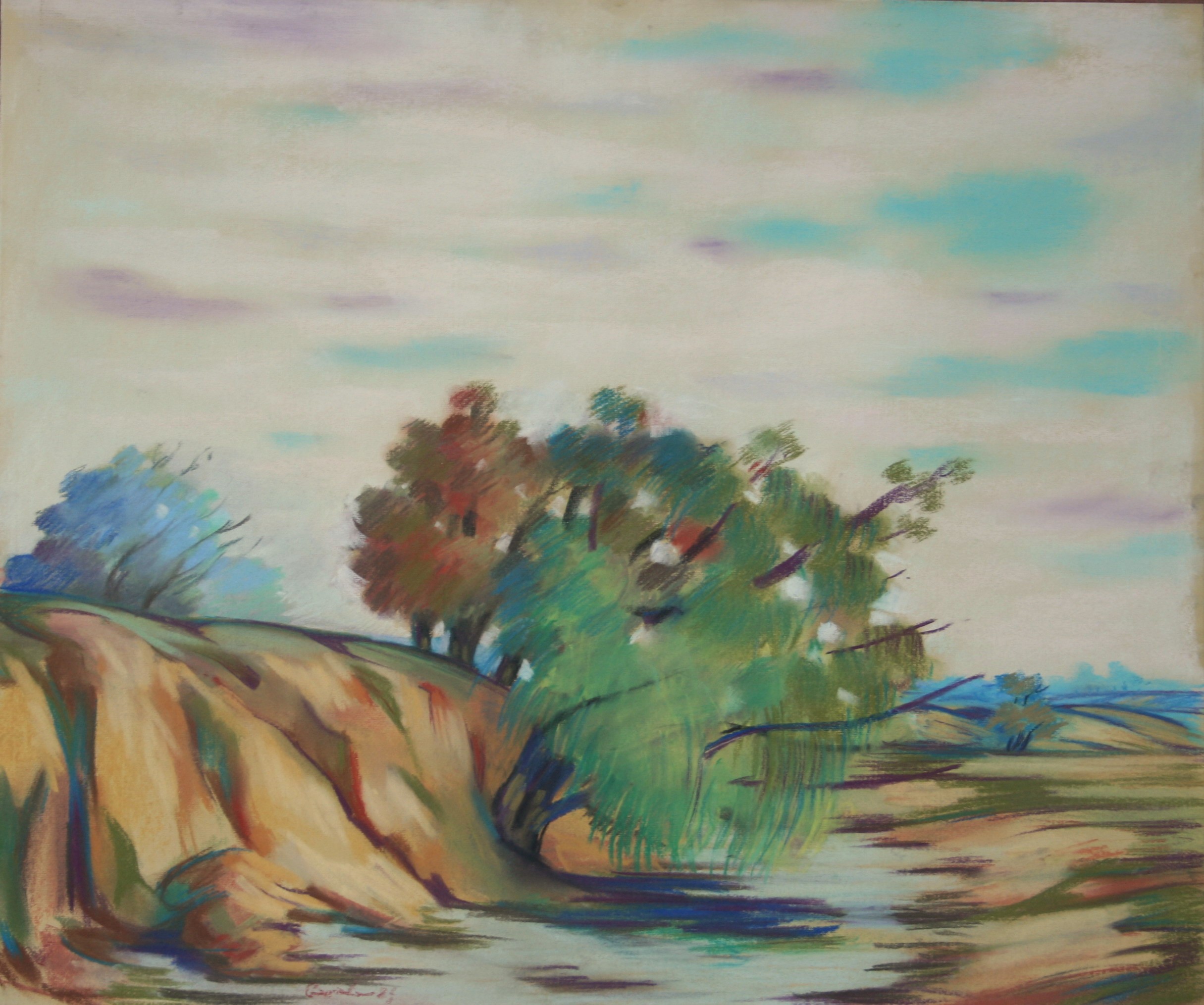
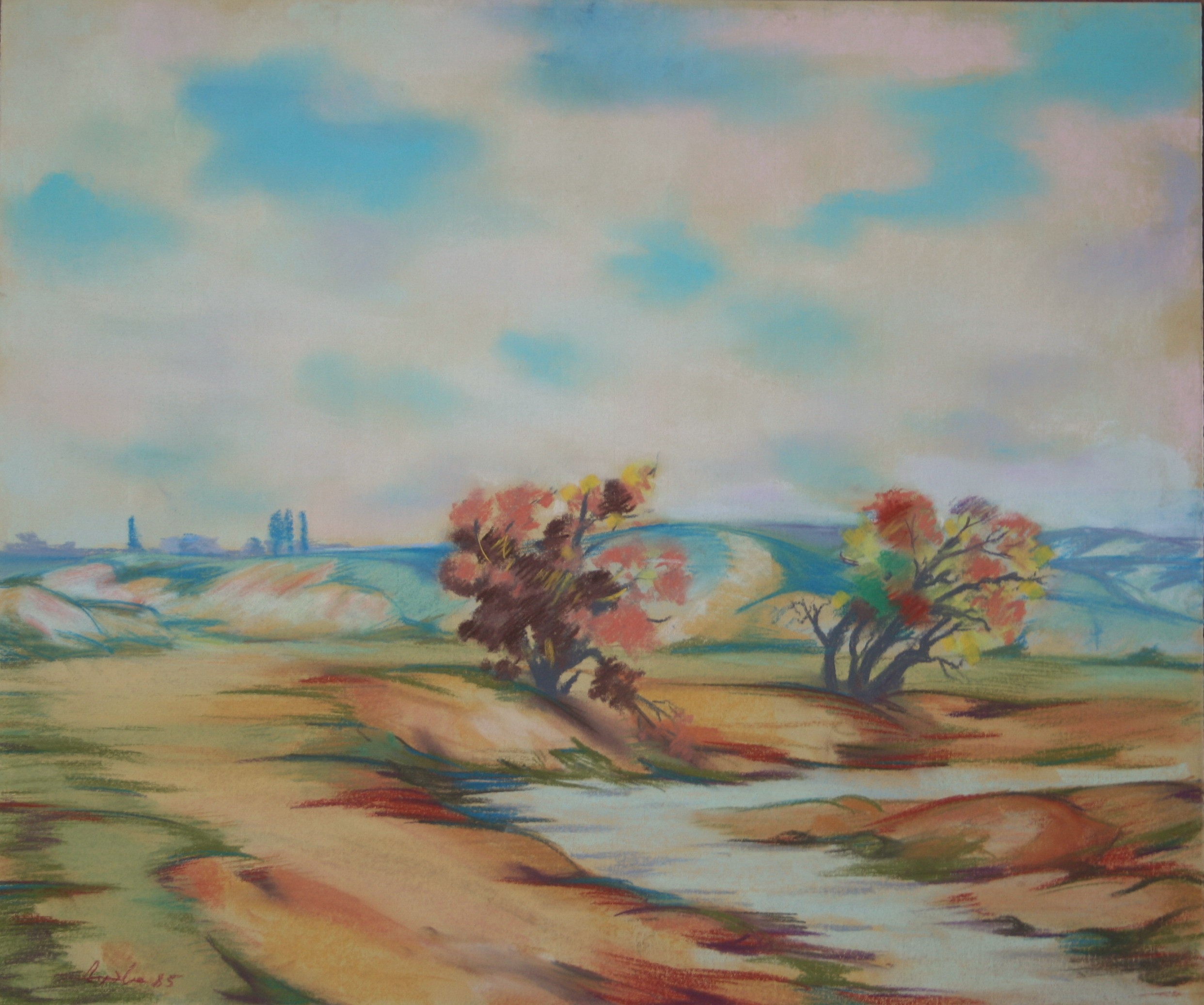
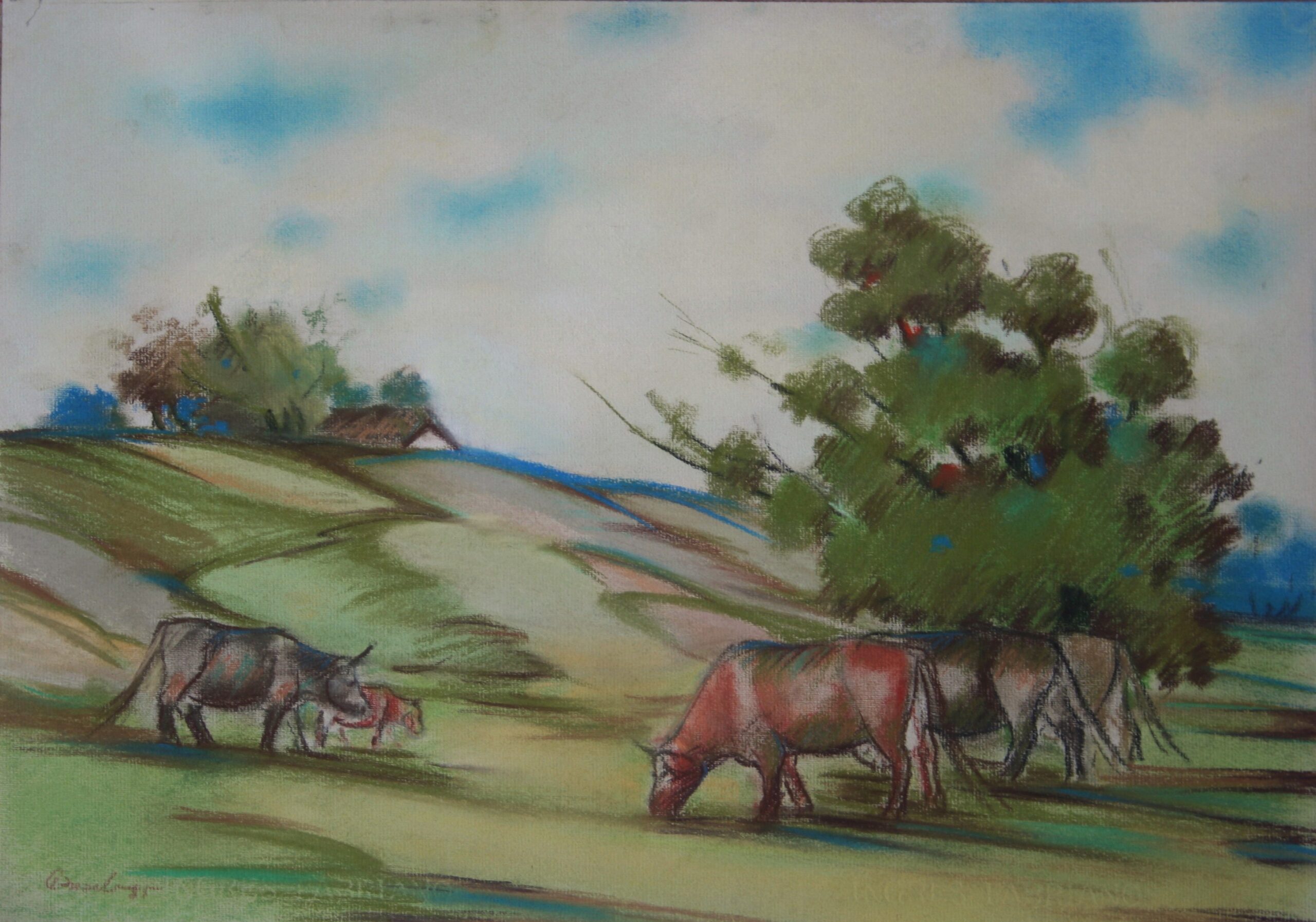
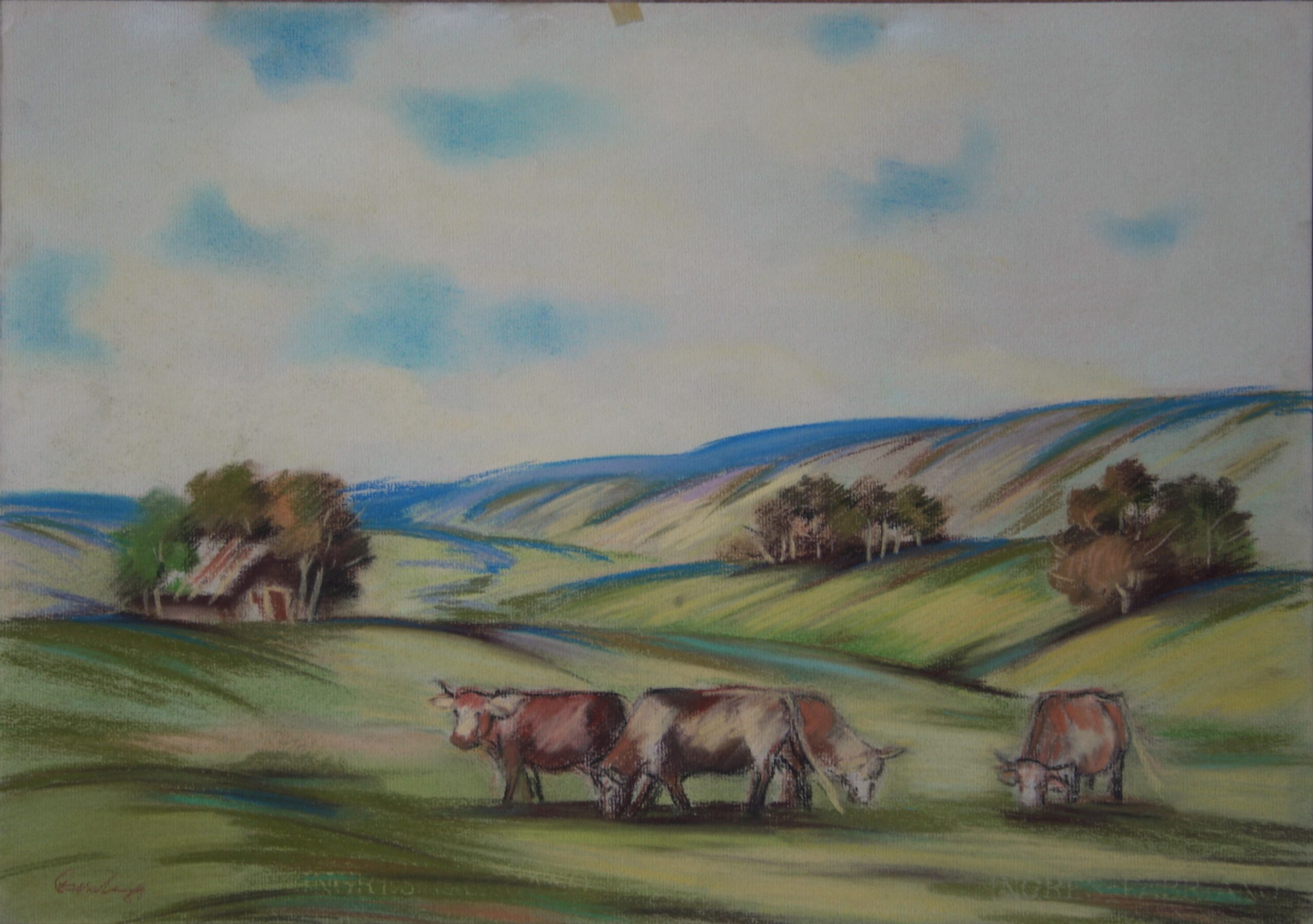
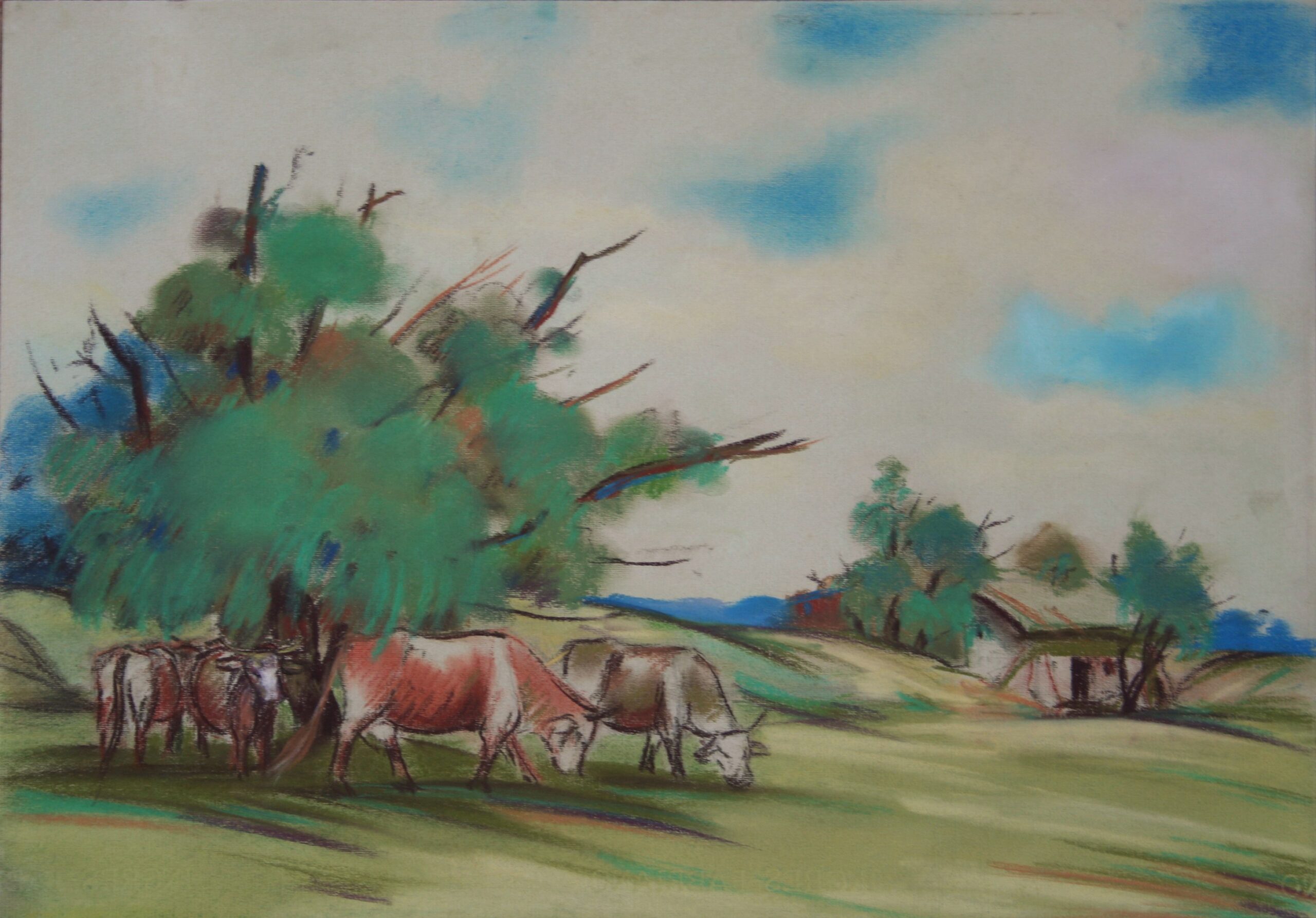
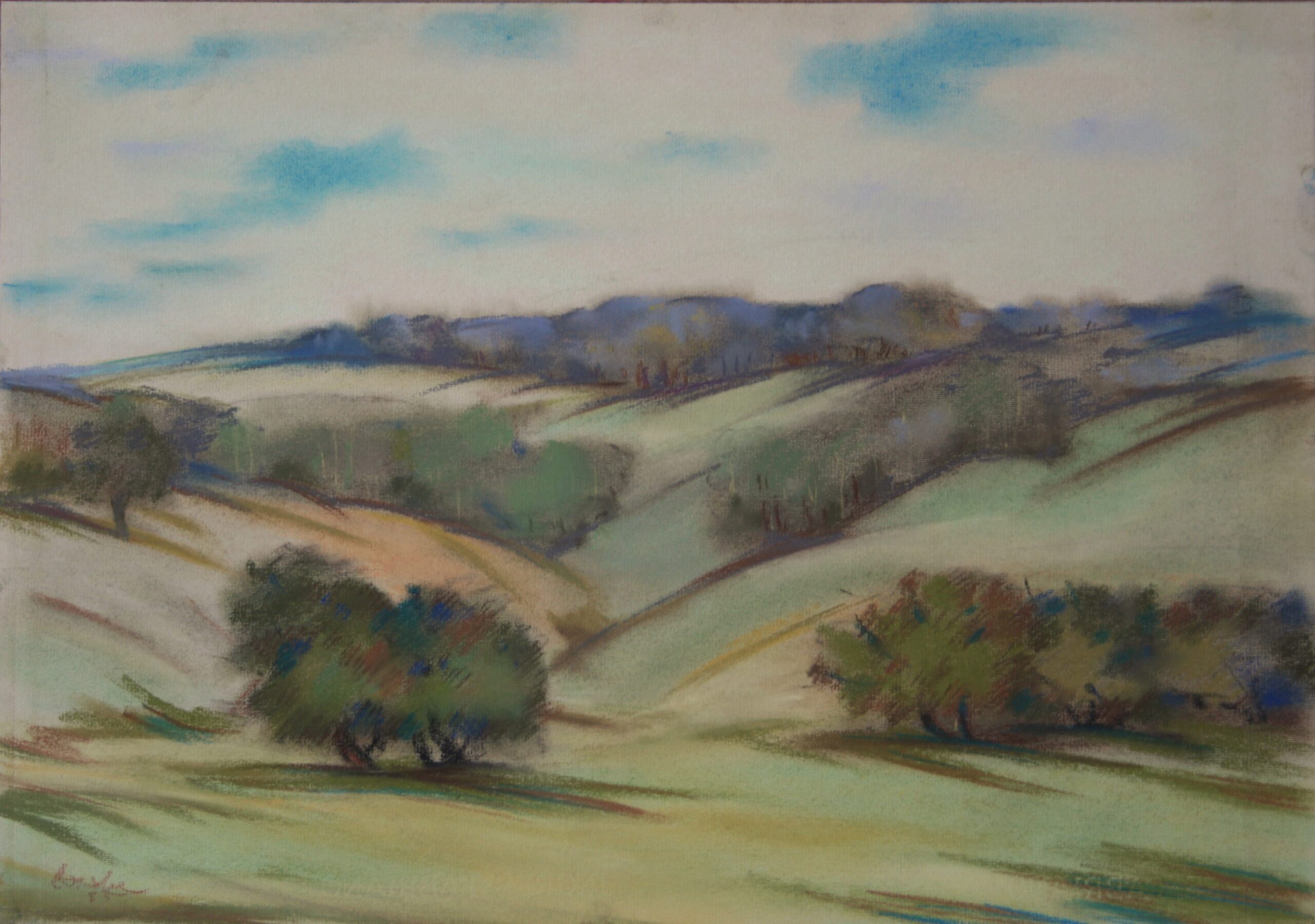
În aceste pasteluri, Constantin Canache transformă peisajul într-un spațiu al memoriei și al contemplării. Natura nu este redată descriptiv, cu preocuparea unei reproduceri fidele, ci este filtrată prin sensibilitatea artistului și recompusă în acorduri cromatice, ritmuri și stări sufletești. Peisajele rurale se disting prin întinderile ample, orizonturile coborâte și cerurile care ocupă o mare parte a compoziției. Siluetele oamenilor, căruțele și vegetația sunt reduse la prezențe discrete, dar pline de semnificație. Ele evocă o lume a drumului, a muncii și a legăturii profunde dintre om și pământ. Cromatica dominată de ocruri, tonuri cenușii și verzuri stinse, învăluie scenele într-o lumină melancolică, apropiată de atmosfera unei amintiri.
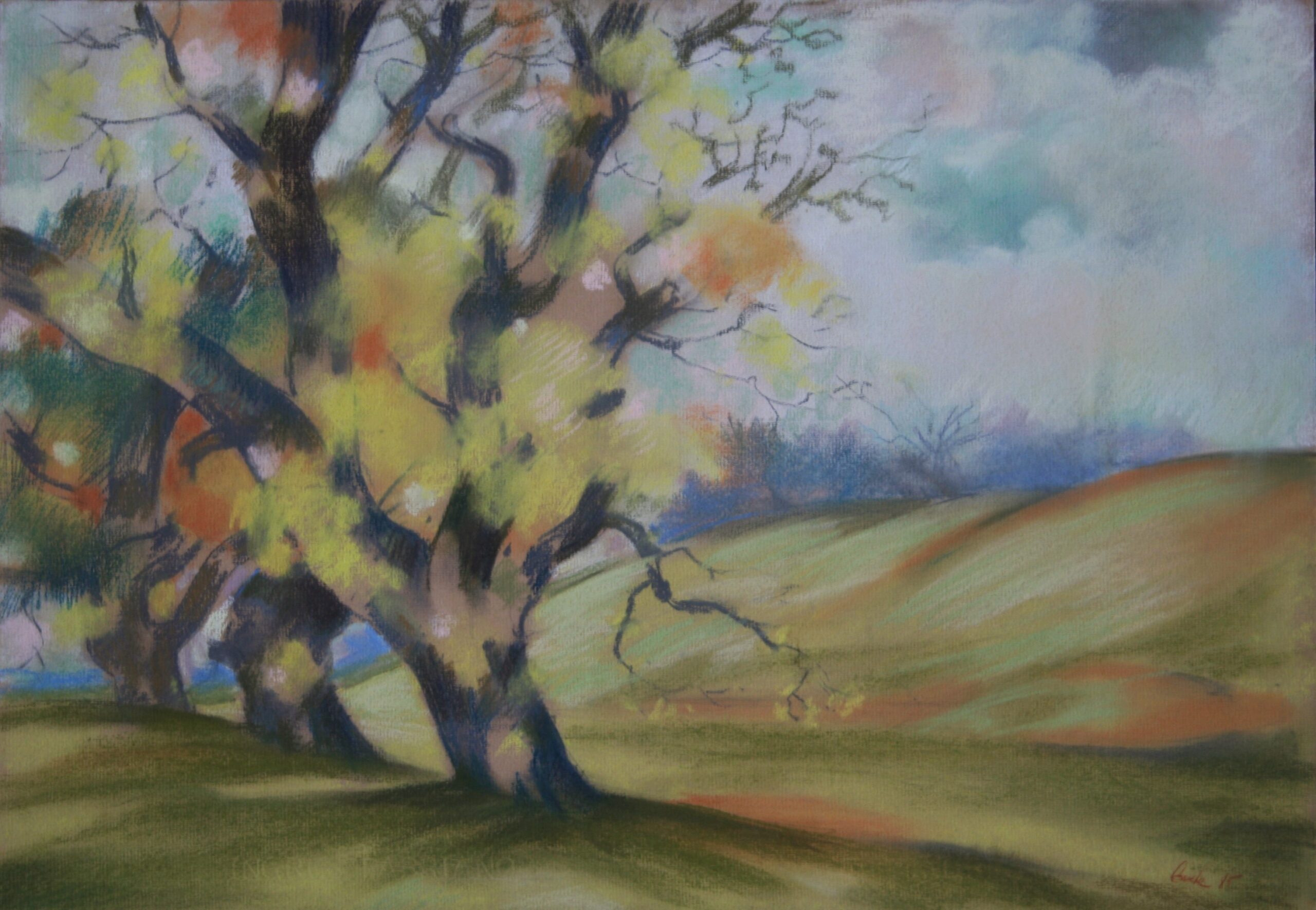
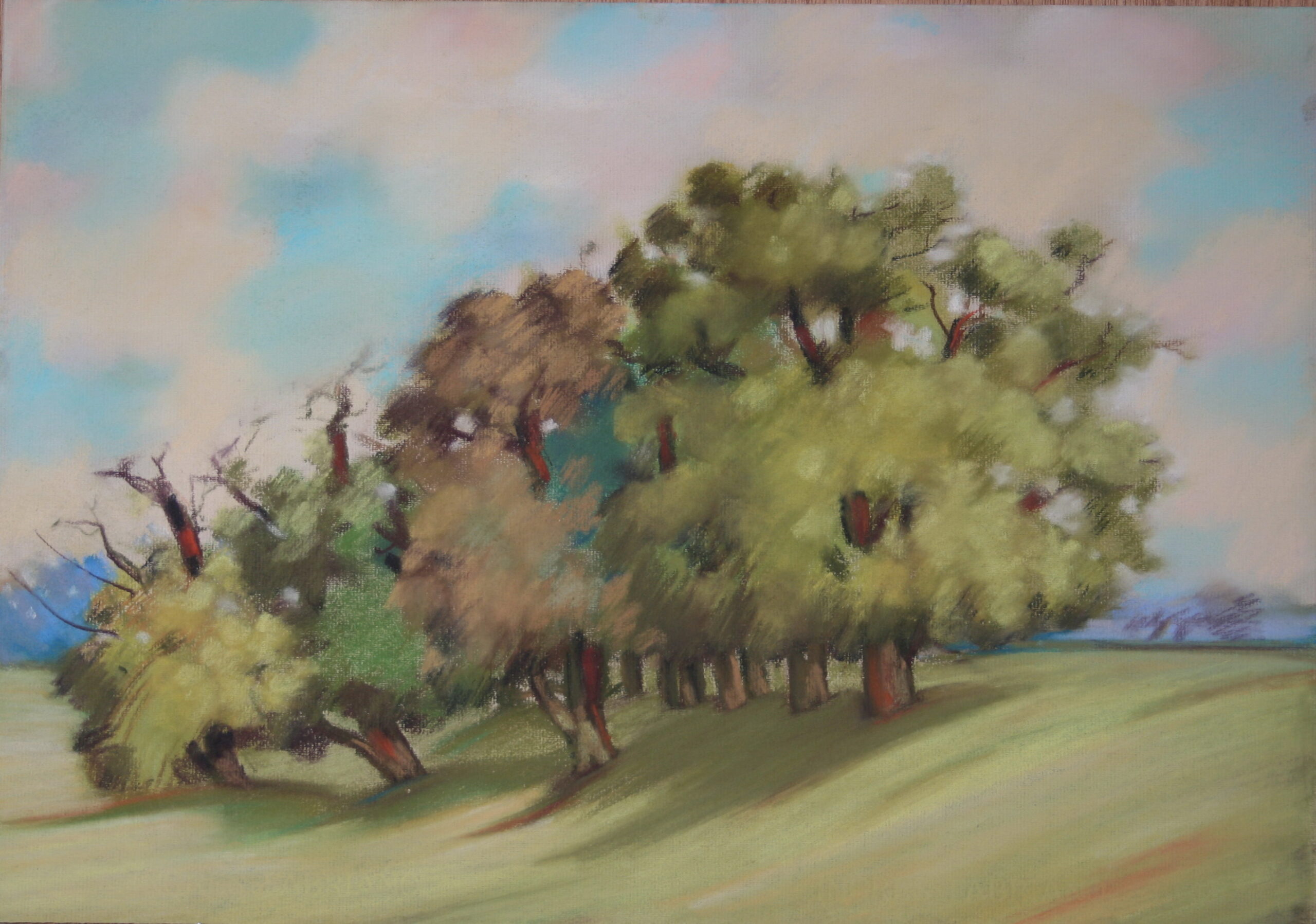
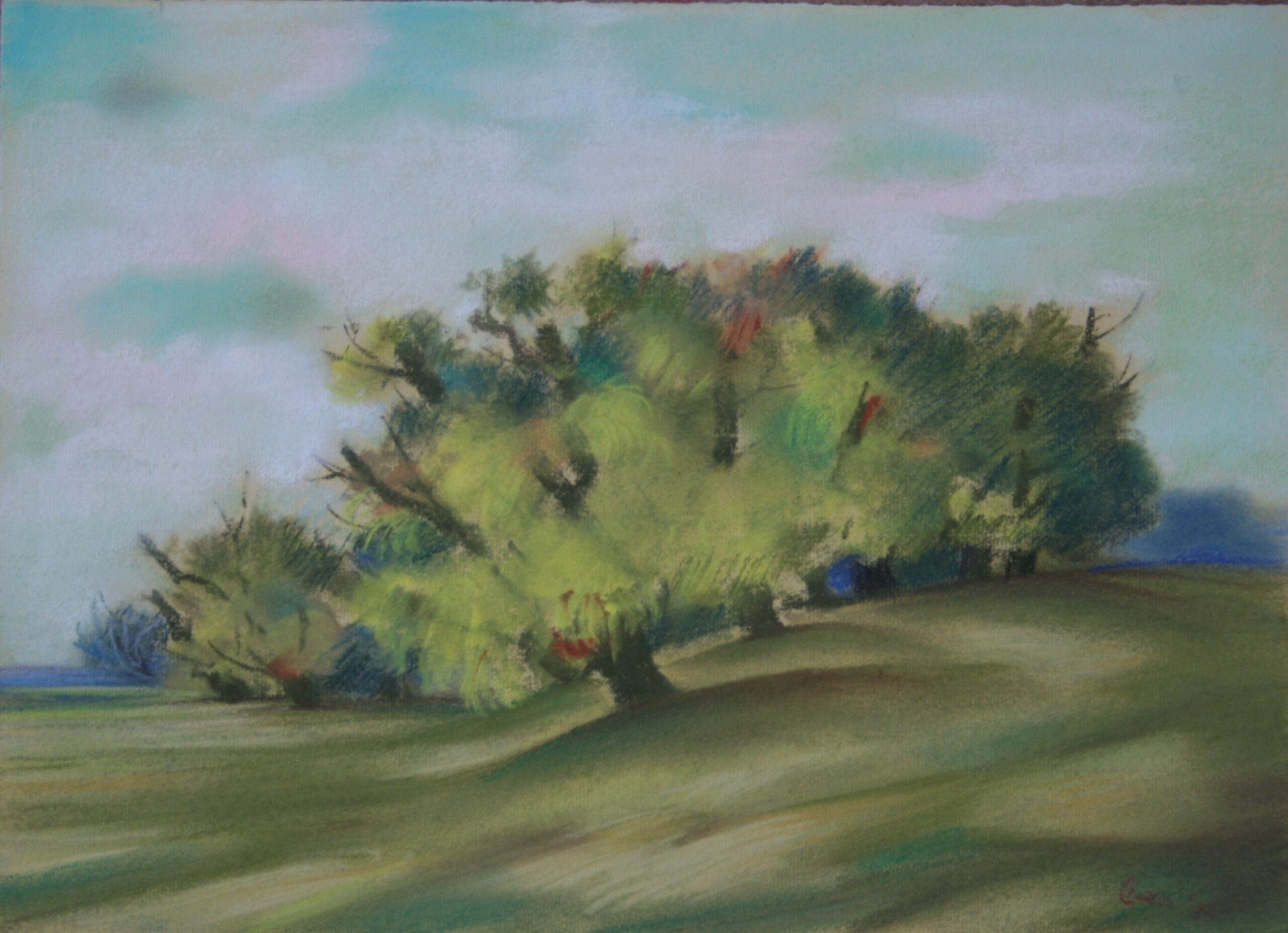
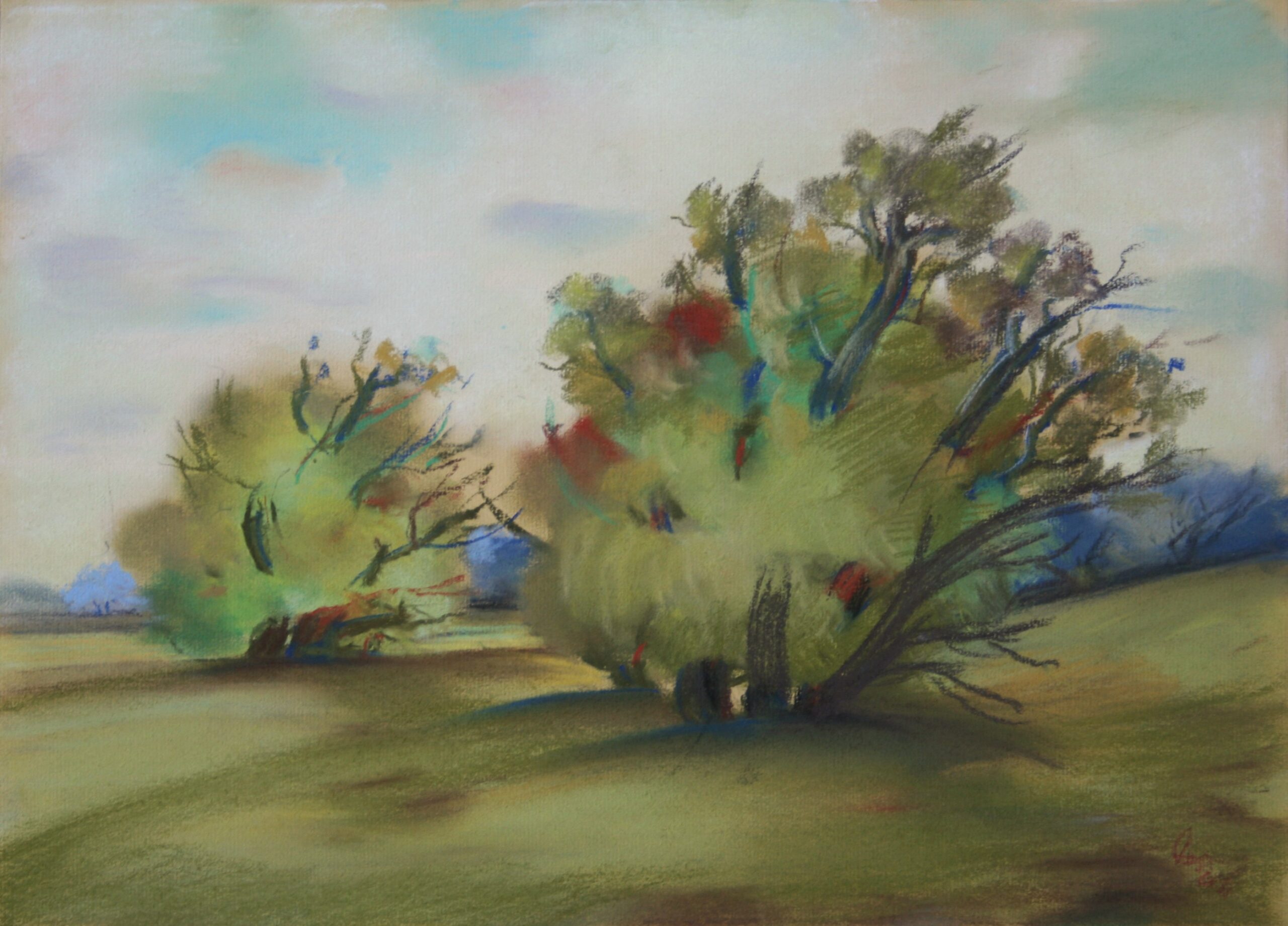
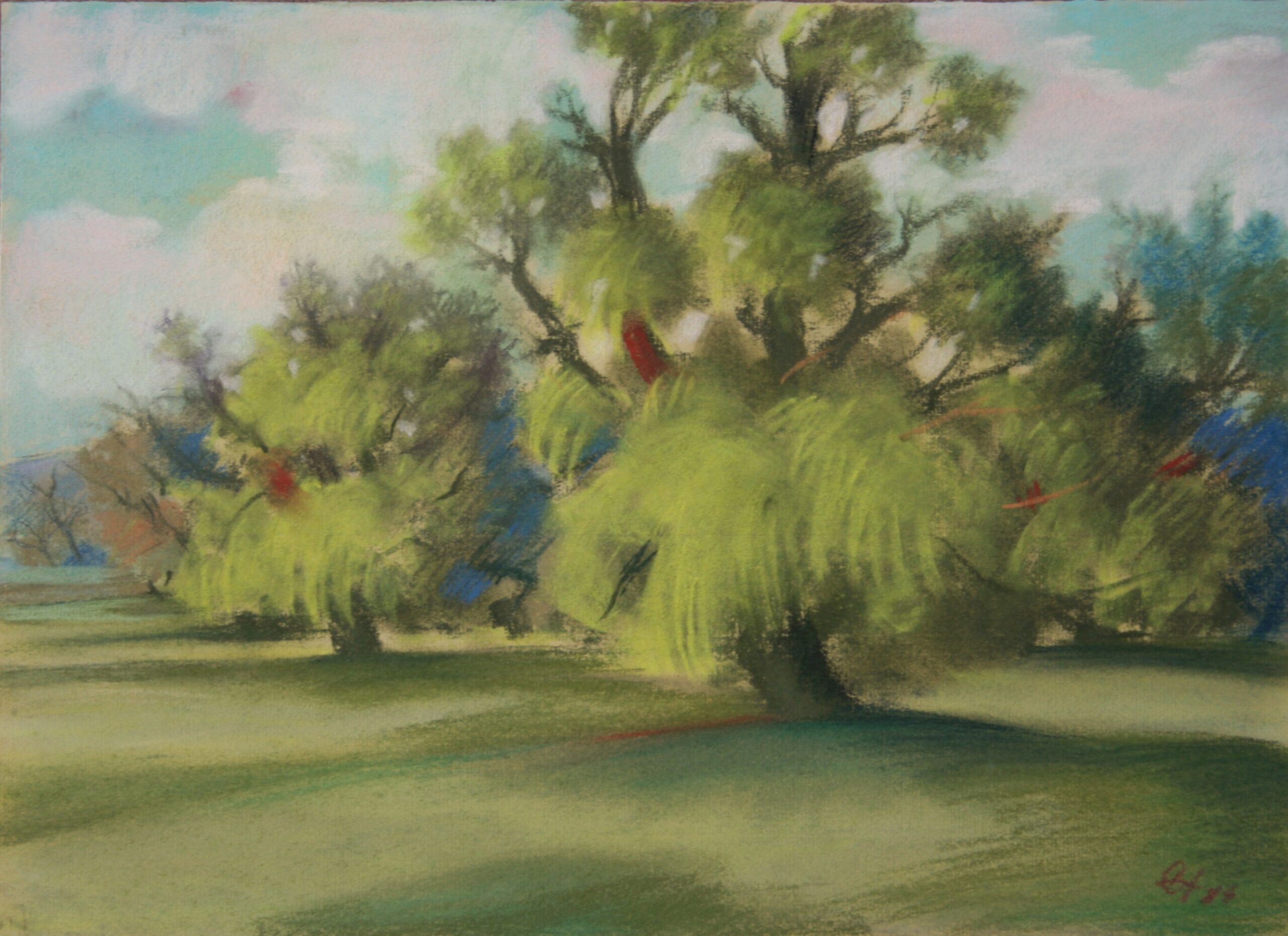
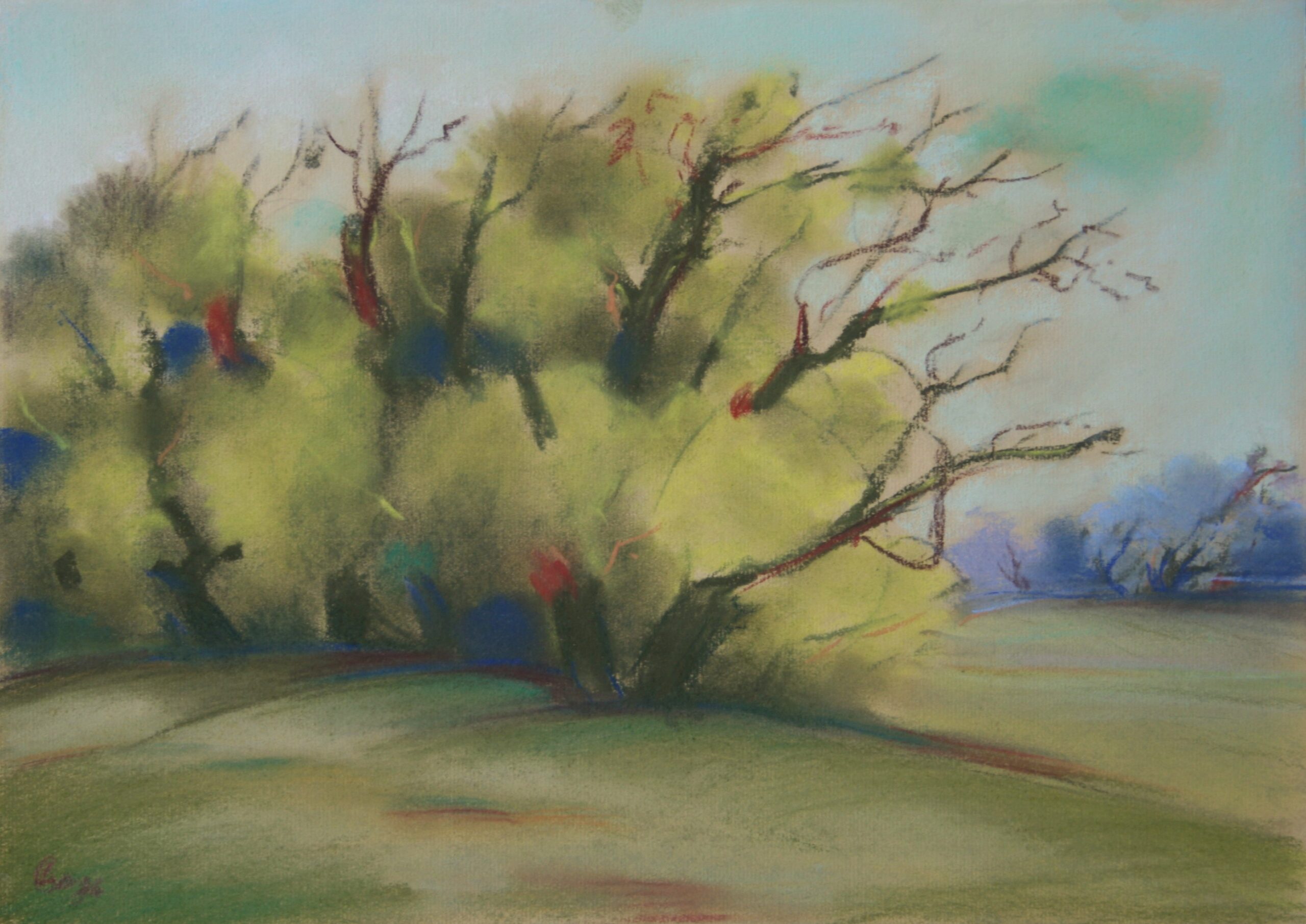
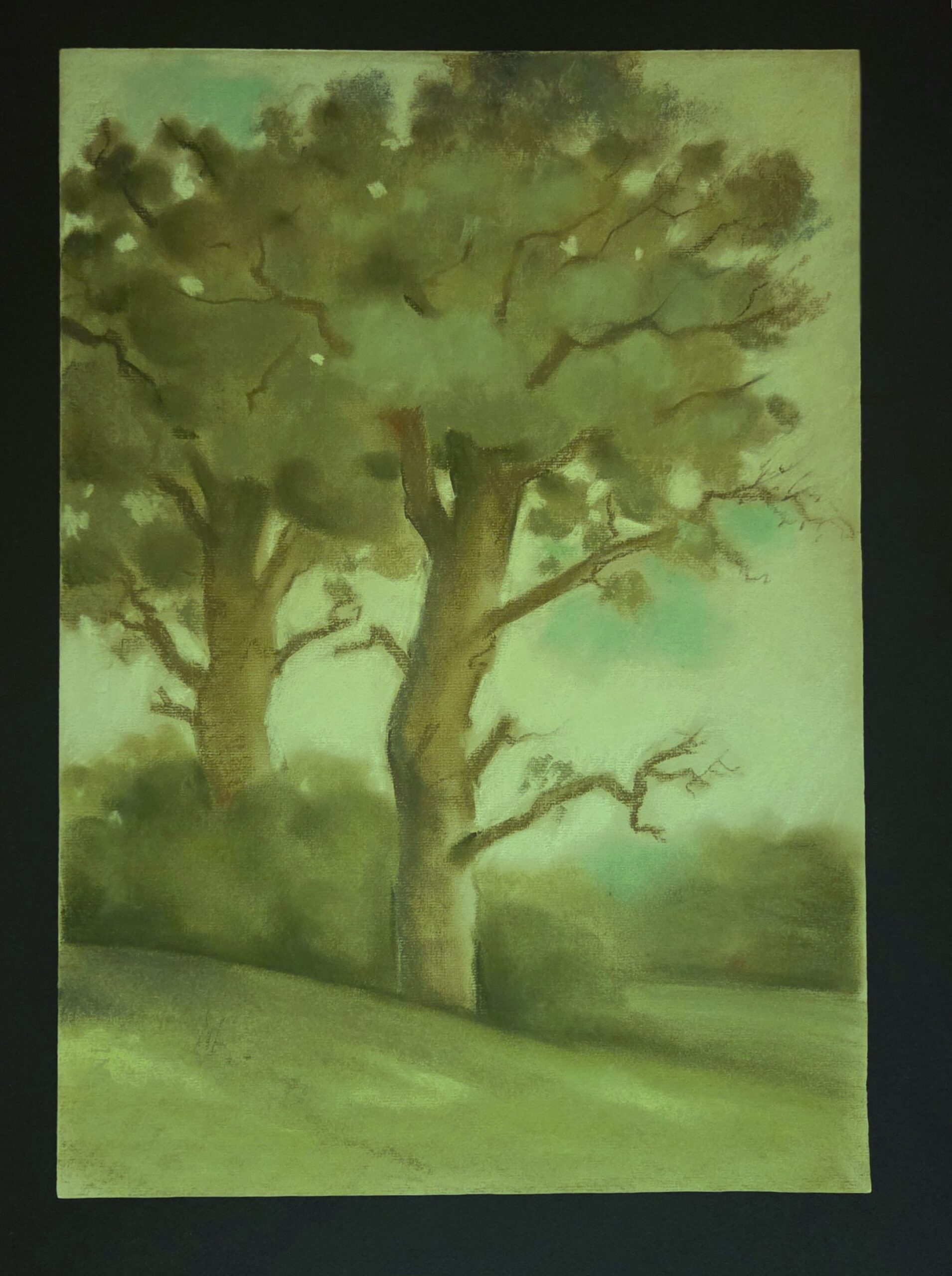
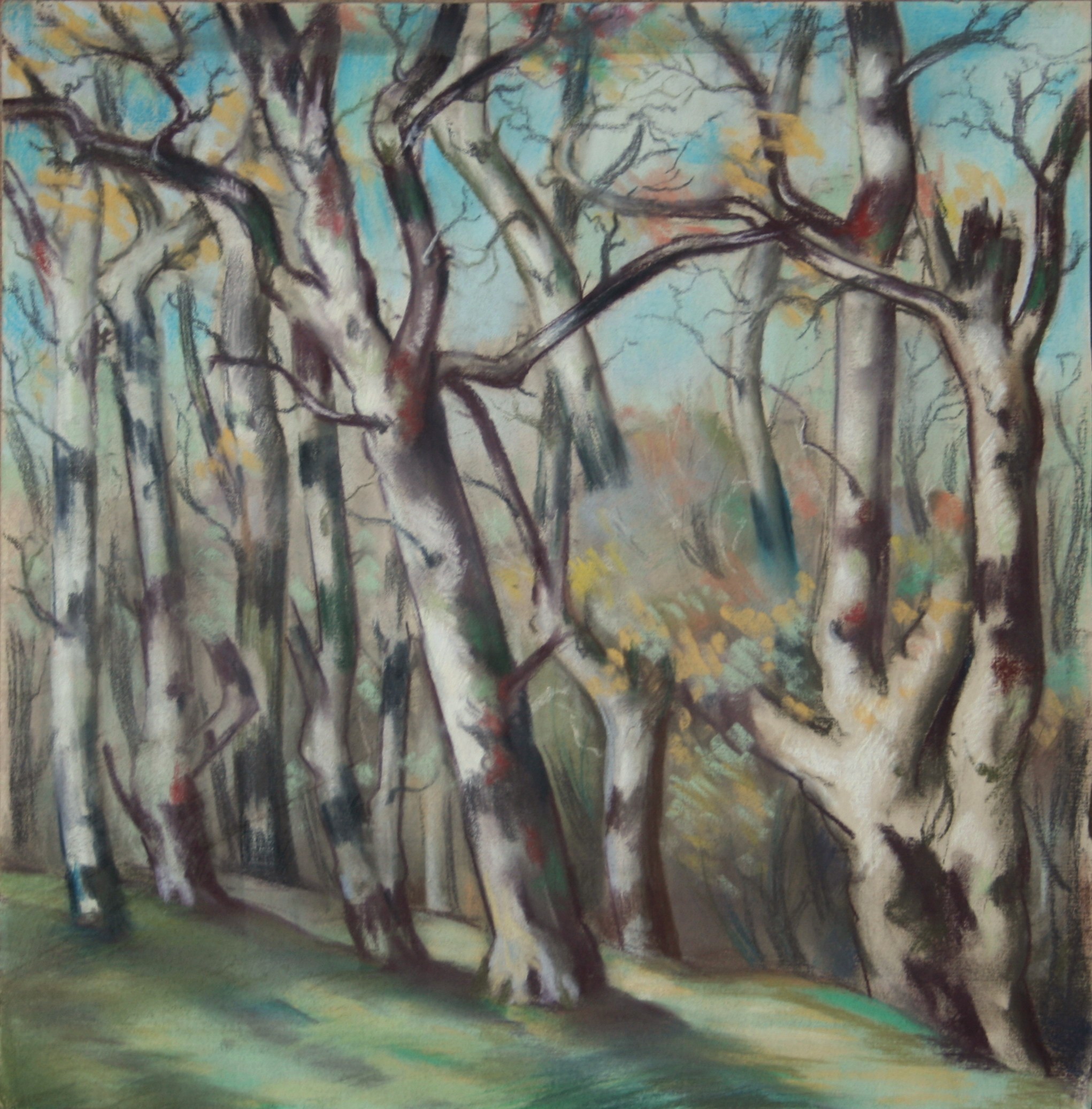
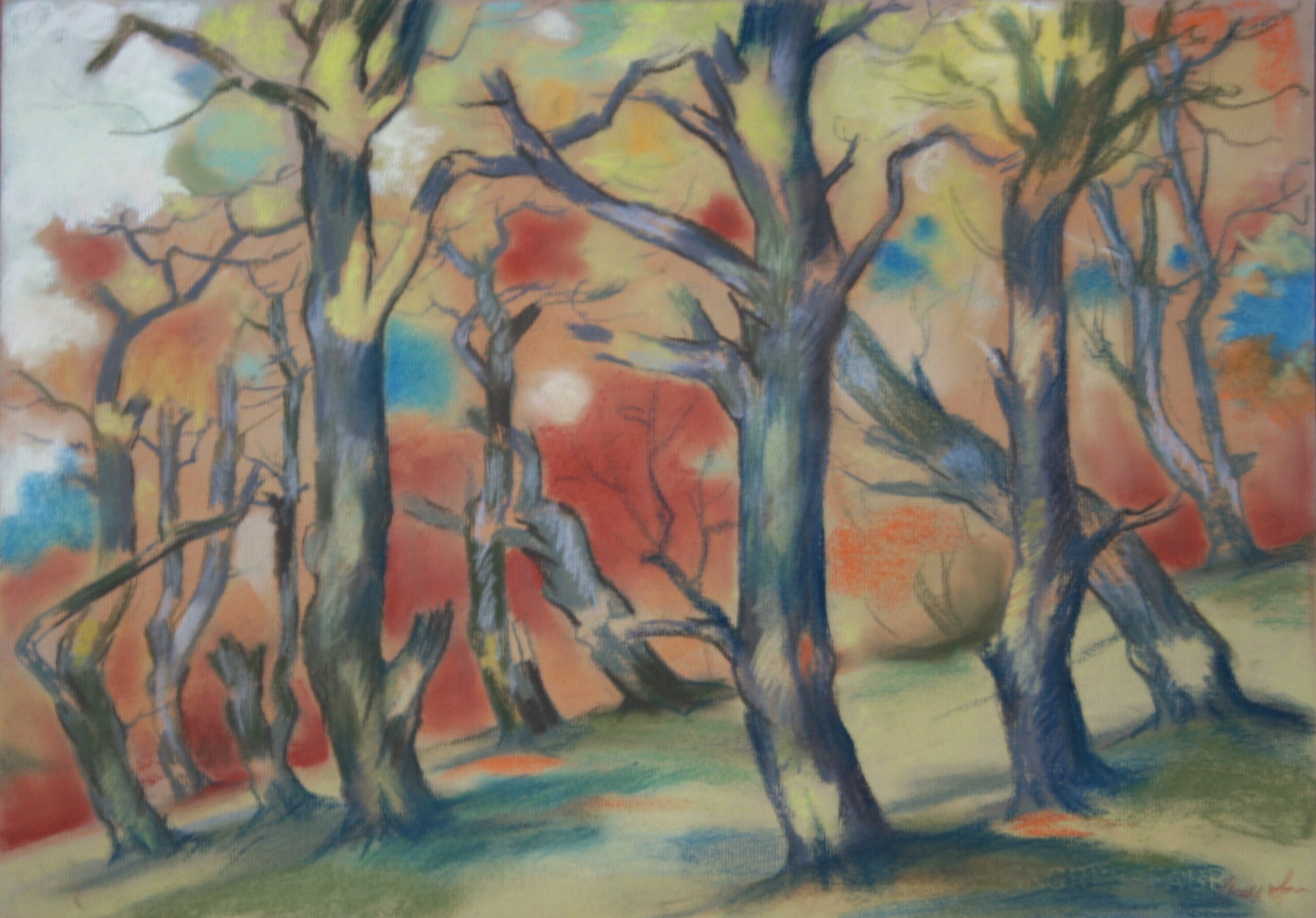
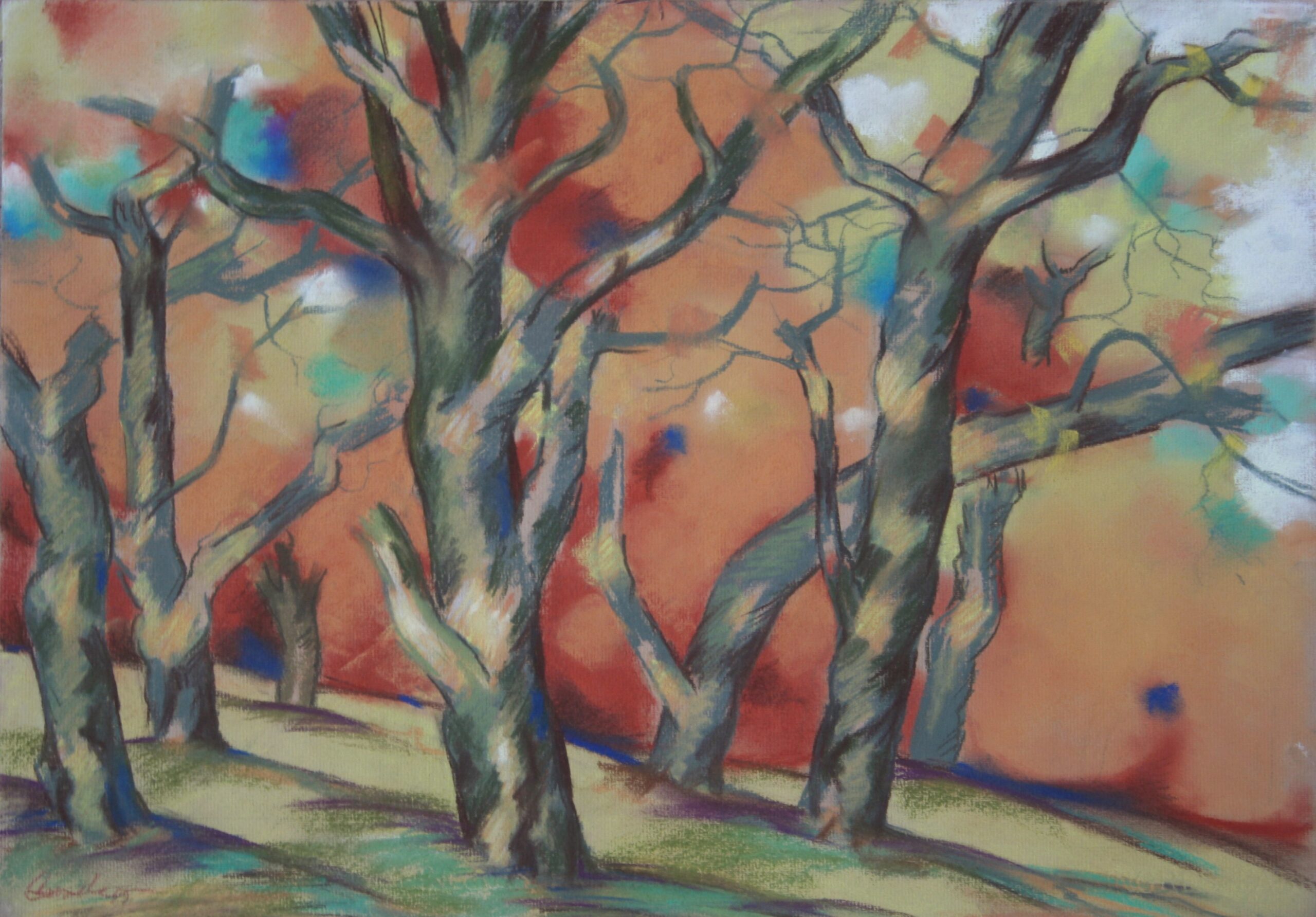
În lucrările dedicate arborilor, limbajul plastic devine mai liber și mai expresiv. Trunchiurile puternice și ramurile contorsionate organizează suprafața asemenea unor structuri vii, iar petele de culoare se desprind treptat de realitate. Dacă primul arbore pare absorbit într-o liniște aproape misterioasă, în celelalte pasteluri, natura izbucnește într-o intensitate cromatică neașteptată: roșurile, albastrurile și verzurile transformă pădurea într-un spectacol interior, vibrant și neliniștit. Prin delicatețea materiei, subtilitatea trecerilor de culoare și siguranța construcției, aceste pasteluri dezvăluie o latură profund poetică a creației lui Constantin Canache. Dincolo de subiectul aparent simplu, ele vorbesc despre timp, singurătate și permanența naturii, demonstrând capacitatea artistului de a face din peisaj expresia unei trăiri interioare.
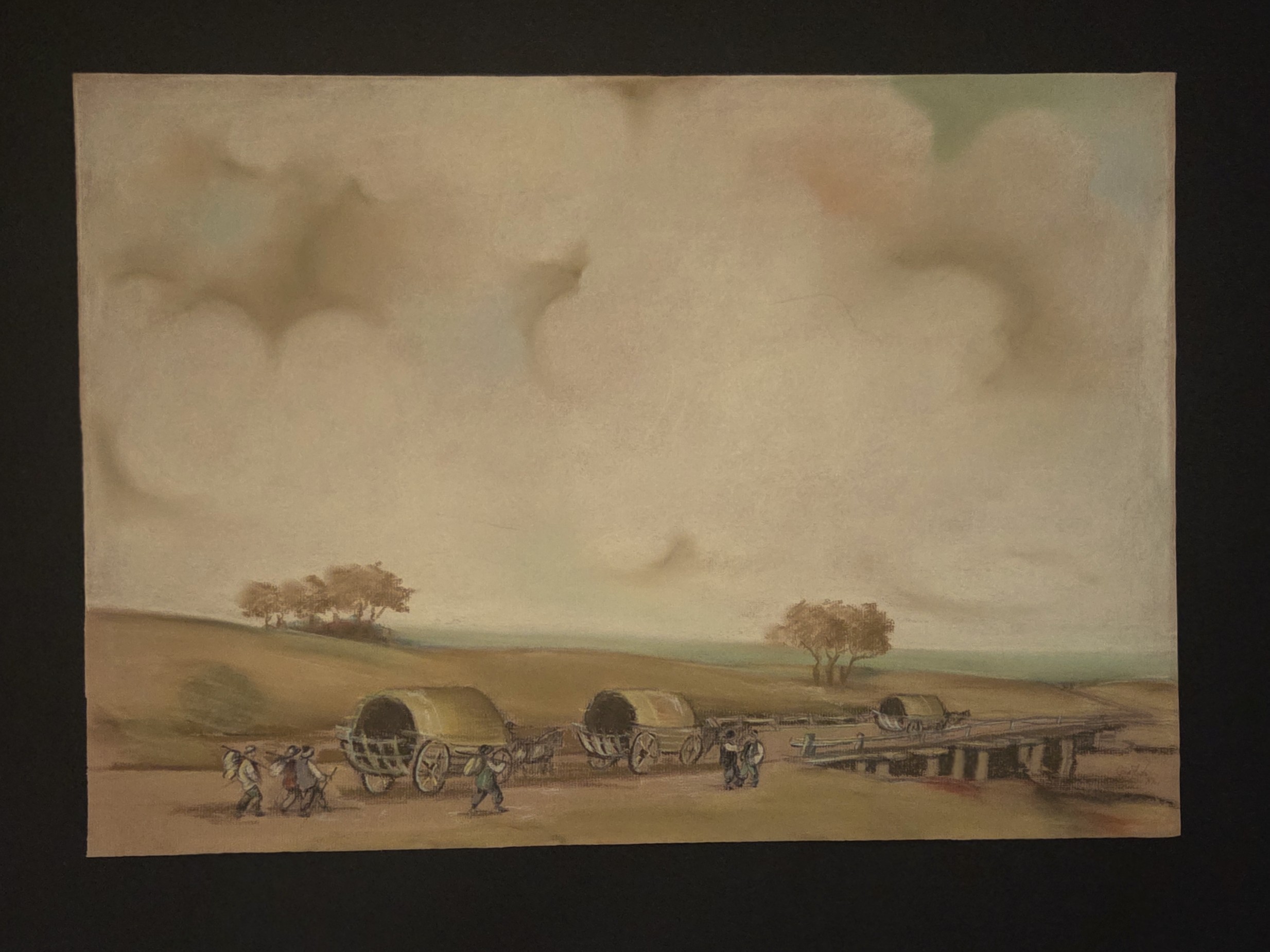
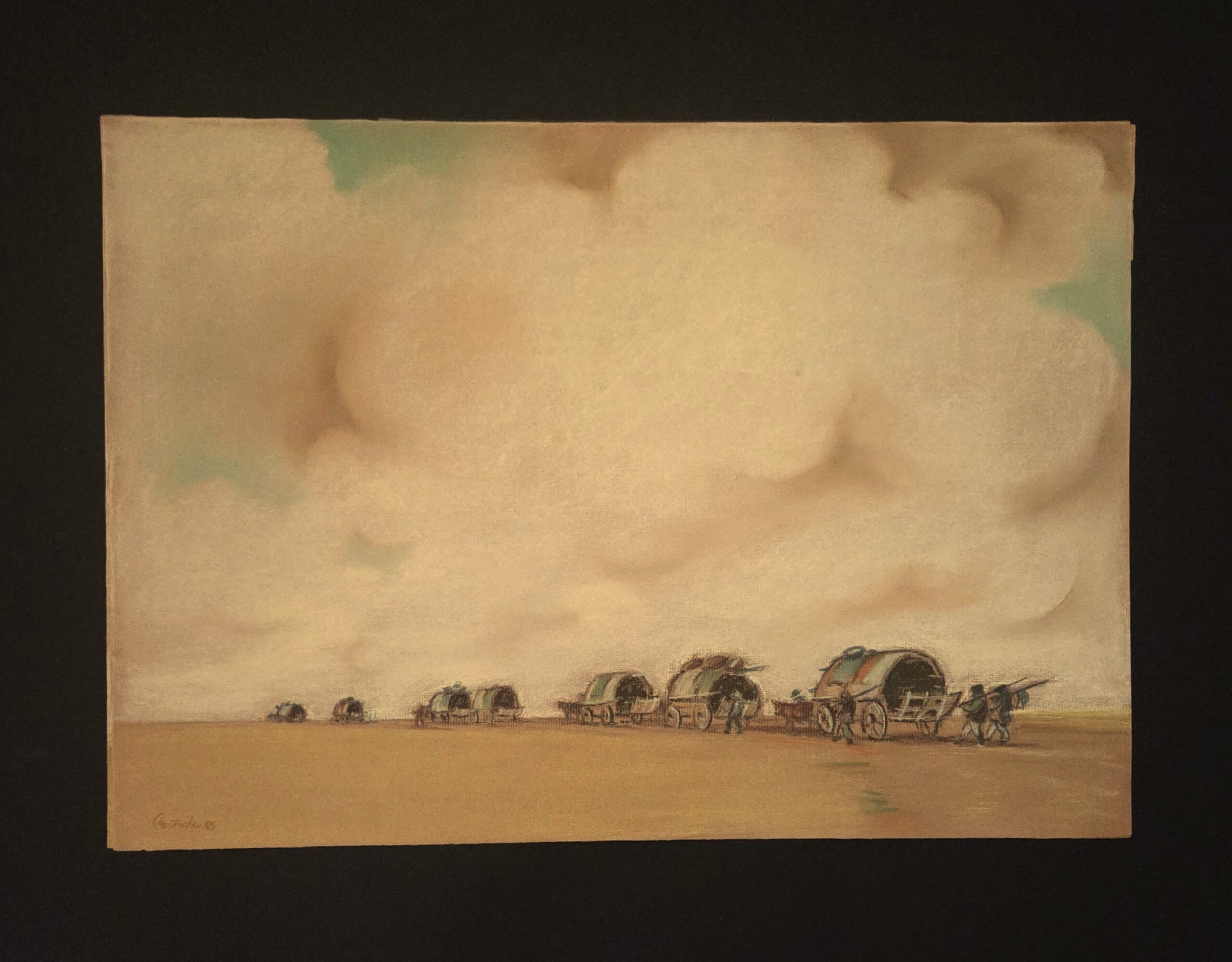
Un motiv aparte îl constituie convoiul de căruțe. Așezate la limita dintre pământ și cer, caruțele și micile siluete umane alcătuiesc o procesiune tăcută, cu ecouri arhaice. Ele par să înainteze nu doar printr-un spațiu geografic, ci și prin timp. Repetarea formelor creează ritmul lent al unei călătorii apăsătoare, iar dimensiunea redusă a oamenilor în raport cu vastitatea cerului accentuează fragilitatea existenței umane. Cerul domină compozițiile prin mase ample, aproape sculpturale, de nori. Tonurile de ocru, brun, cenușiu și verde pal conferă imaginilor o atmosferă stinsă, melancolică. Într-una dintre lucrări, podul introduce ideea trecerii și a pragului, amplificând simbolismul călătoriei; în cealaltă, șirul căruțelor se pierde spre orizont, sugerând continuitatea, migrația și un drum fără sfârșit. Prin delicatețea pastelului și economia mijloacelor plastice, Constantin Canache transformă scenele rurale în imagini cu valoare universală. Dincolo de evocarea unei lumi tradiționale, aceste lucrări vorbesc despre om aflat în fața imensității, despre povara drumului și despre mersul neîntrerupt al vieții. Este un ciclu de o remarcabilă coerență poetică, în care peisajul devine expresia unei memorii profunde și a unei nostalgii fără sentimentalism.
*****************************************************************************************************************************************************
In these pastels, Constantin Canache transforms the landscape into a space of memory and contemplation. Nature is not rendered descriptively, with the aim of faithful reproduction, but is filtered through the artist’s sensitivity and recomposed into chromatic harmonies, rhythms, and emotional states. The rural landscapes are distinguished by their broad expanses, low horizons, and skies that occupy a large part of the composition. Human figures, carts, and vegetation are reduced to discreet yet meaningful presences. They evoke a world of journeys, work, and the profound bond between people and the land. The palette, dominated by ochres, grey tones, and muted greens, envelops the scenes in a melancholy light, evoking the atmosphere of a memory.In the works devoted to trees, the visual language becomes freer and more expressive. Powerful trunks and contorted branches organise the pictorial surface like living structures, while patches of colour gradually detach themselves from reality. While the first tree seems absorbed in an almost mysterious stillness, in the other pastels nature erupts with an unexpected chromatic intensity: reds, blues, and greens transform the forest into an inner spectacle, vibrant and restless. Through the delicacy of the medium, the subtlety of colour transitions, and the assurance of their construction, these pastels reveal a profoundly poetic aspect of Constantin Canache’s work. Beyond their seemingly simple subject matter, they speak of time, solitude, and the permanence of nature, demonstrating the artist’s ability to make the landscape an expression of an inner experience. A distinctive motif is the convoy of carts. Positioned at the boundary between earth and sky, the carts and small human figures form a silent procession with archaic echoes. They seem to advance not only through geographical space, but also through time. The repetition of forms creates the slow rhythm of an arduous journey, while the small scale of the people in relation to the vastness of the sky emphasises the fragility of human existence. The sky dominates the compositions through broad, almost sculptural masses of cloud. Tones of ochre, brown, grey, and pale green lend the images a subdued, melancholy atmosphere. In one of the works, the bridge introduces the idea of passage and threshold, heightening the symbolism of the journey; in the other, the line of carts recedes towards the horizon, suggesting continuity, migration, and an endless road. Through the delicacy of pastel and an economy of visual means, Constantin Canache transforms rural scenes into images of universal significance. Beyond evoking a traditional world, these works speak of humanity confronted with immensity, of the burden of the journey, and of the uninterrupted course of life. This is a series of remarkable poetic coherence, in which the landscape becomes the expression of a deep memory and a nostalgia free of sentimentalism.
Pasteluri – impresii de călătorie
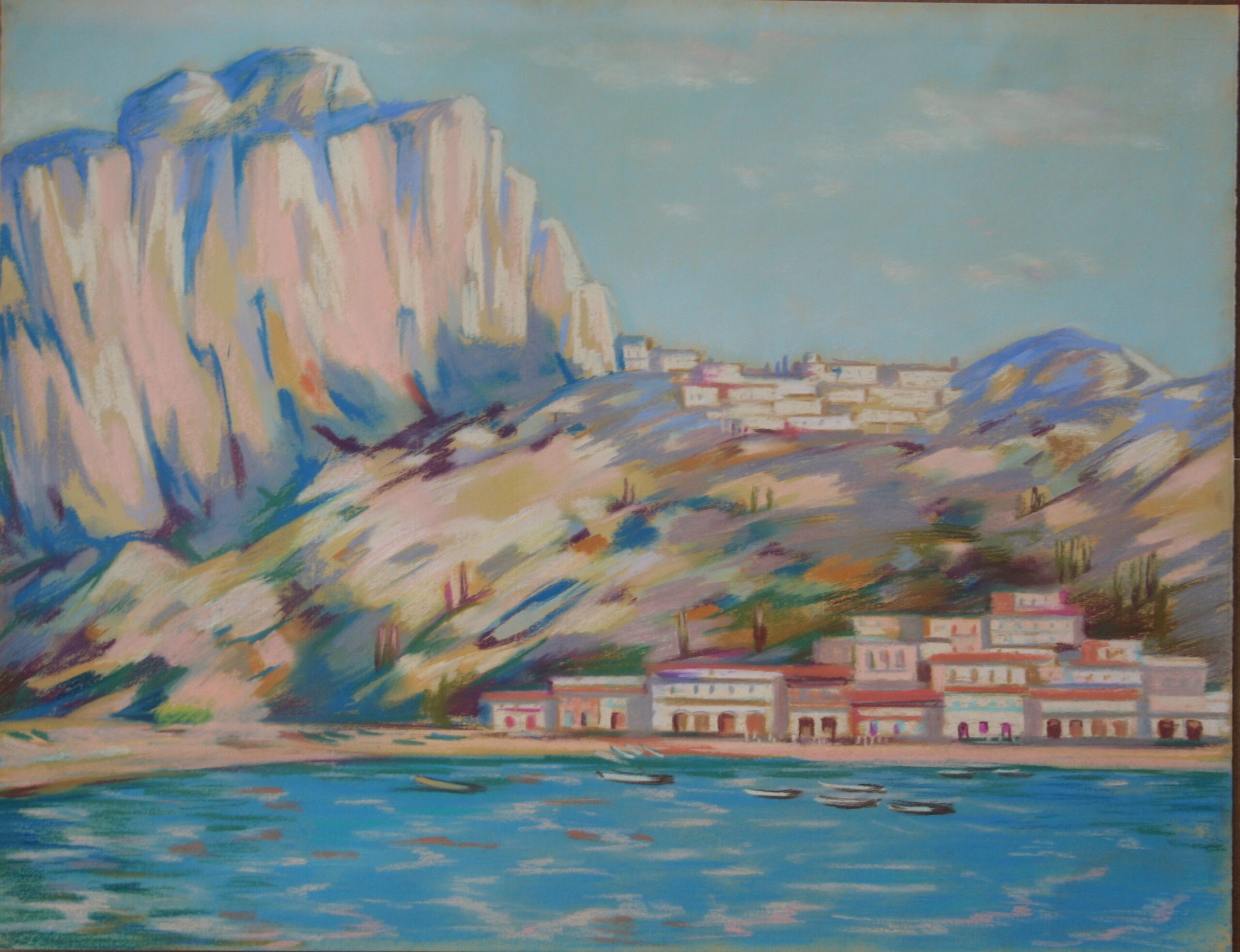
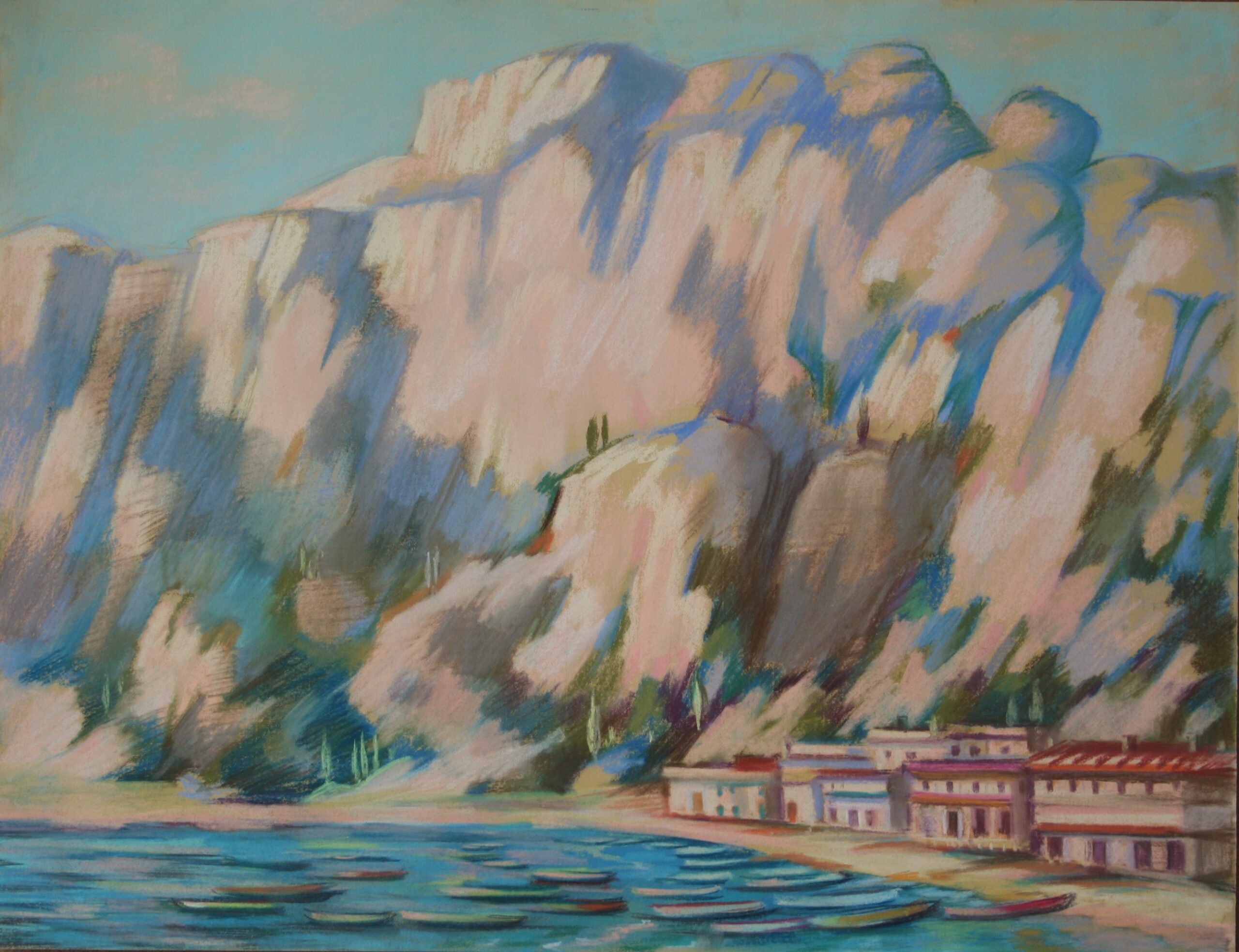
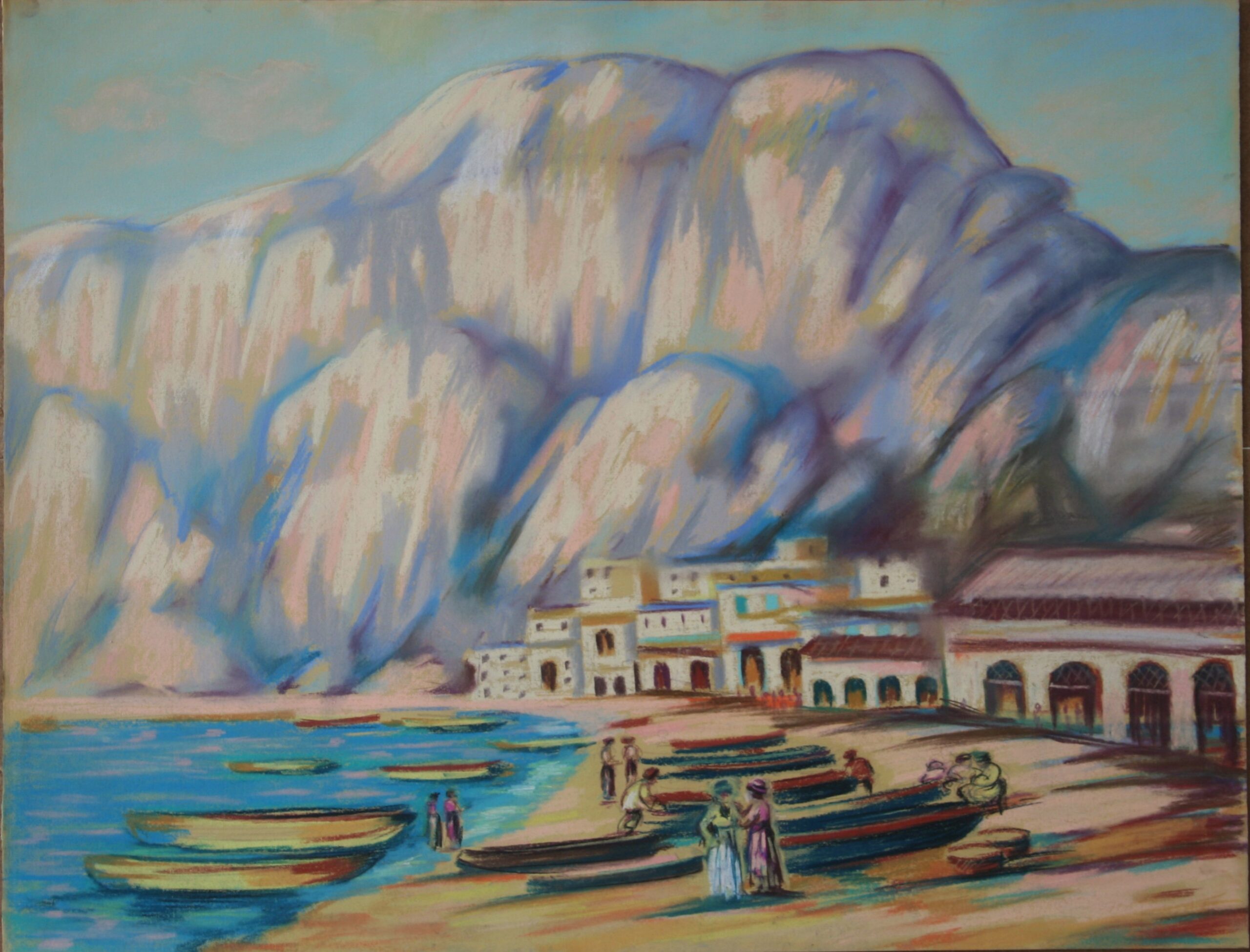
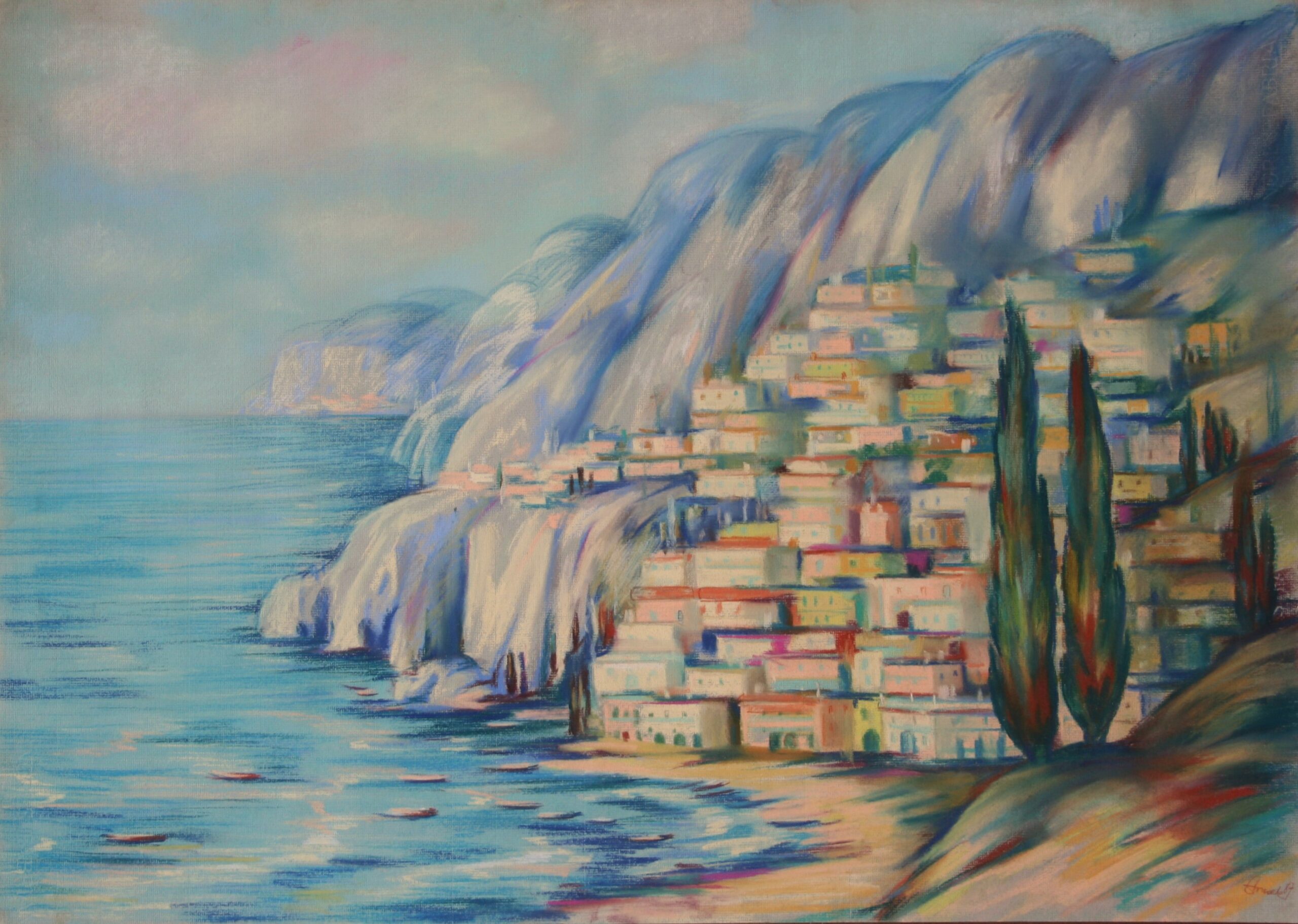
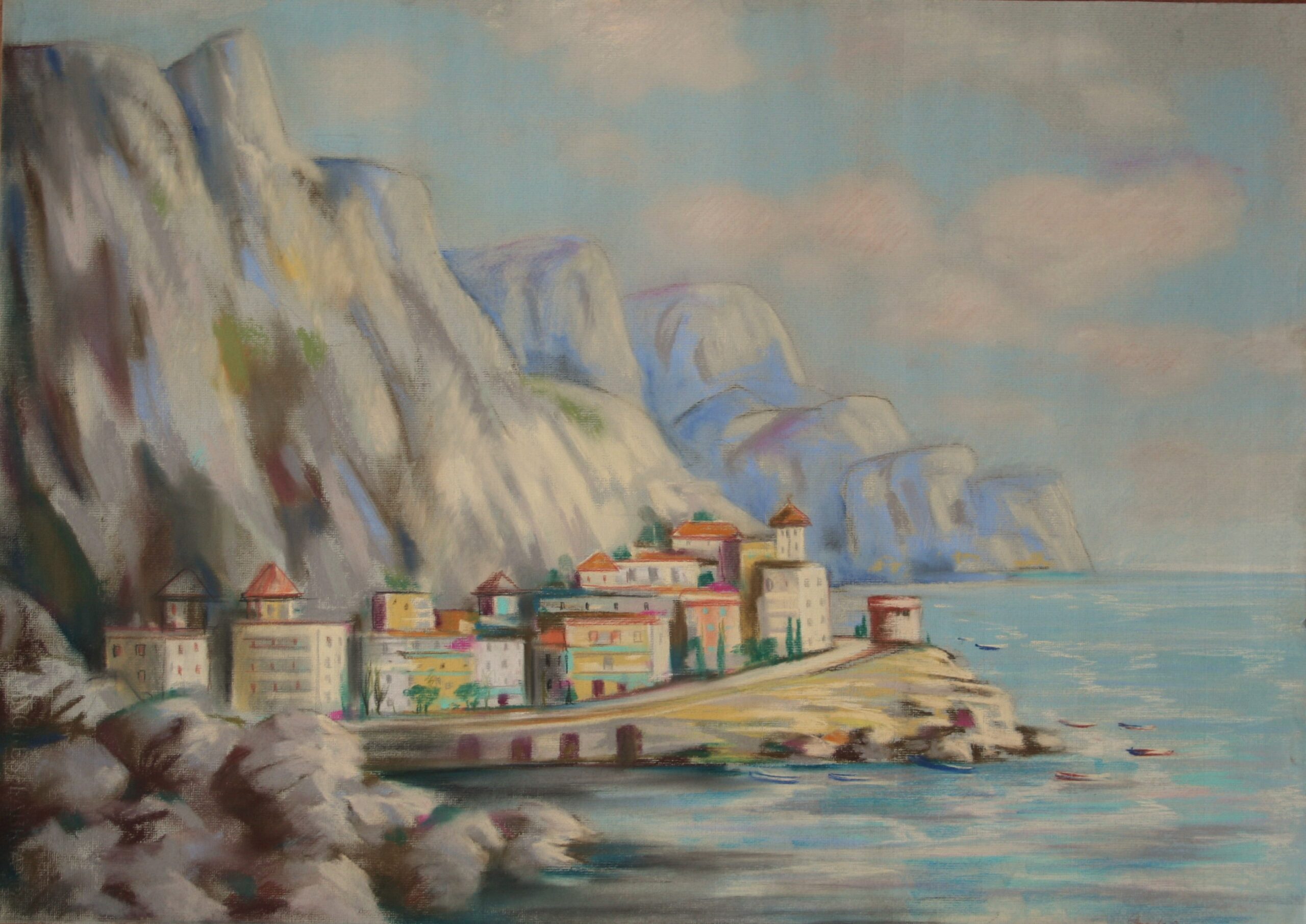
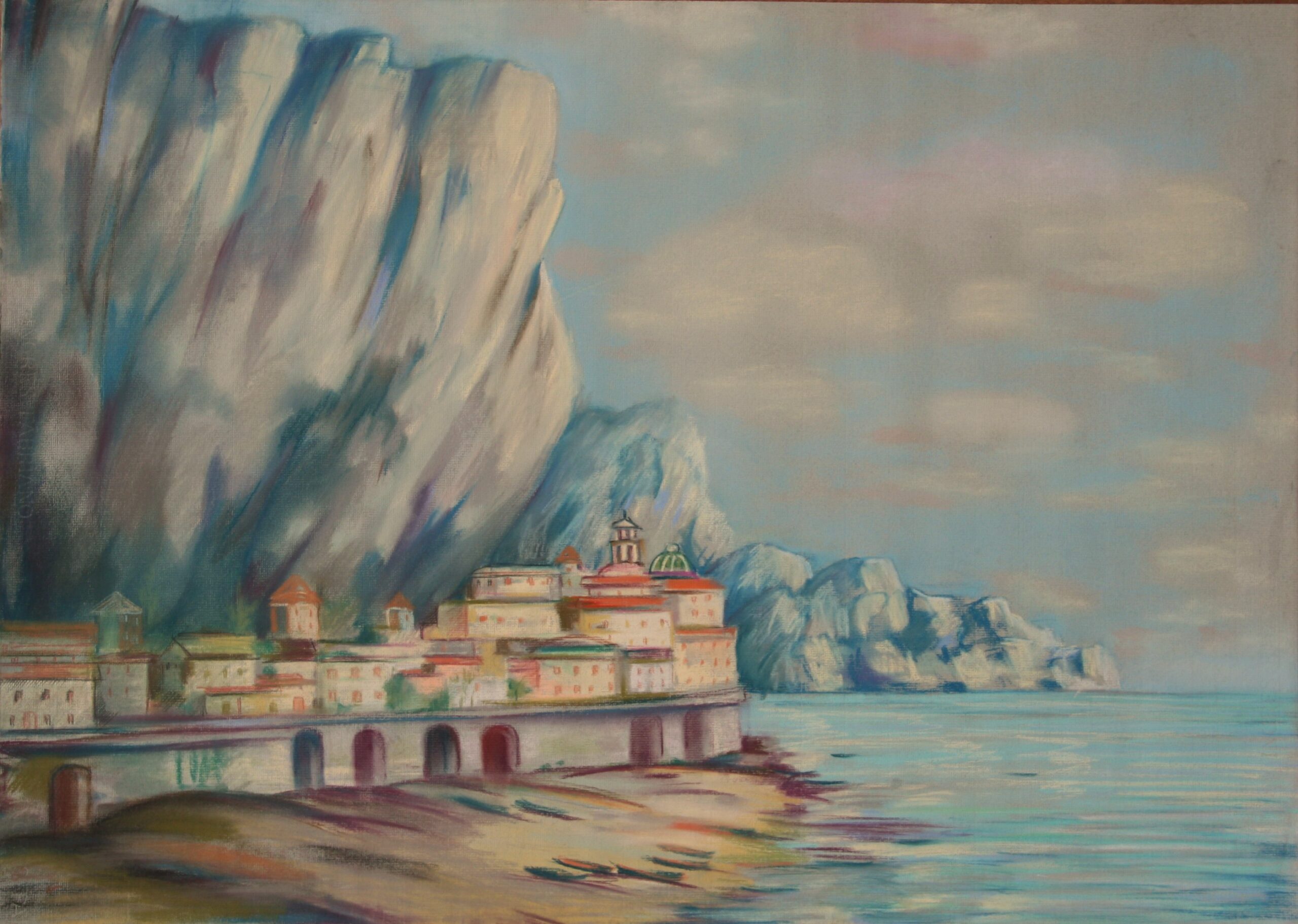
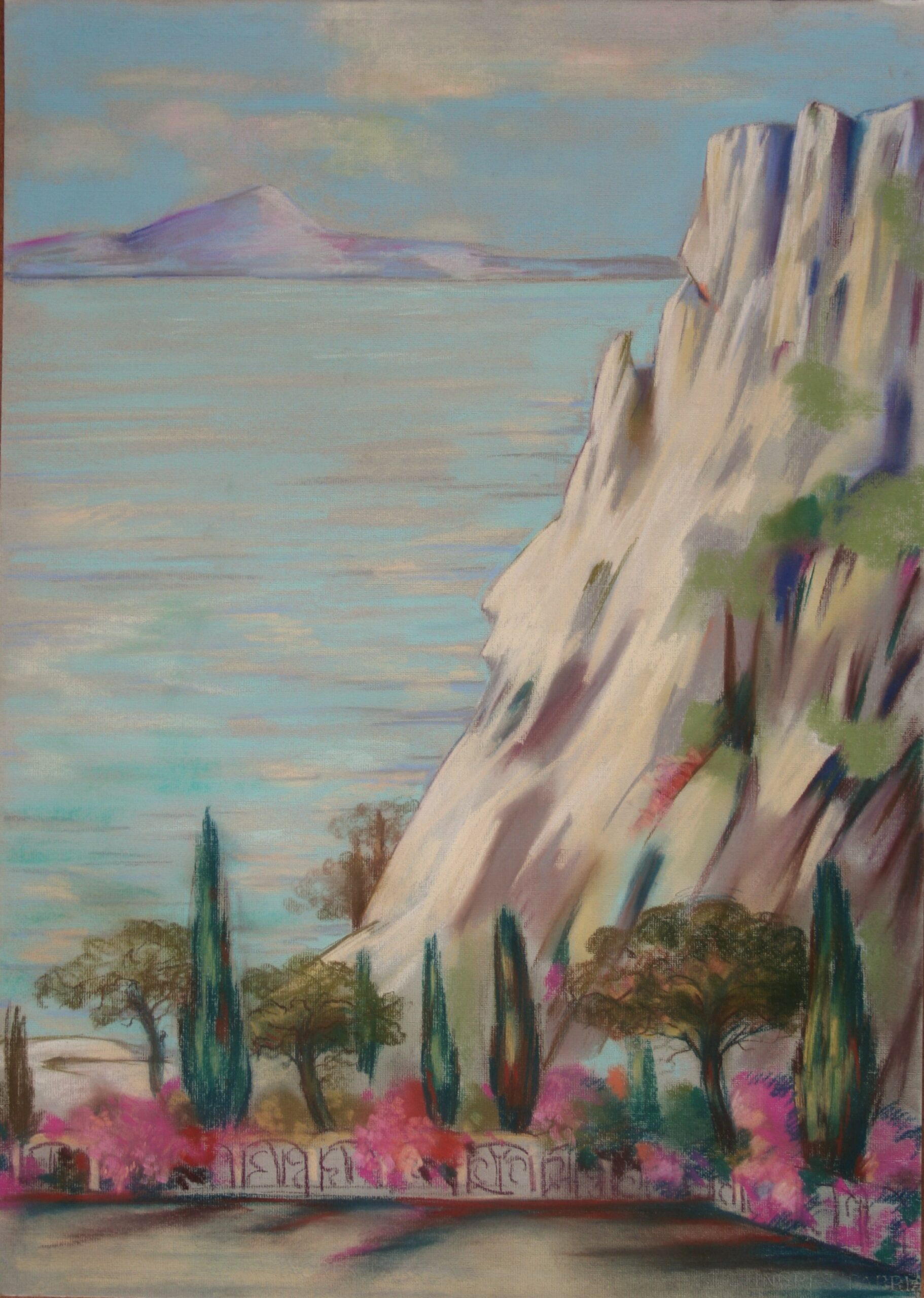
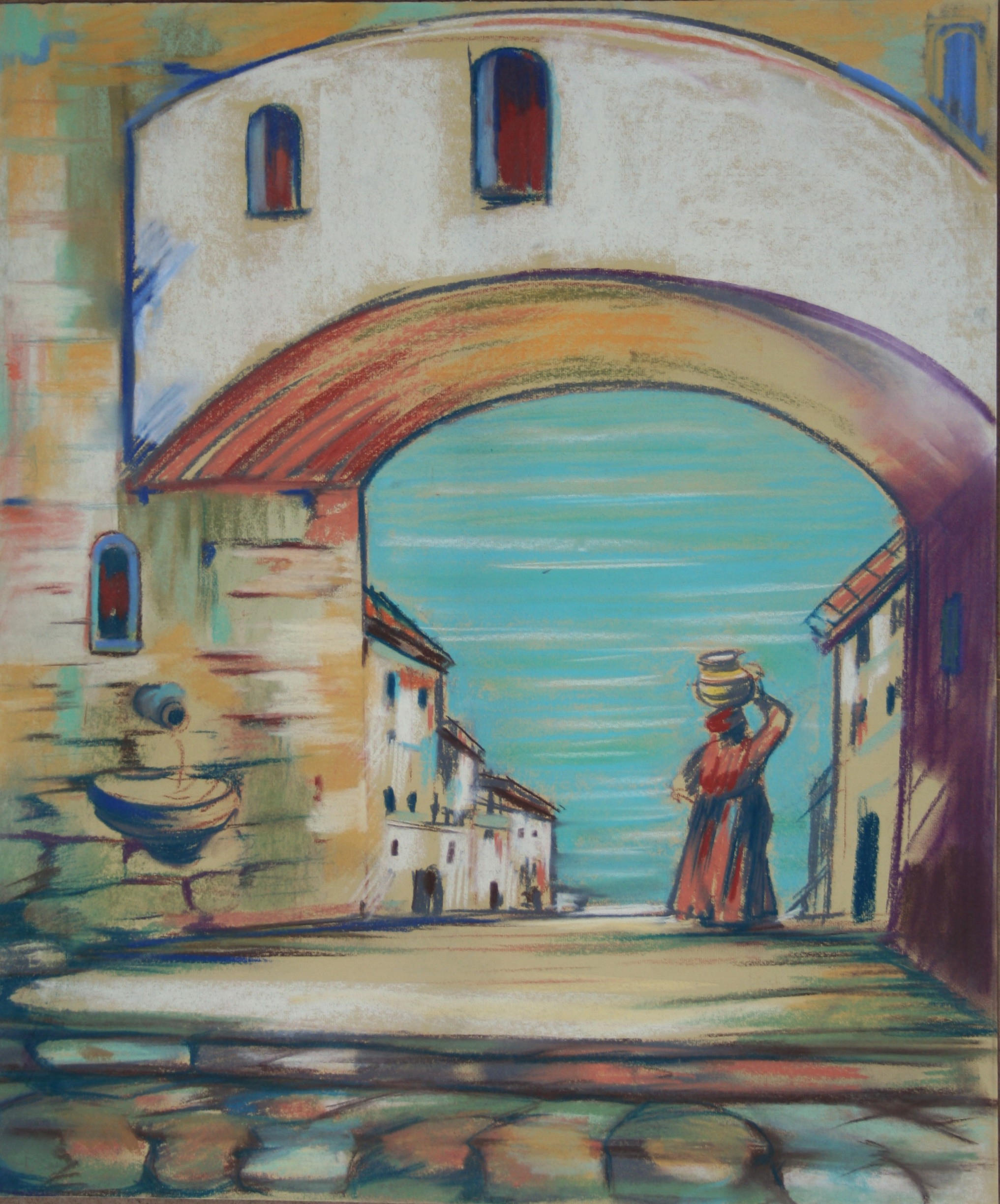
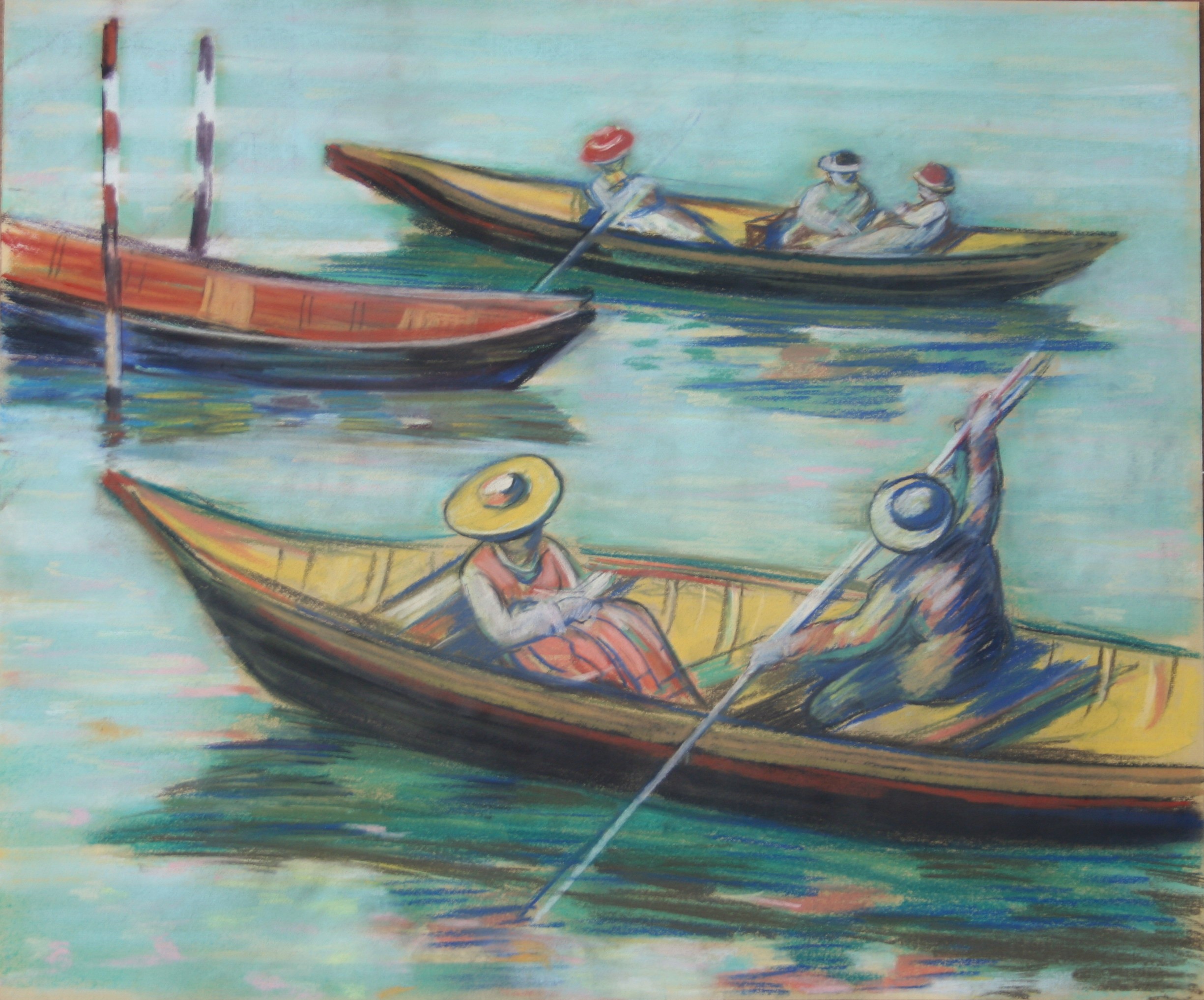
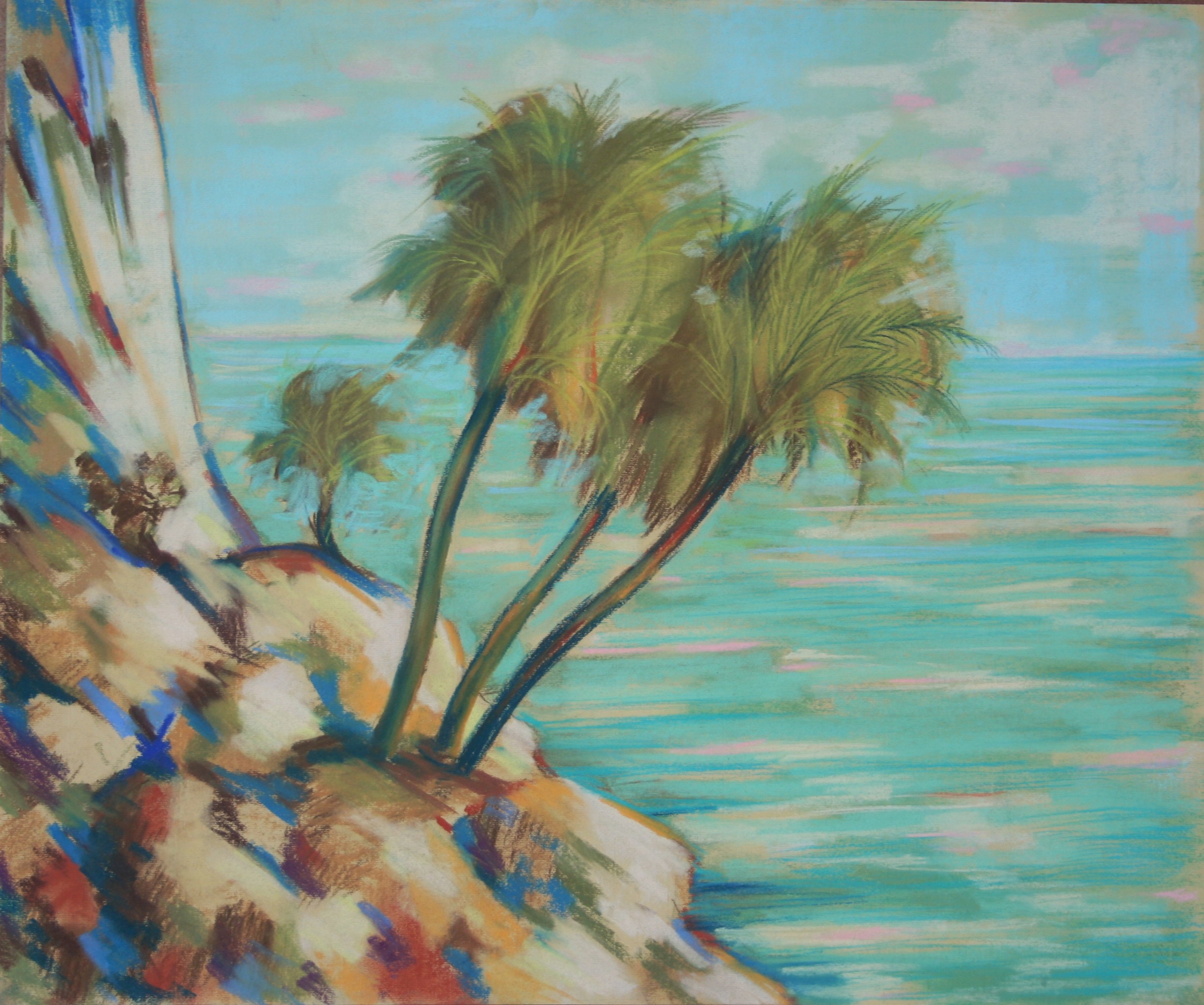
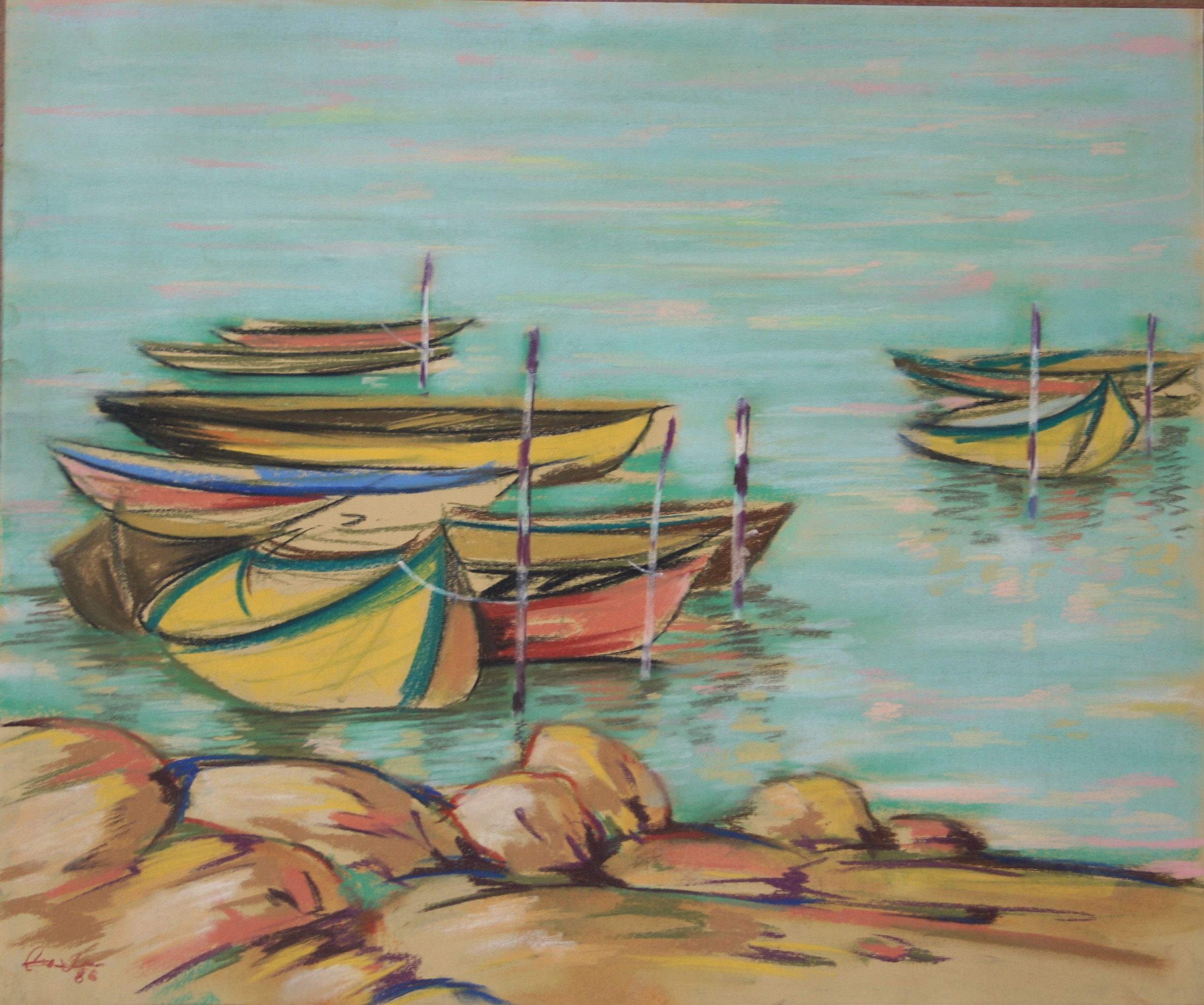
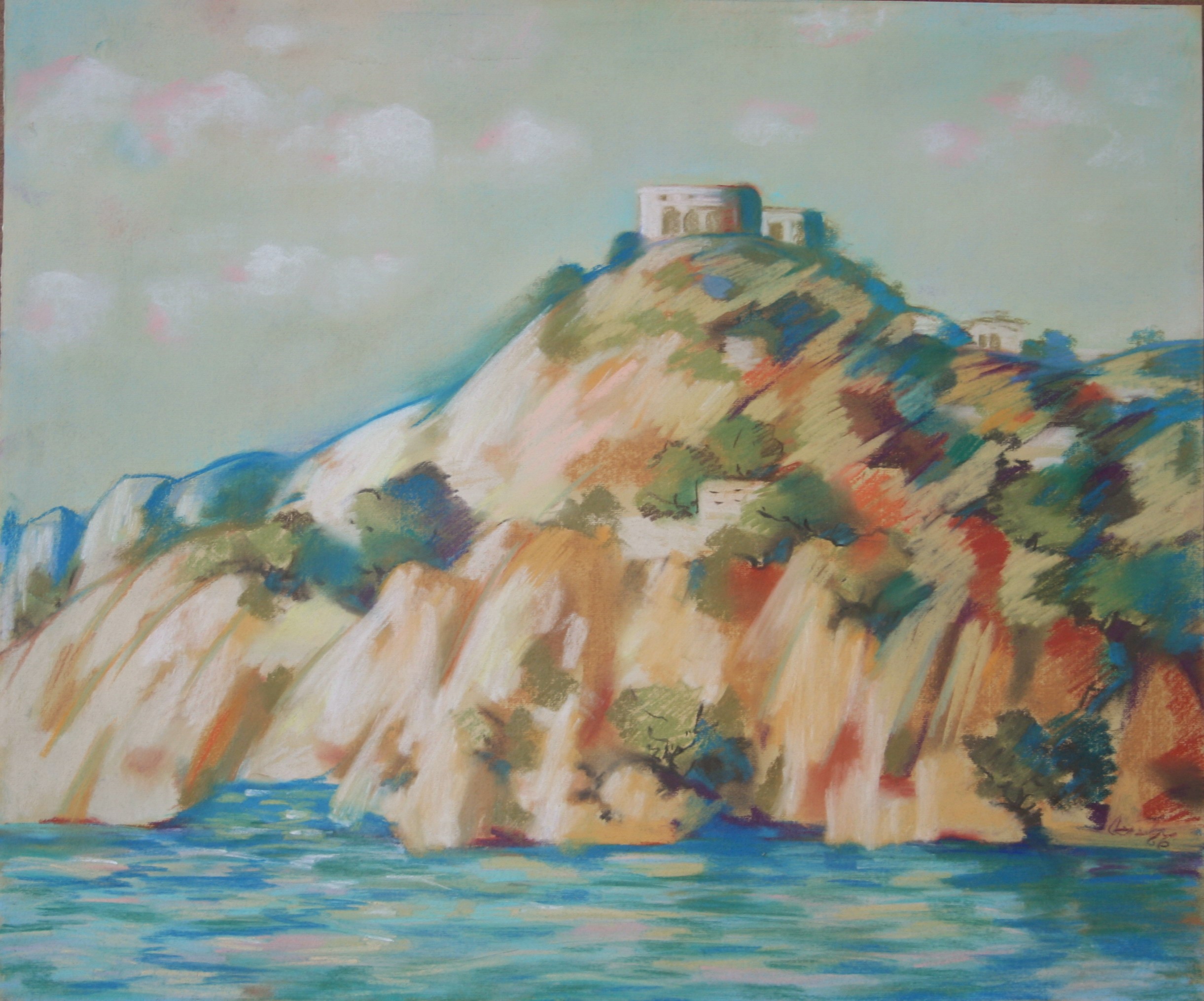
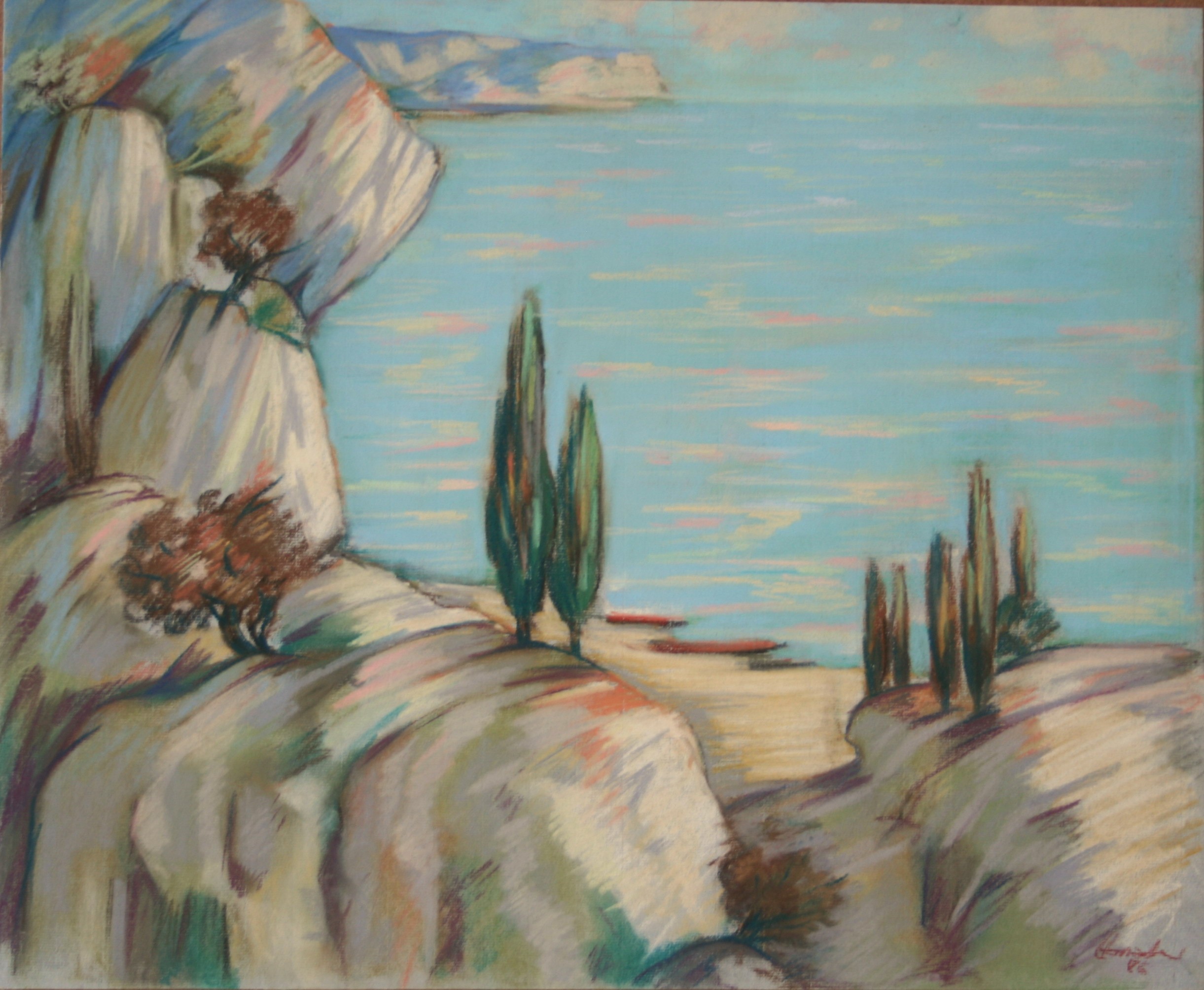
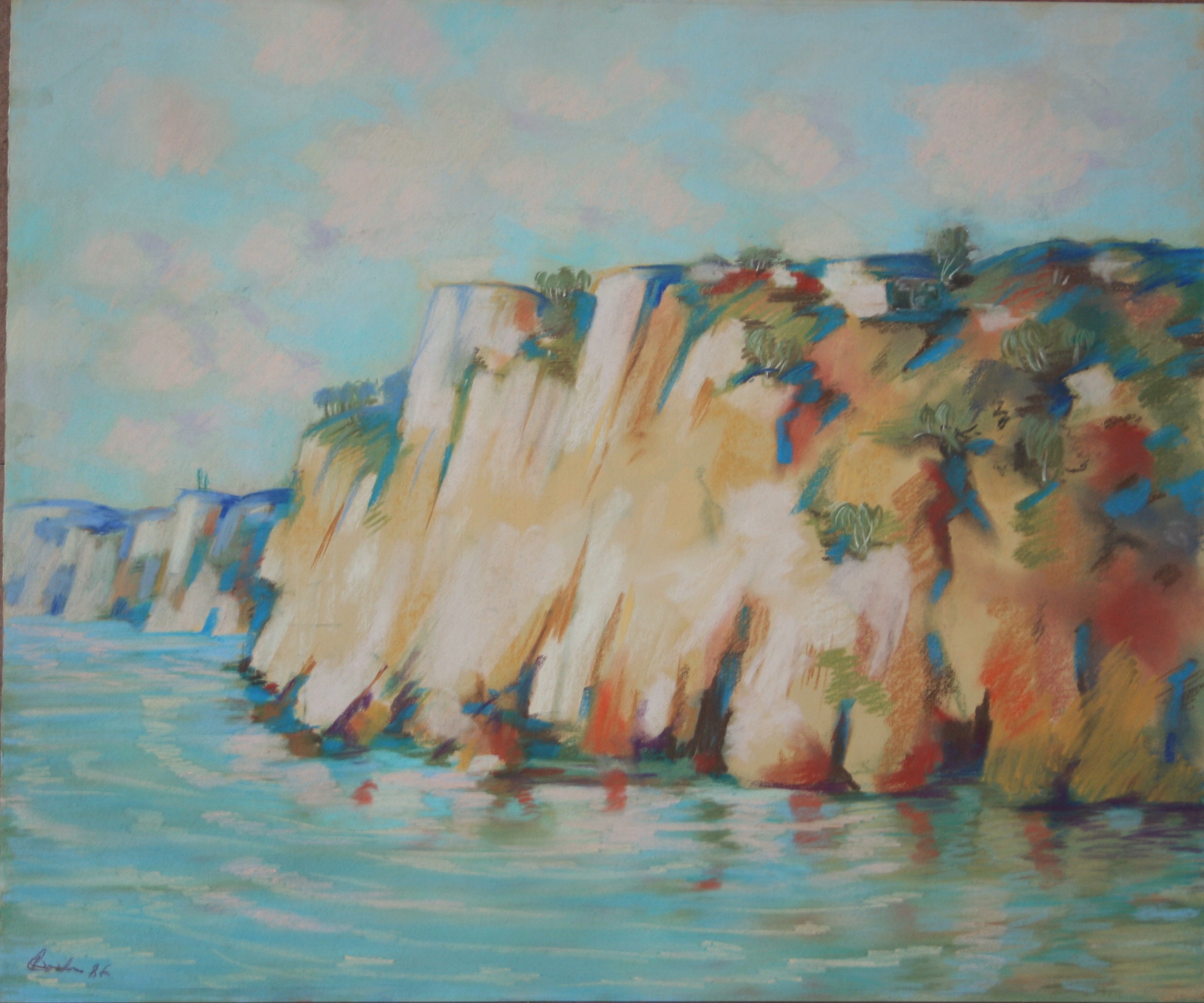
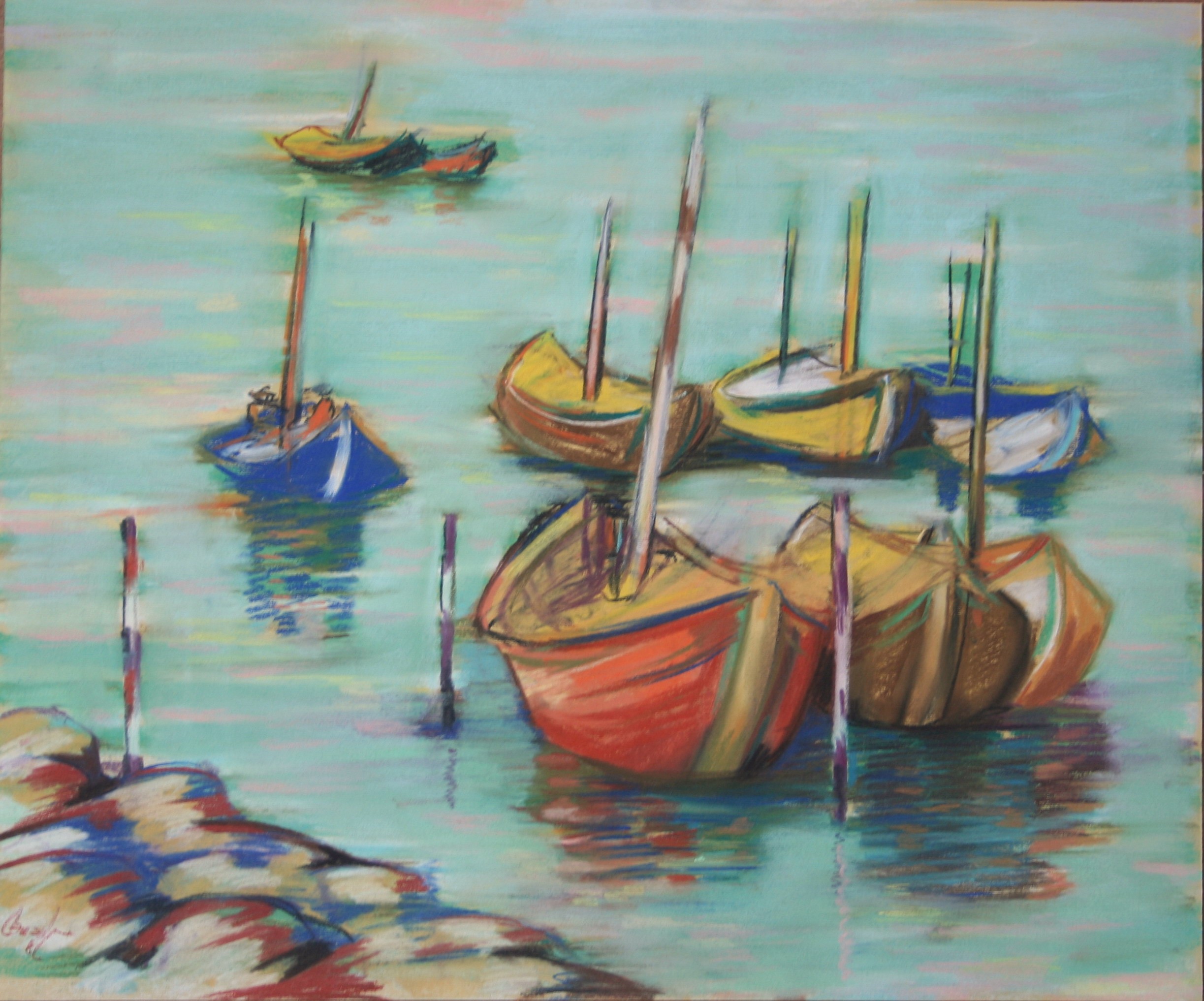
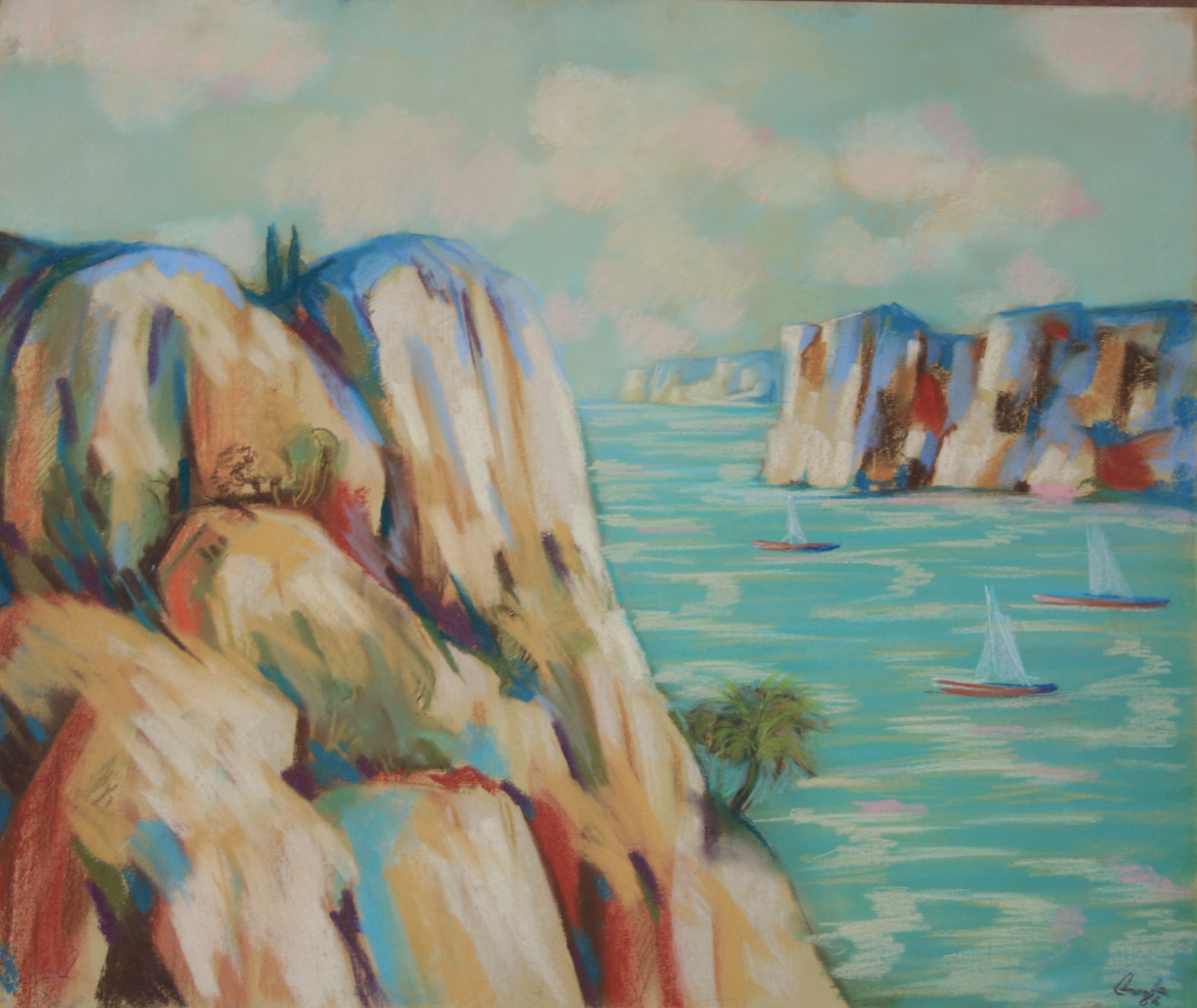
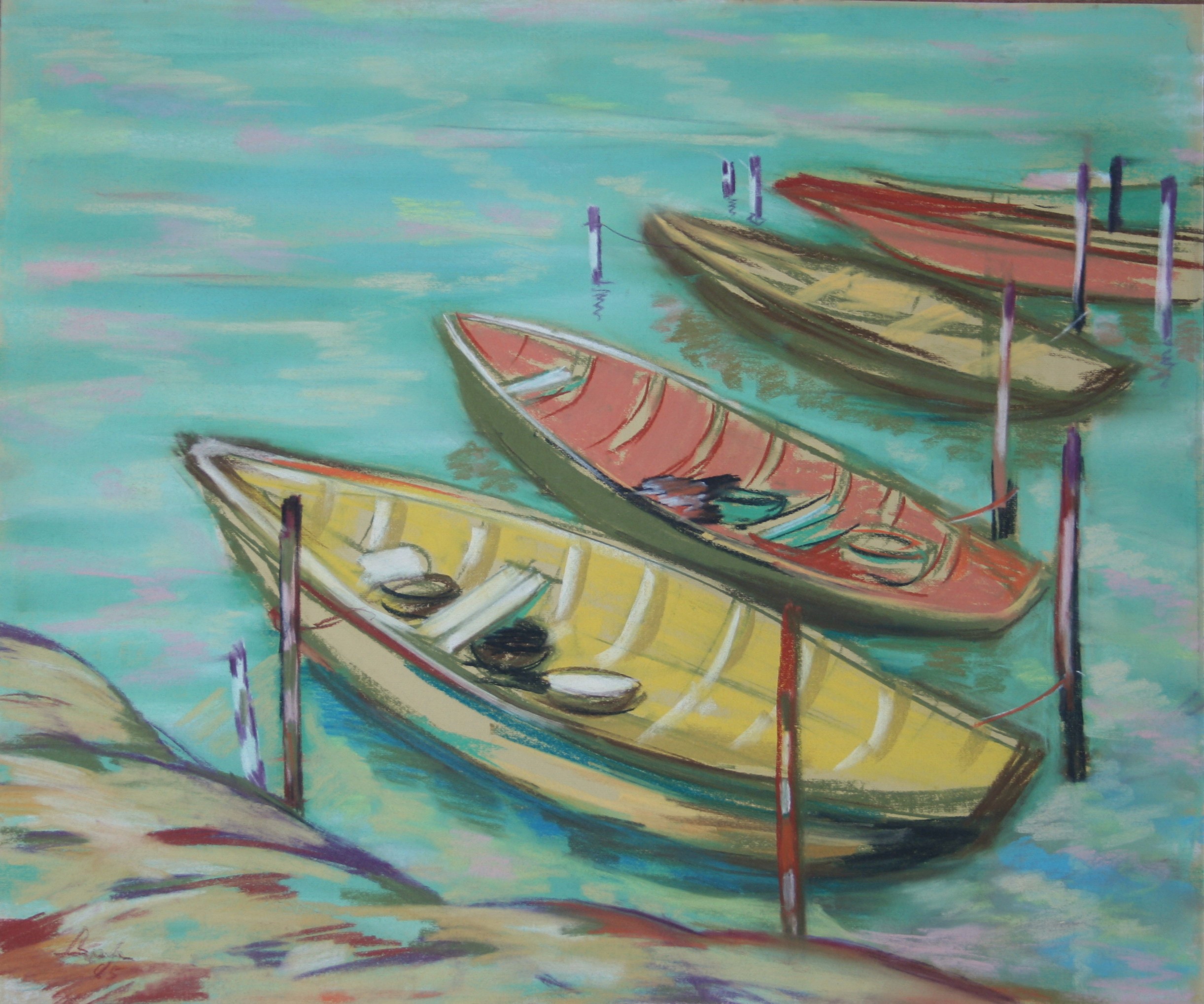
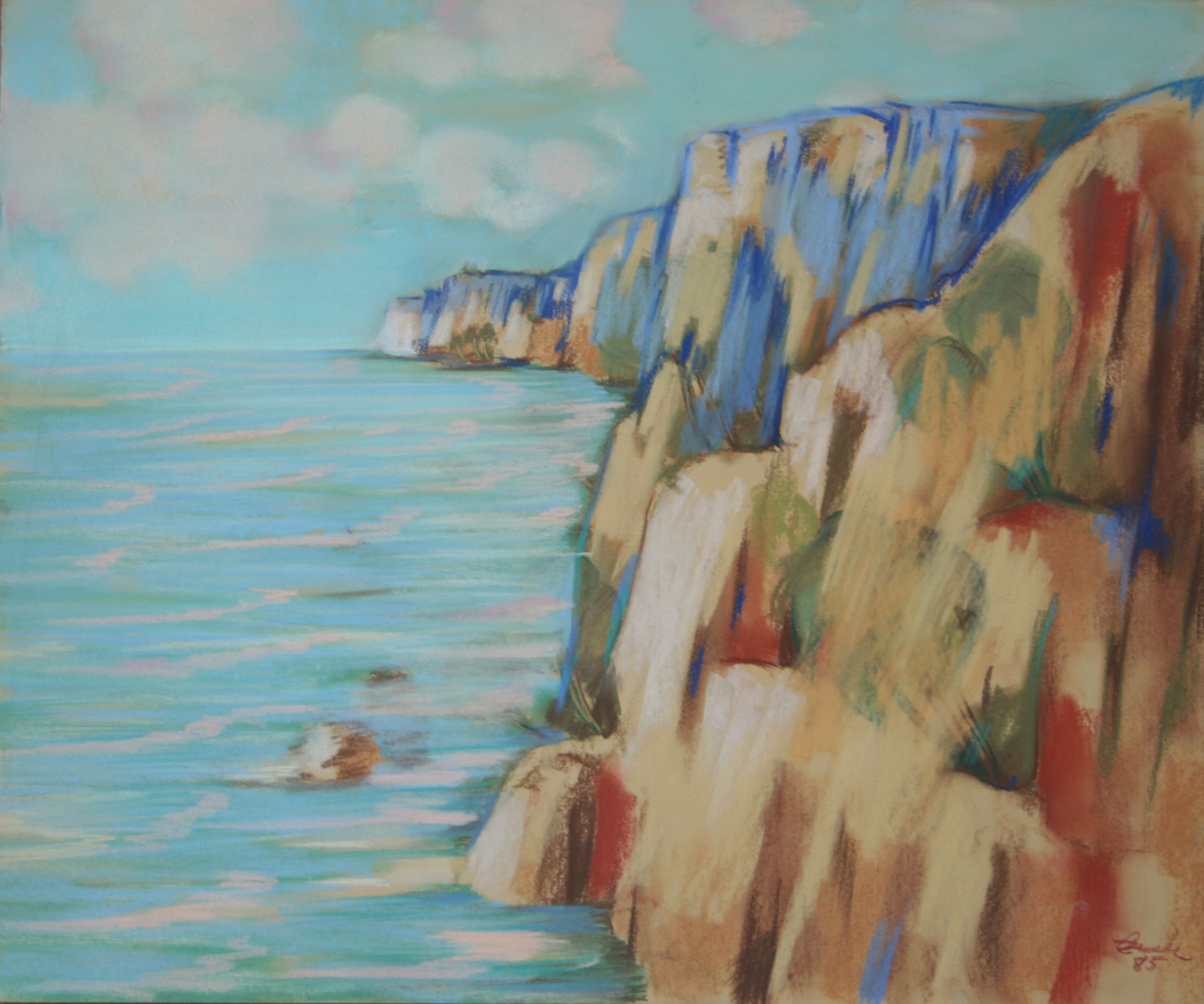
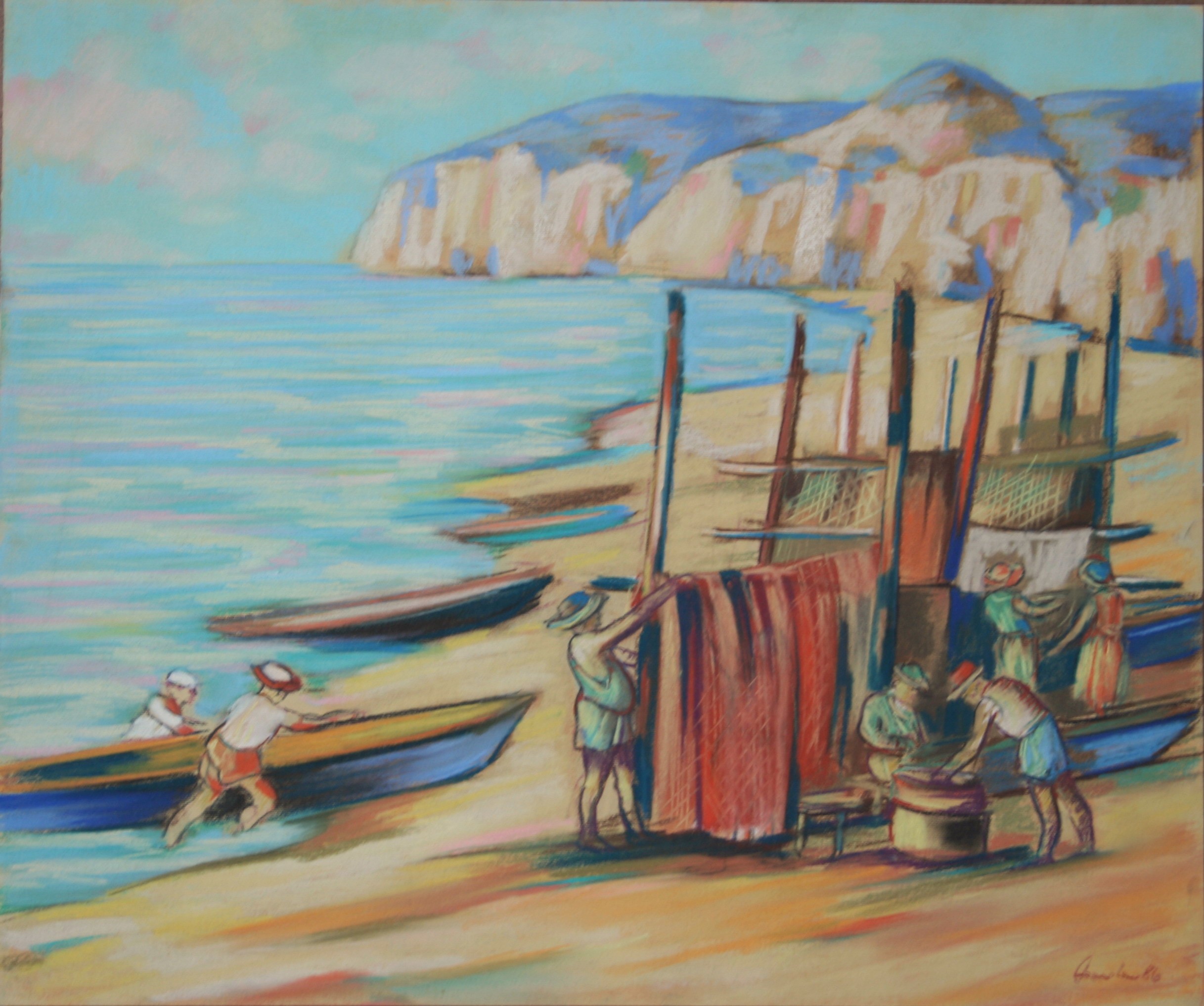
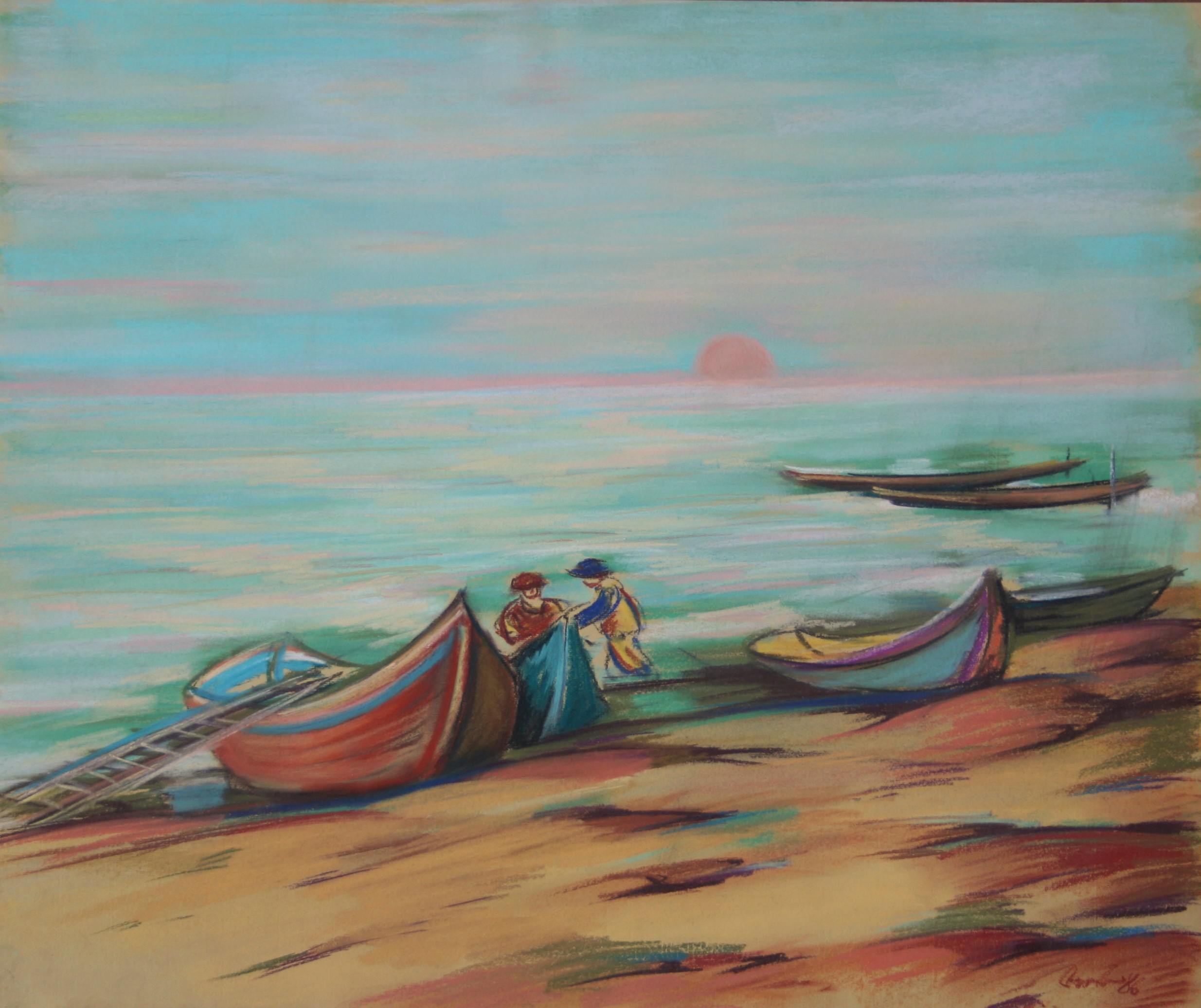
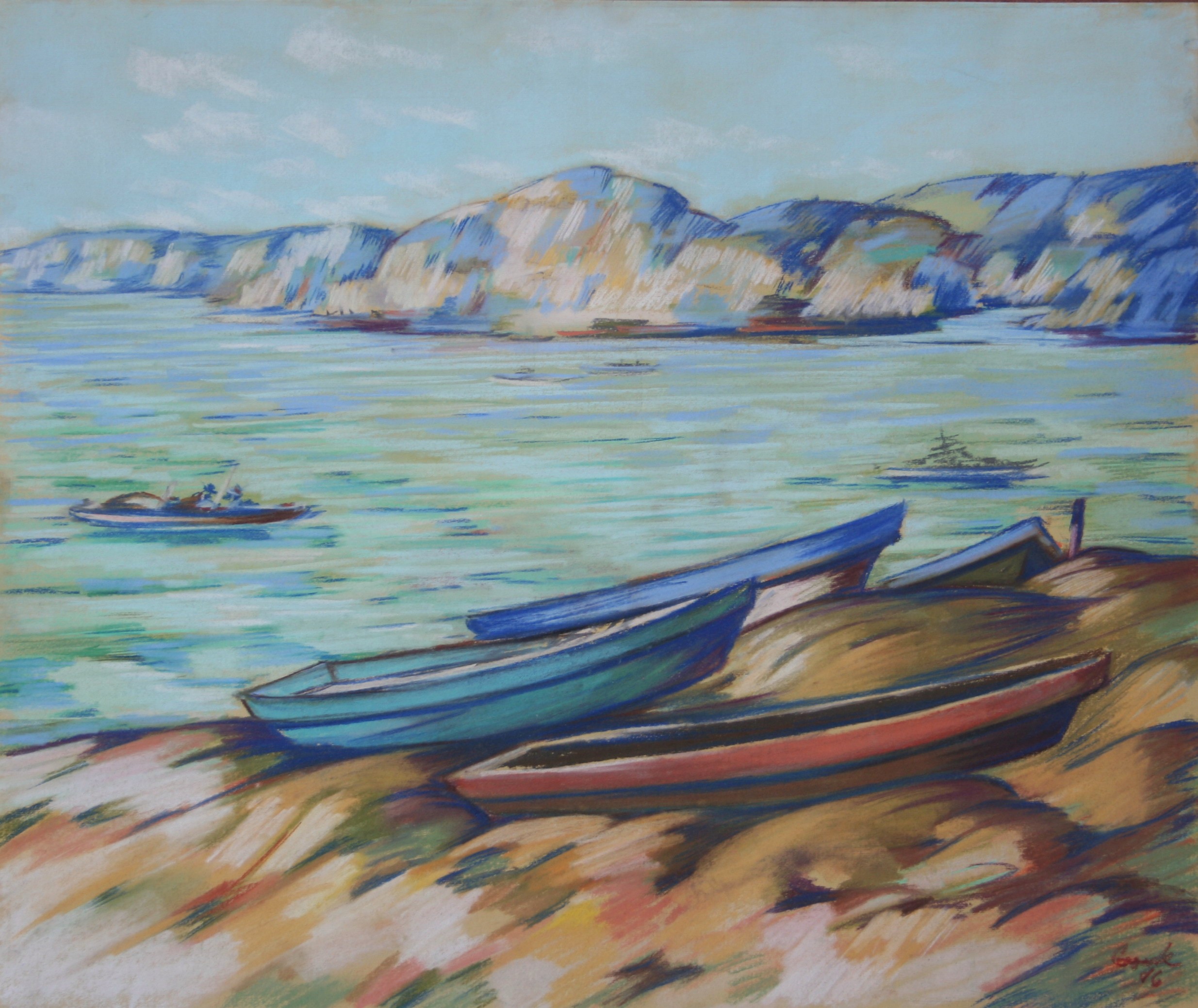
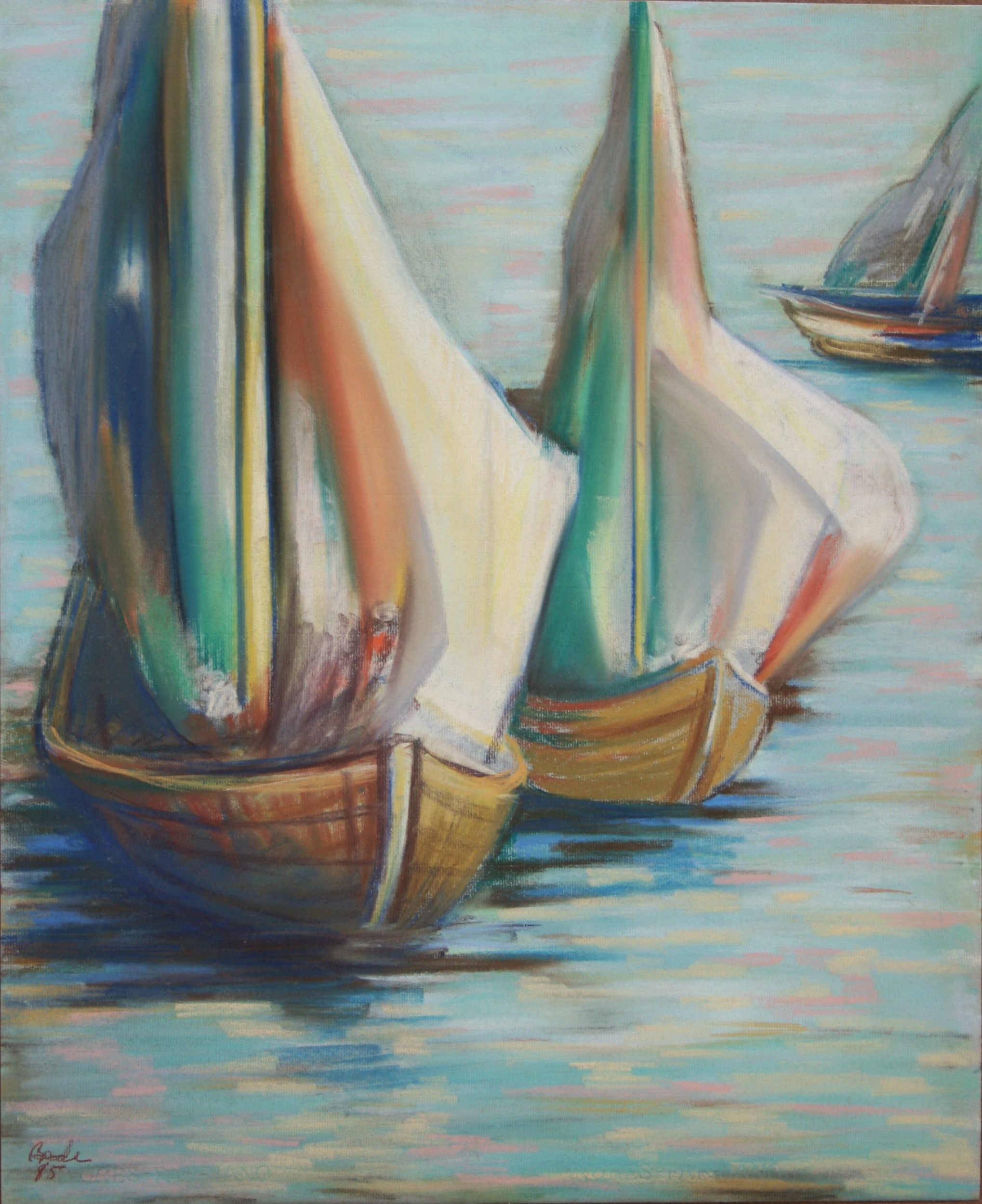
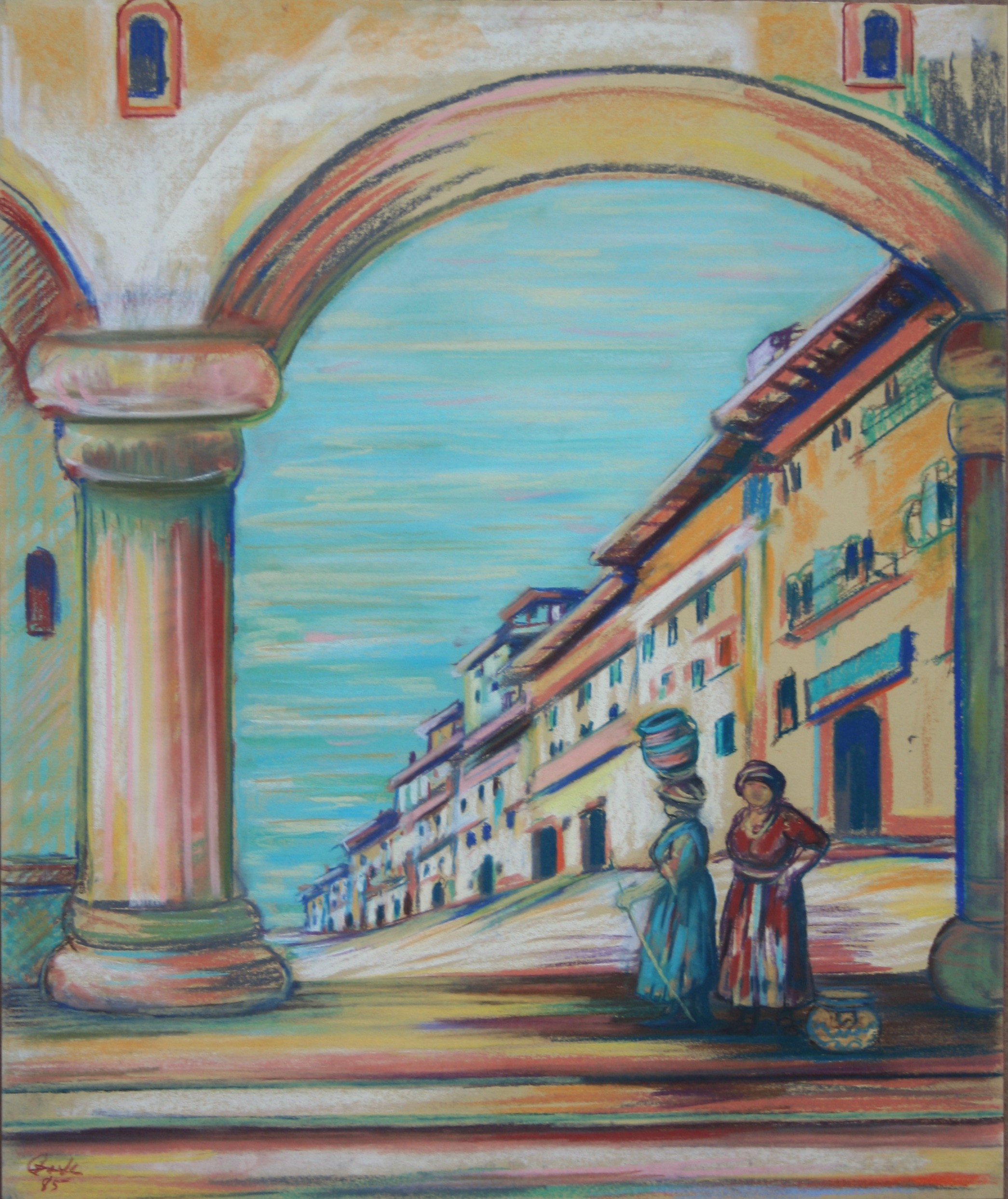
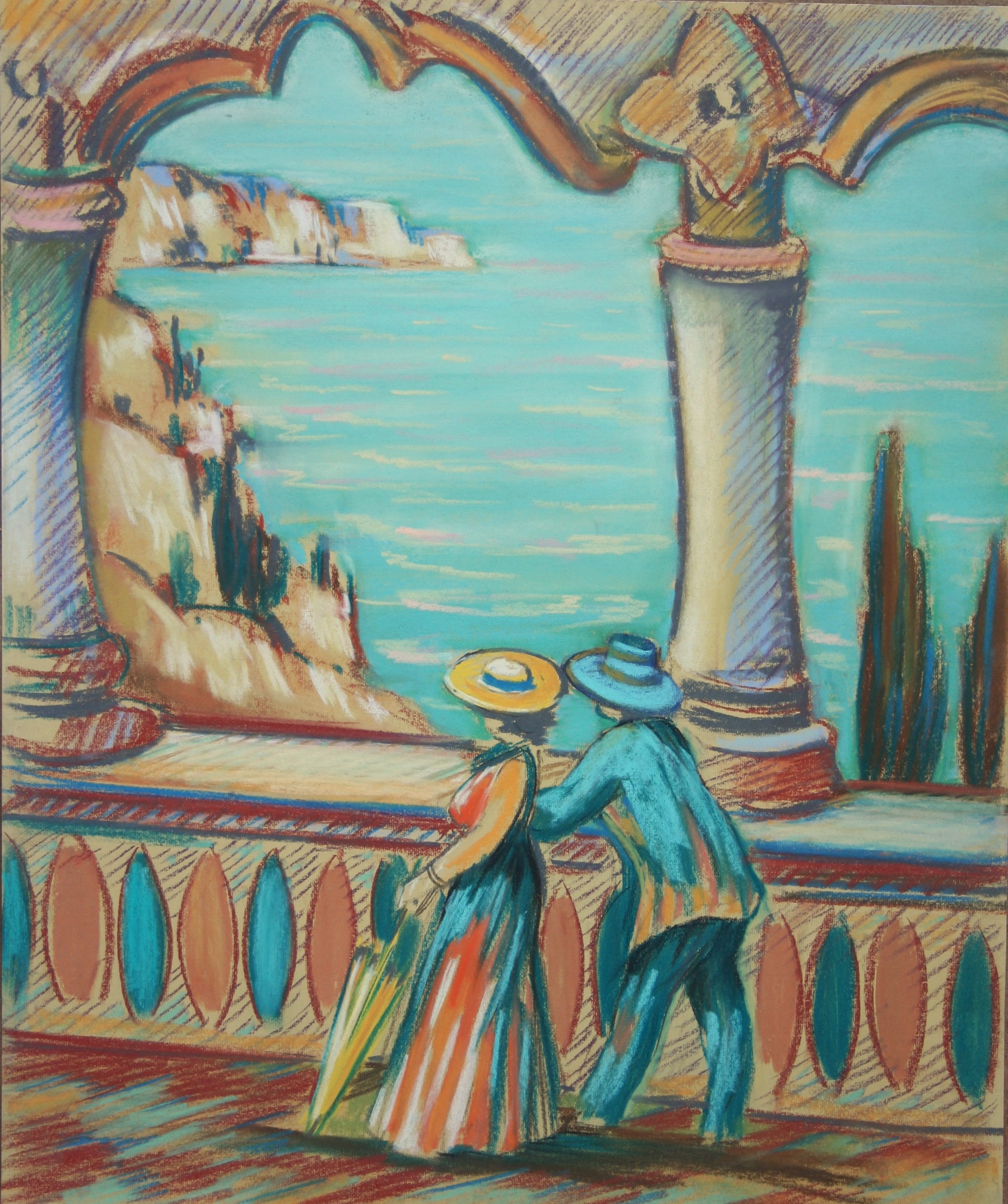
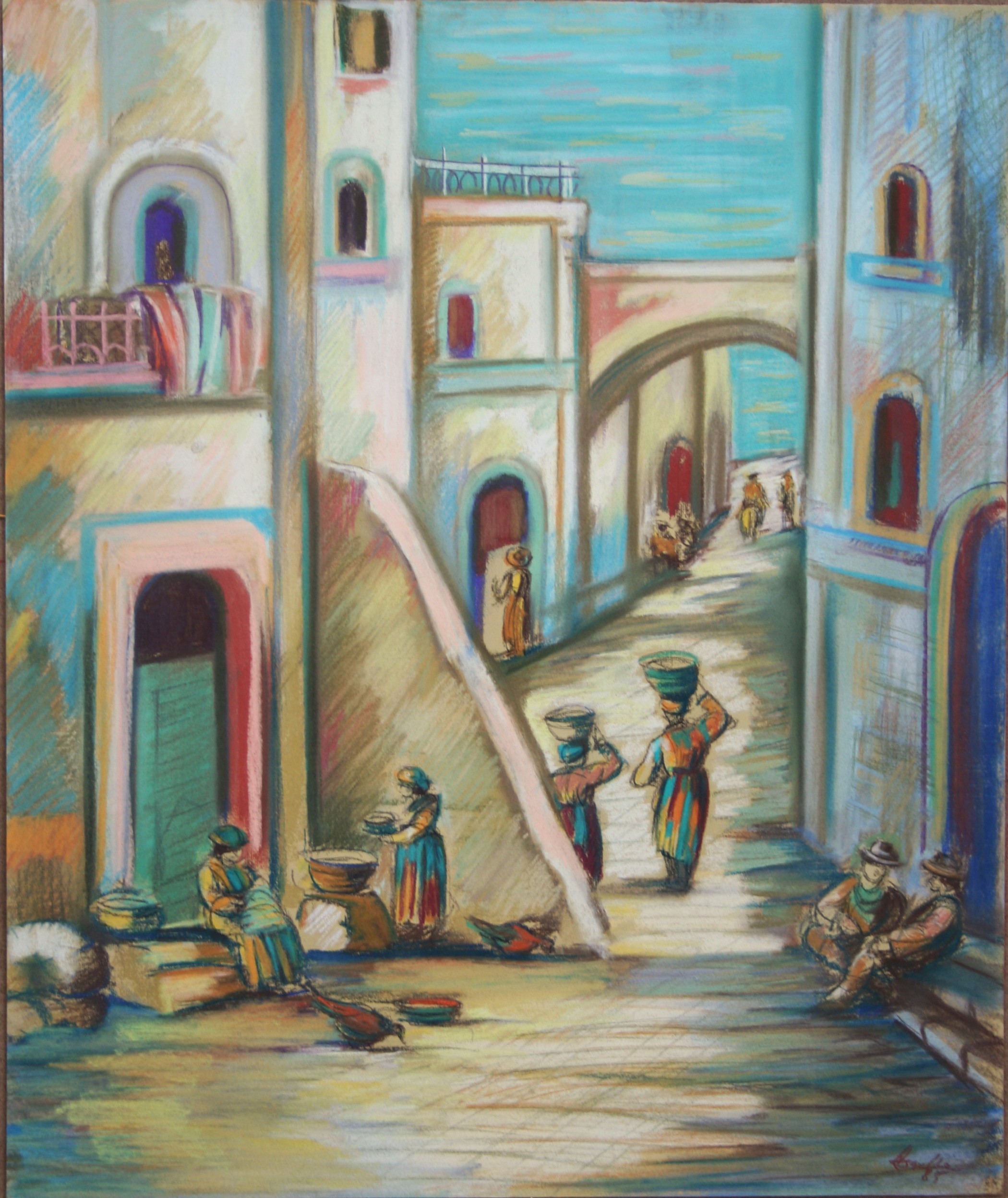
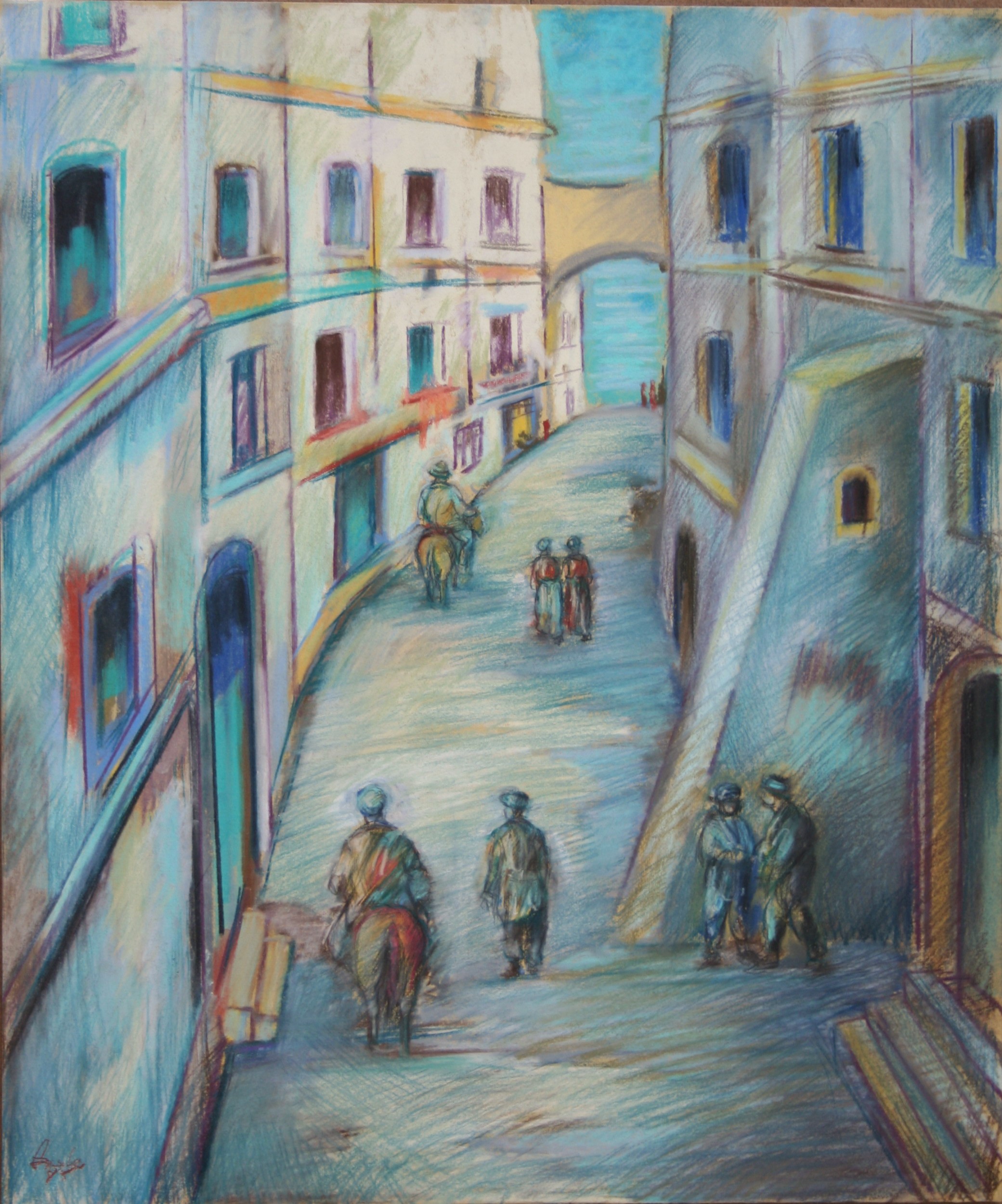
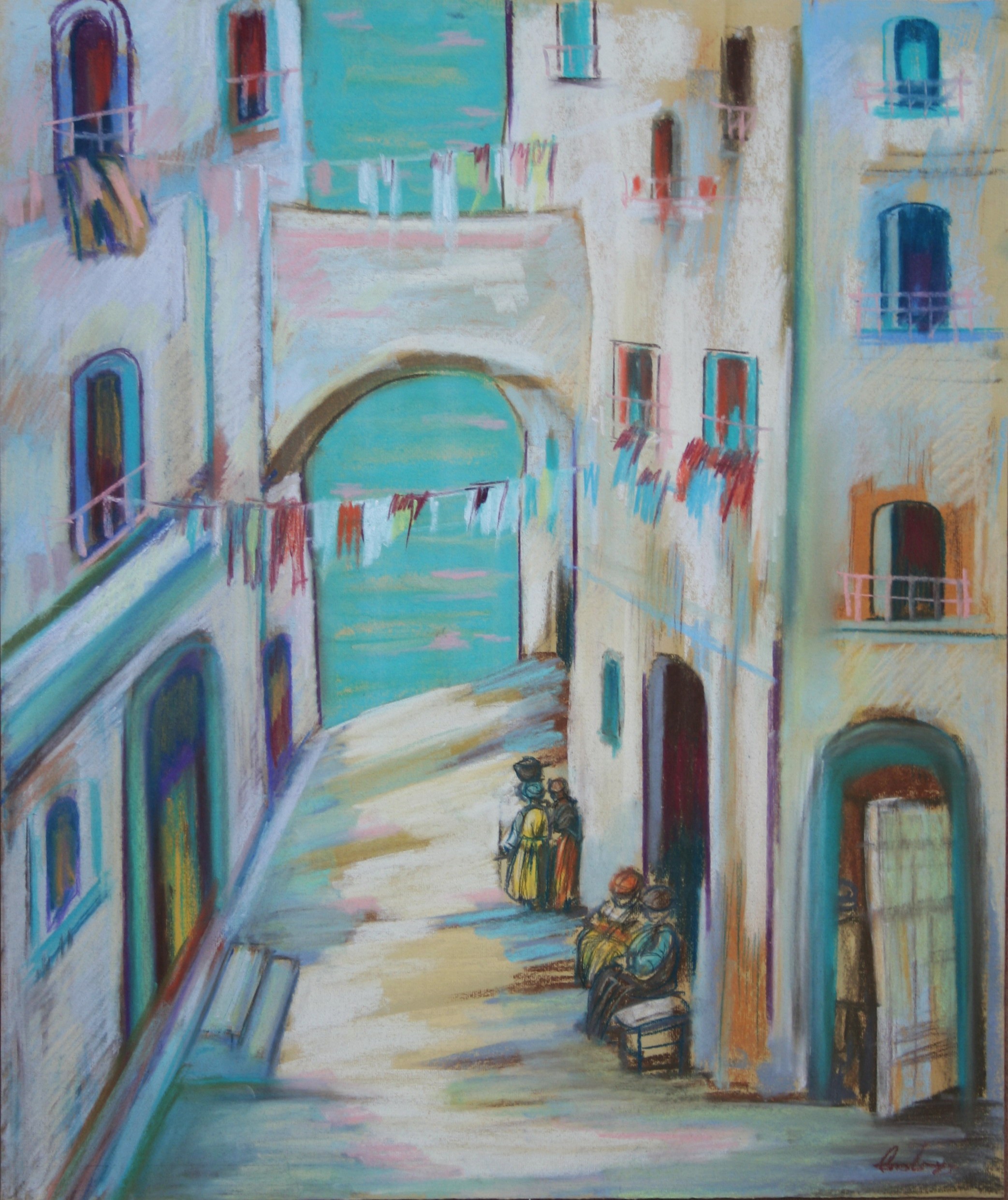
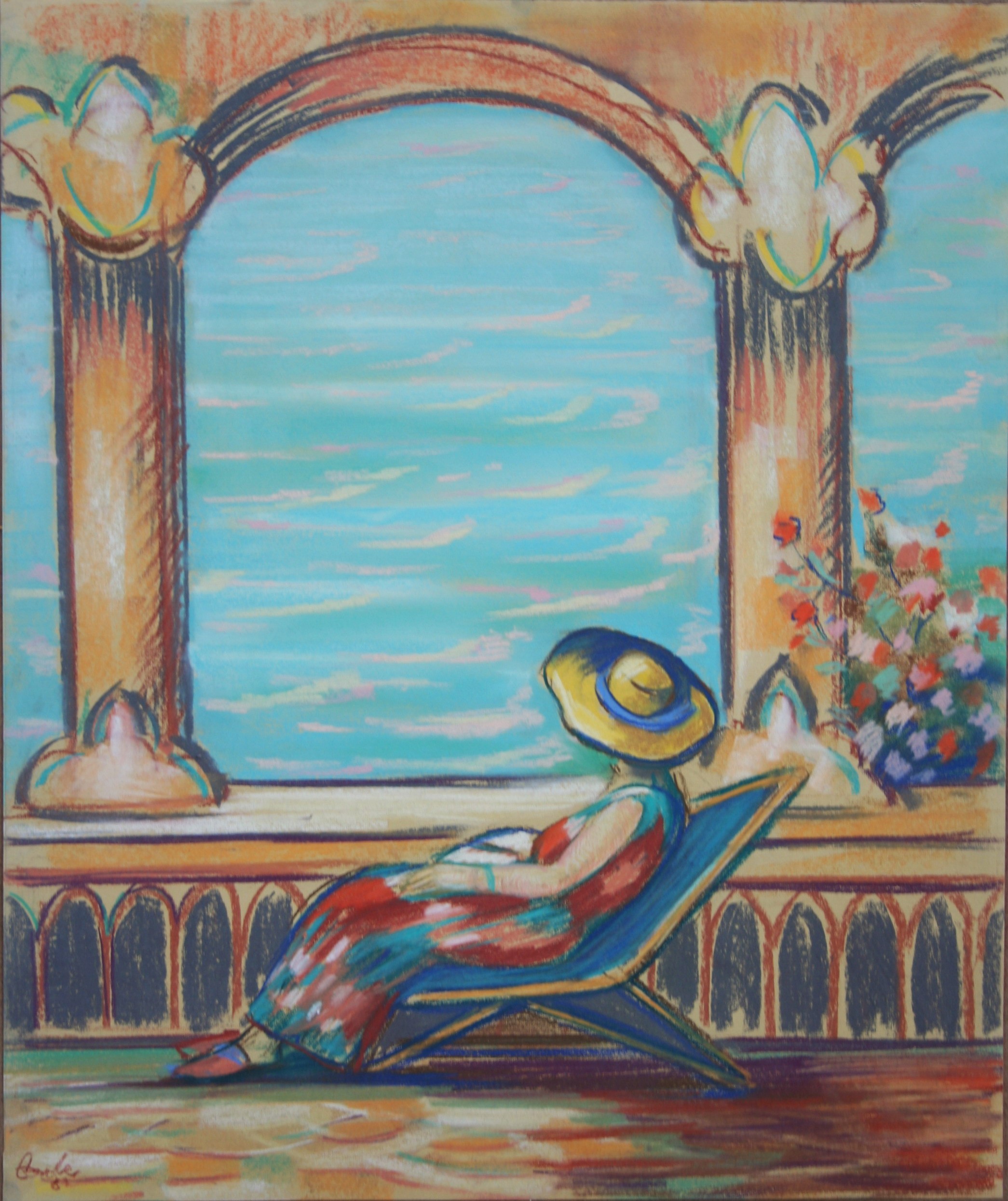
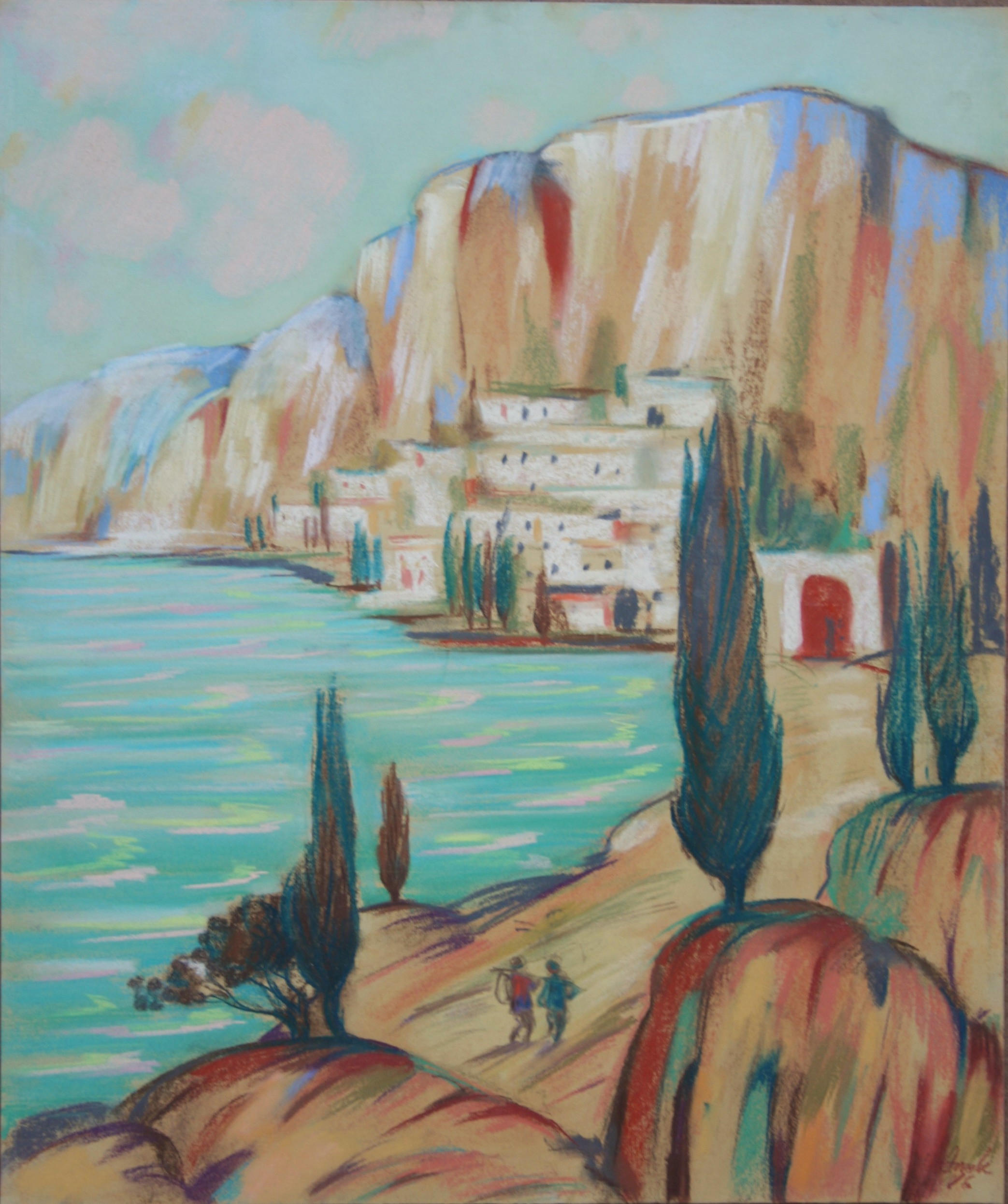
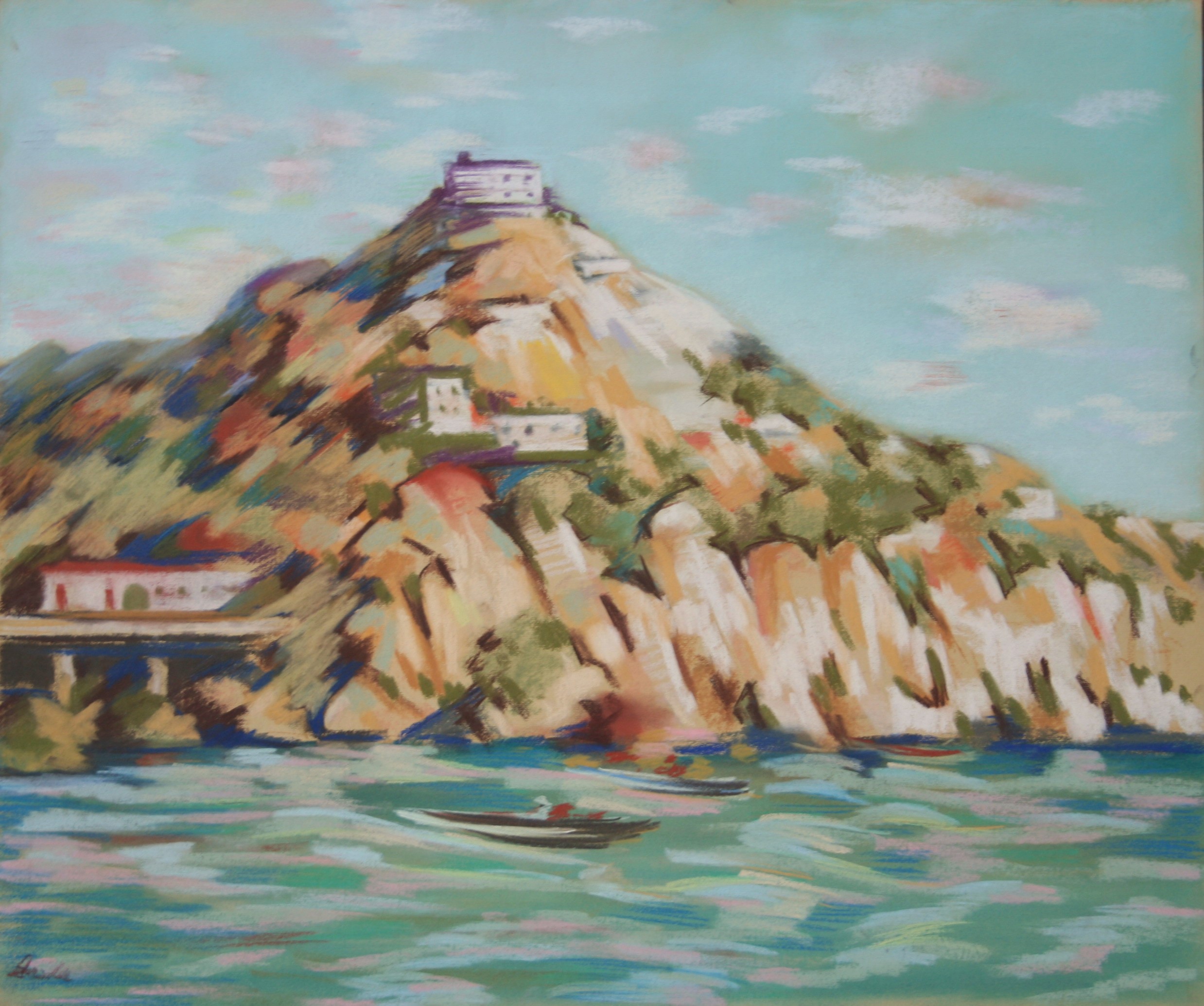
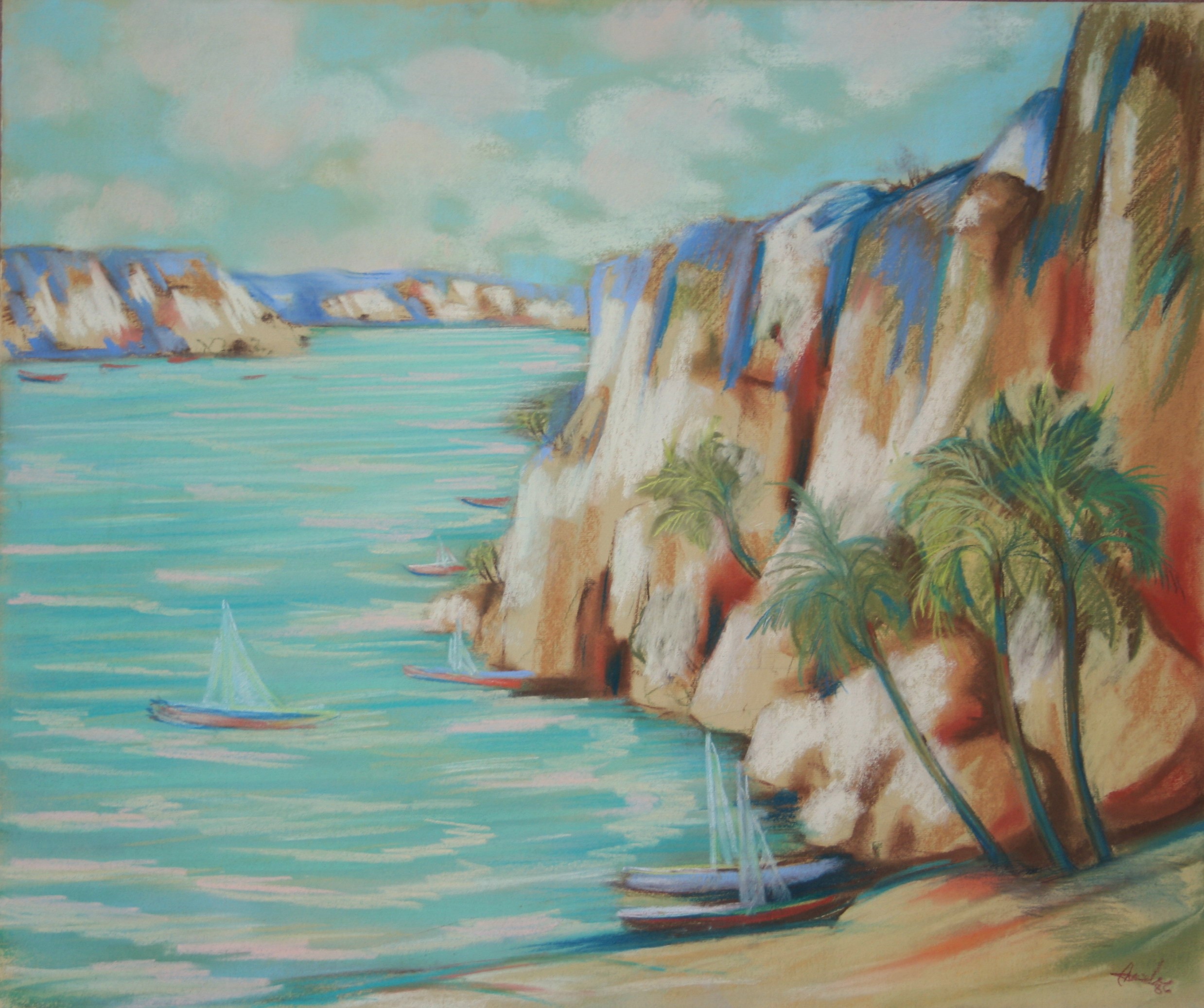
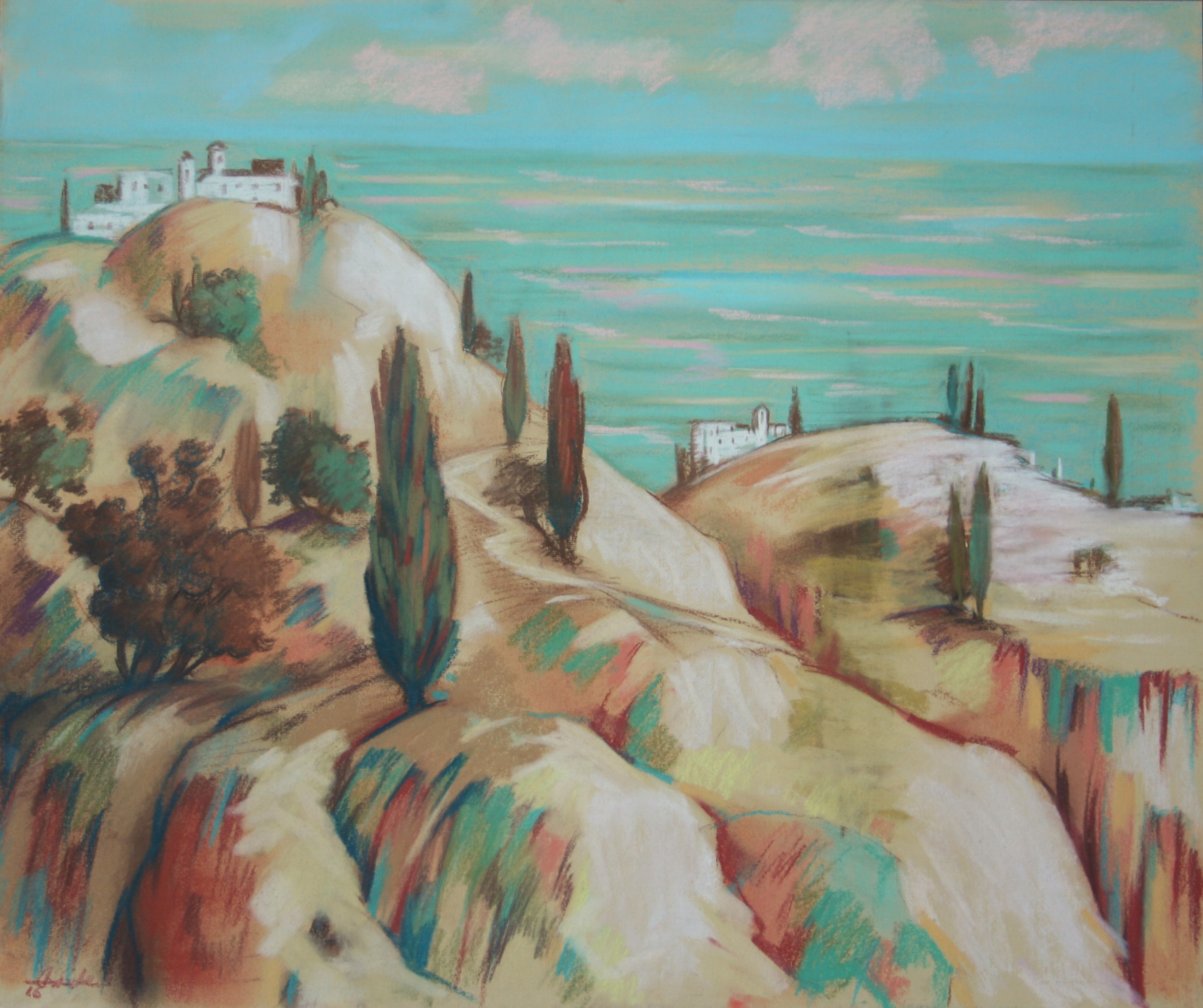
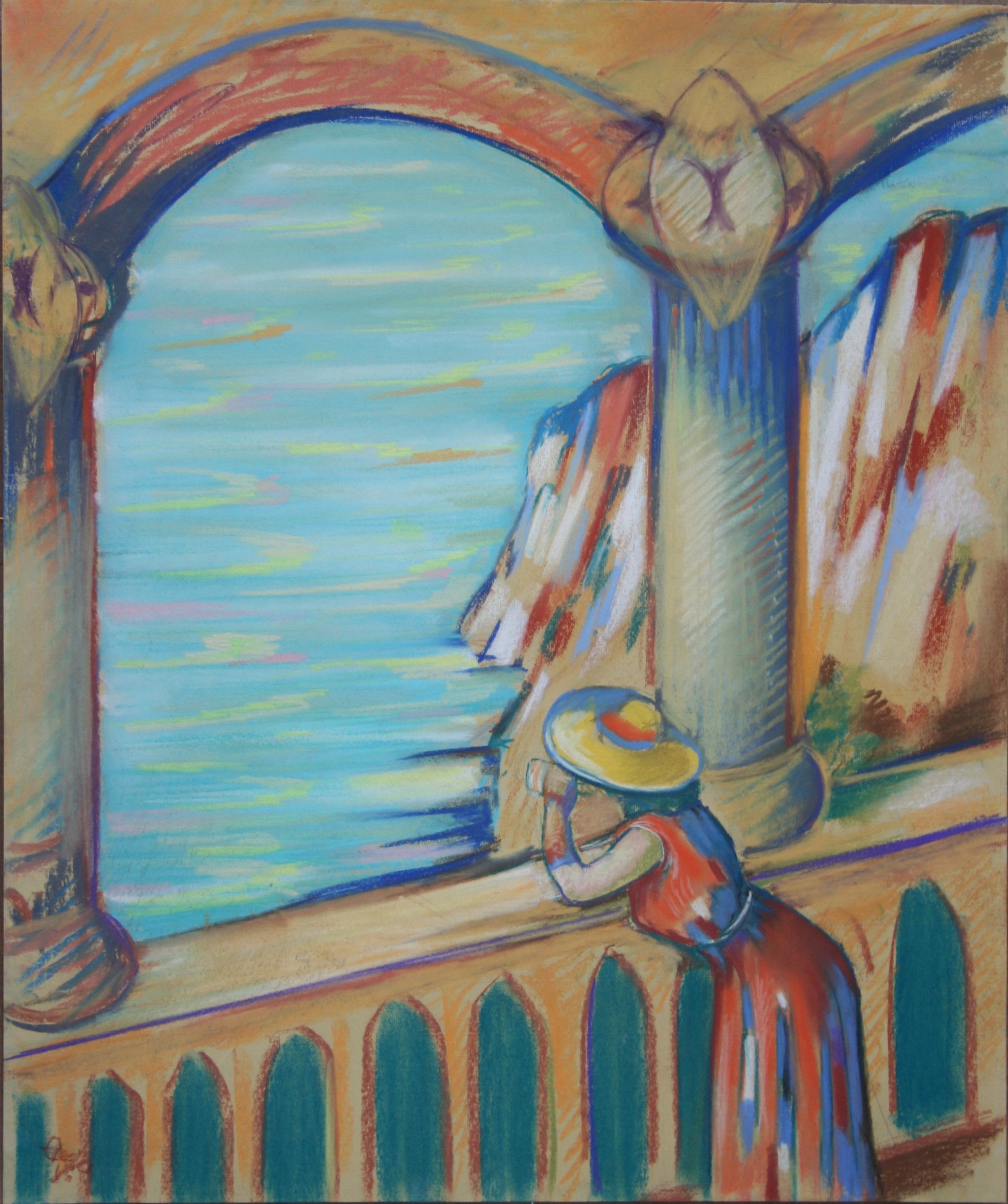
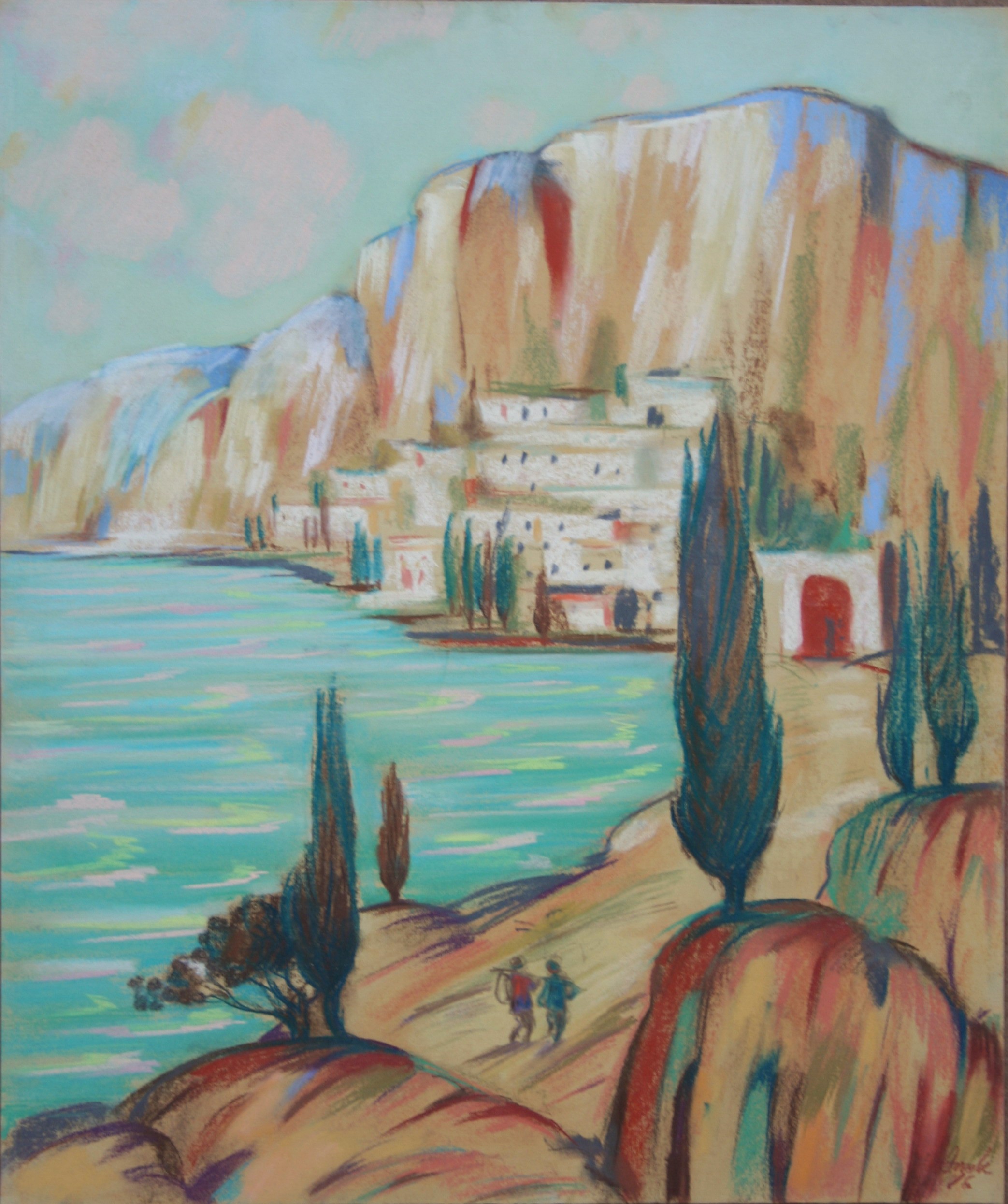
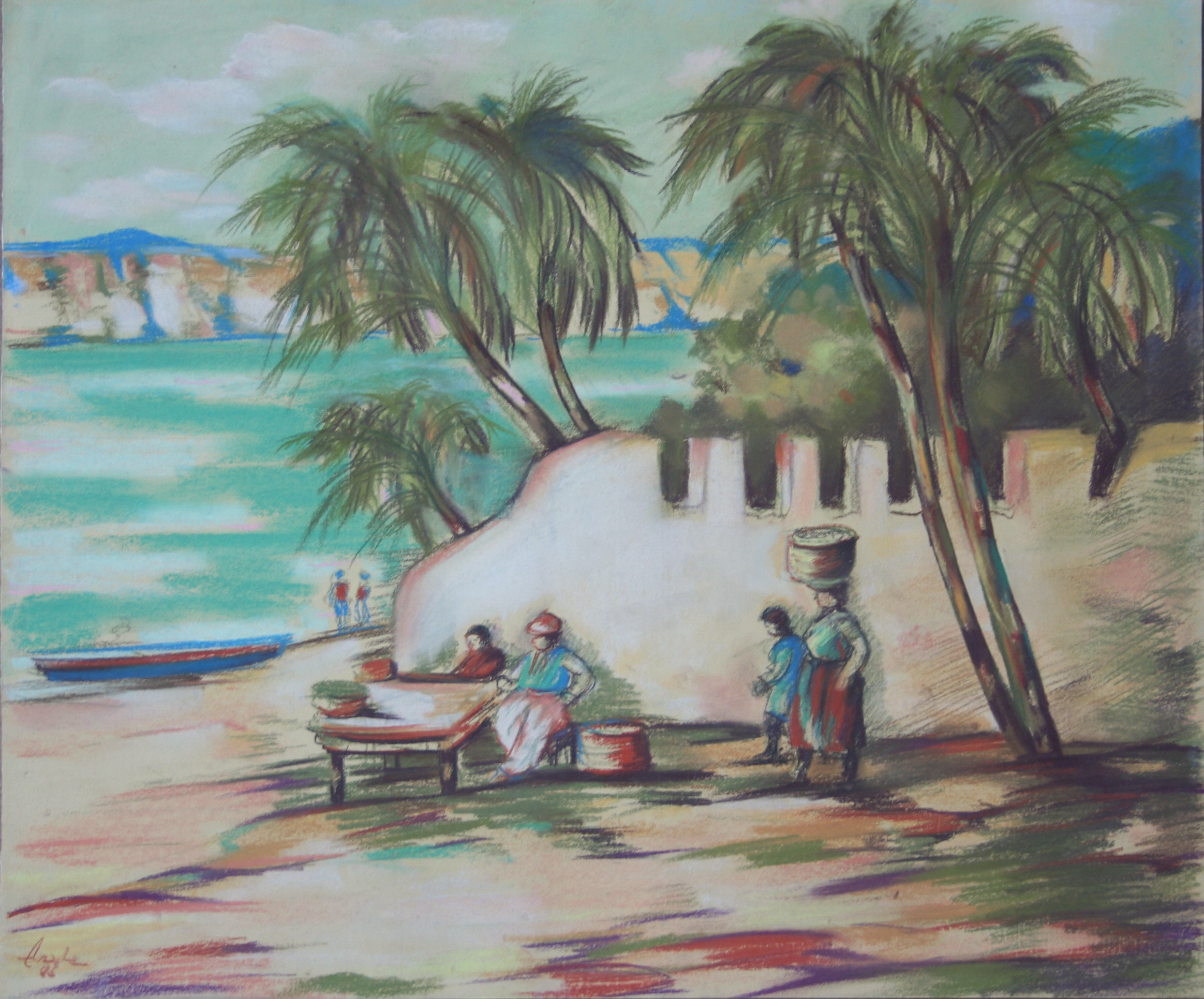
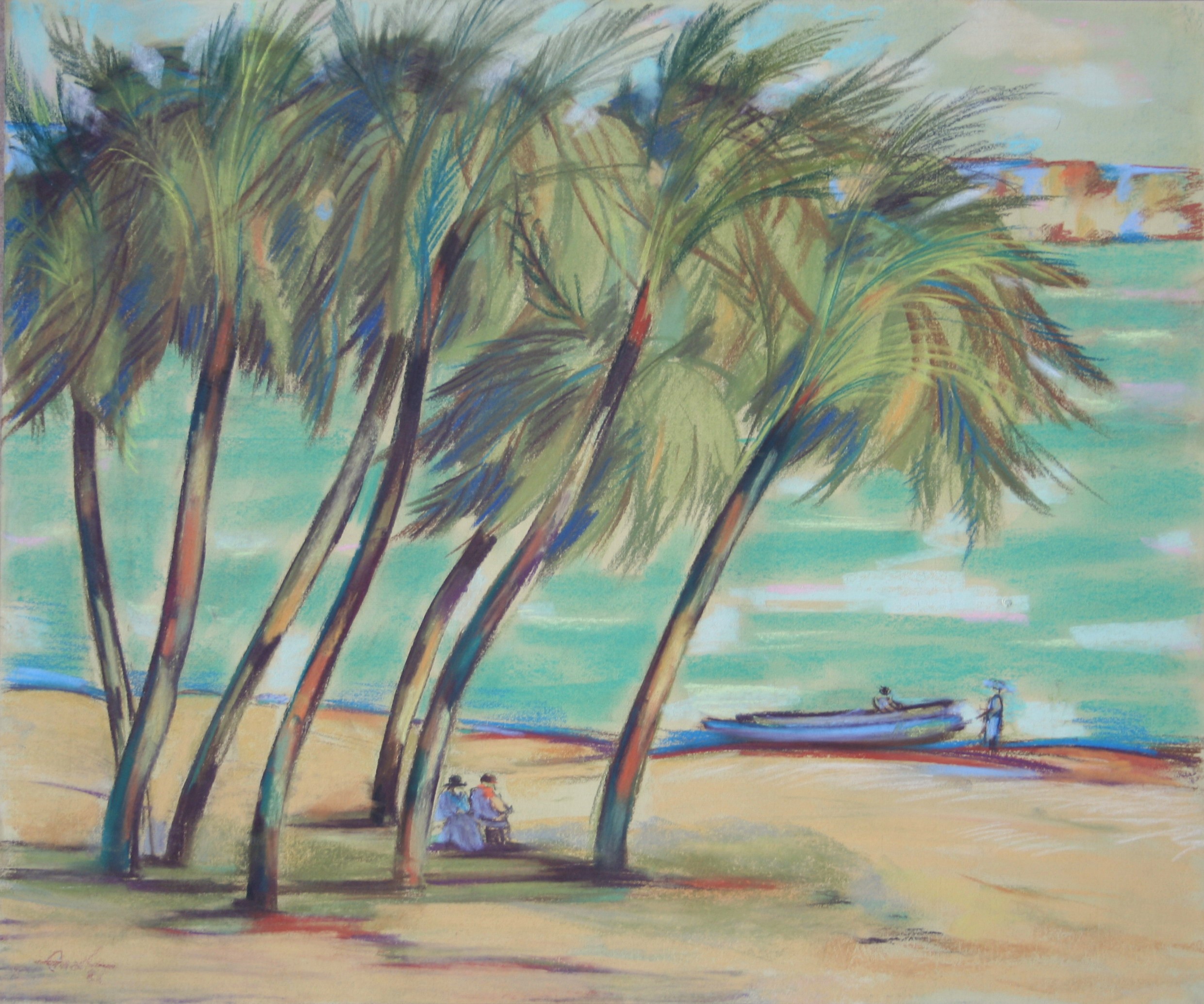
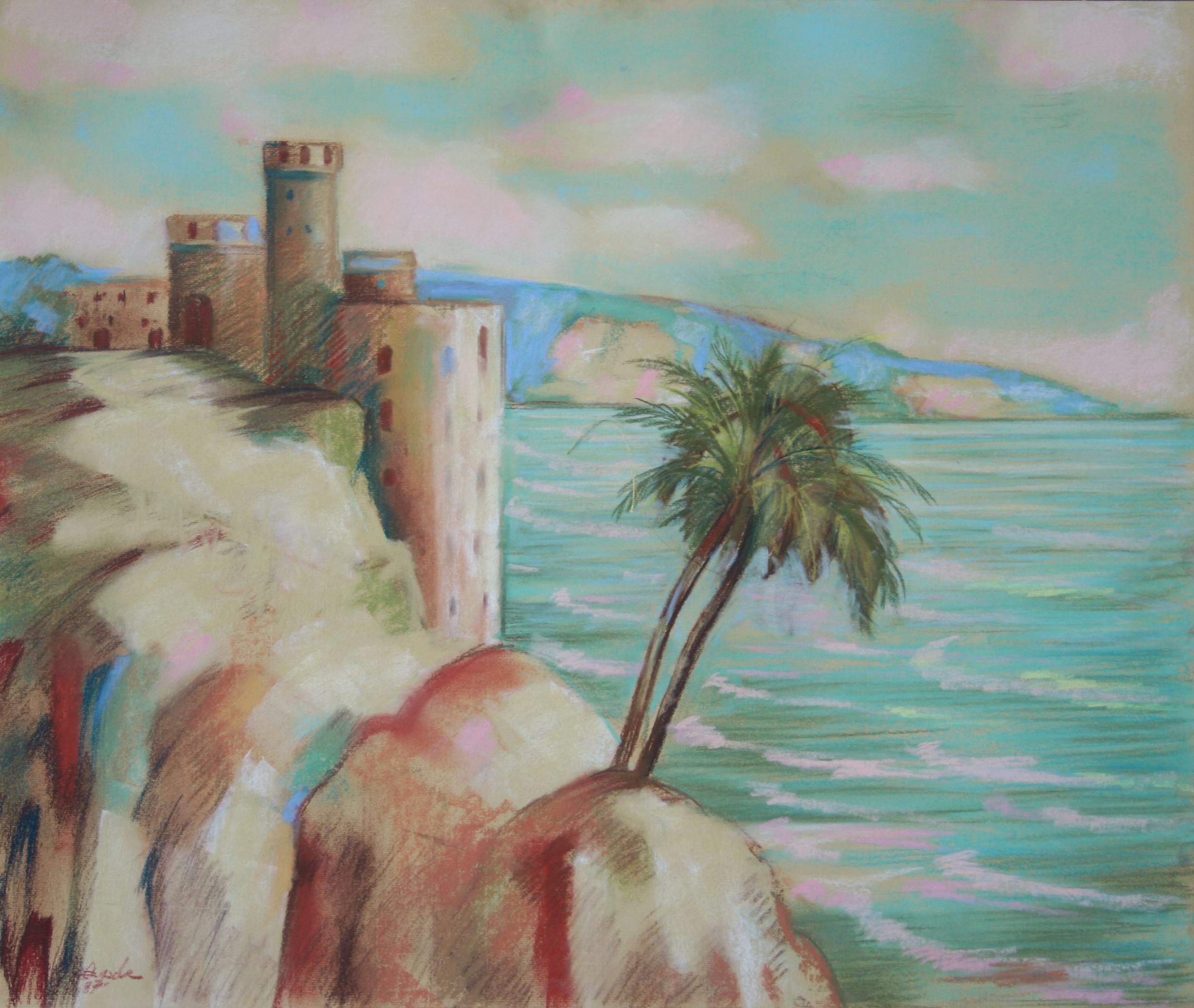
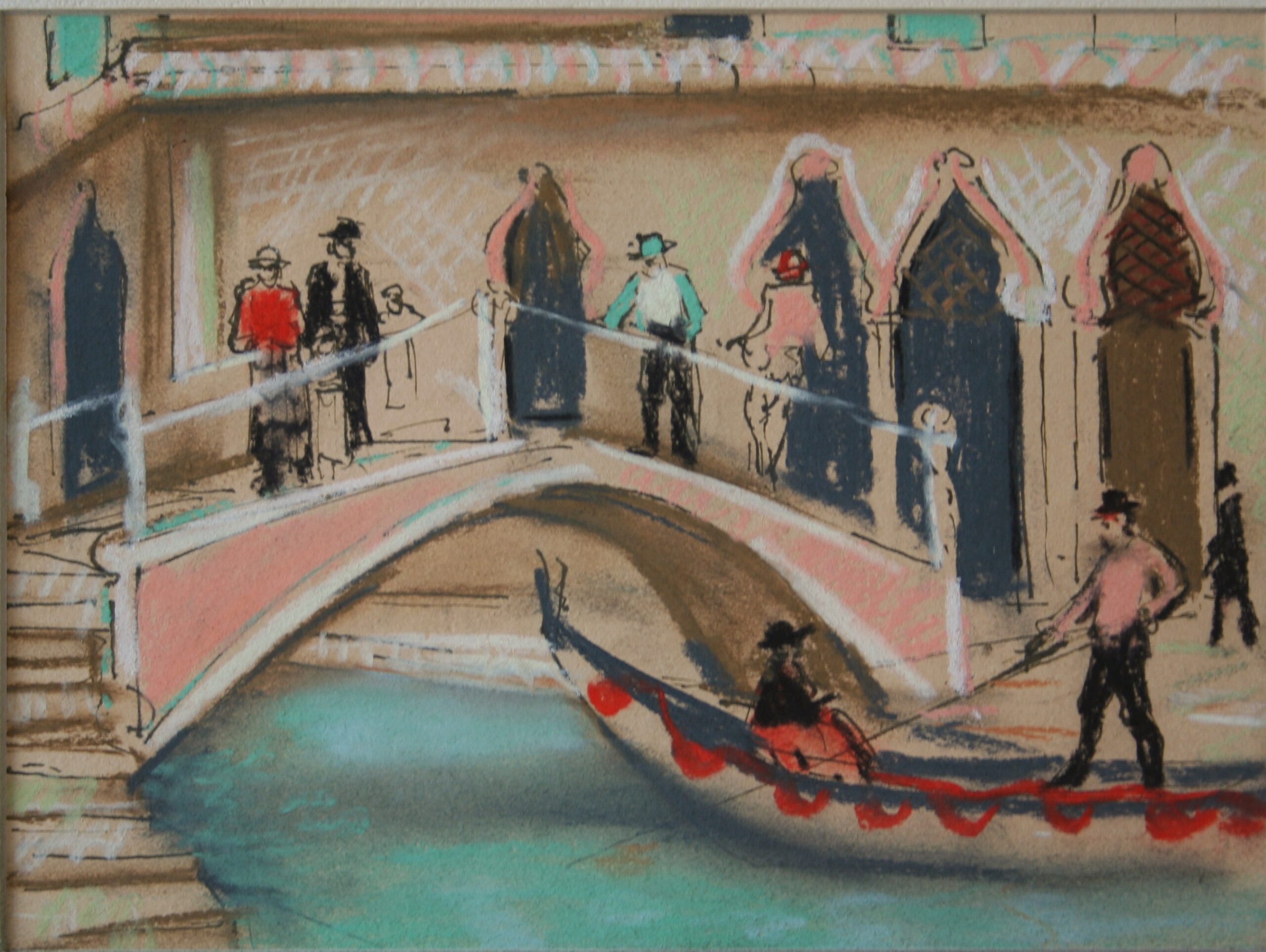
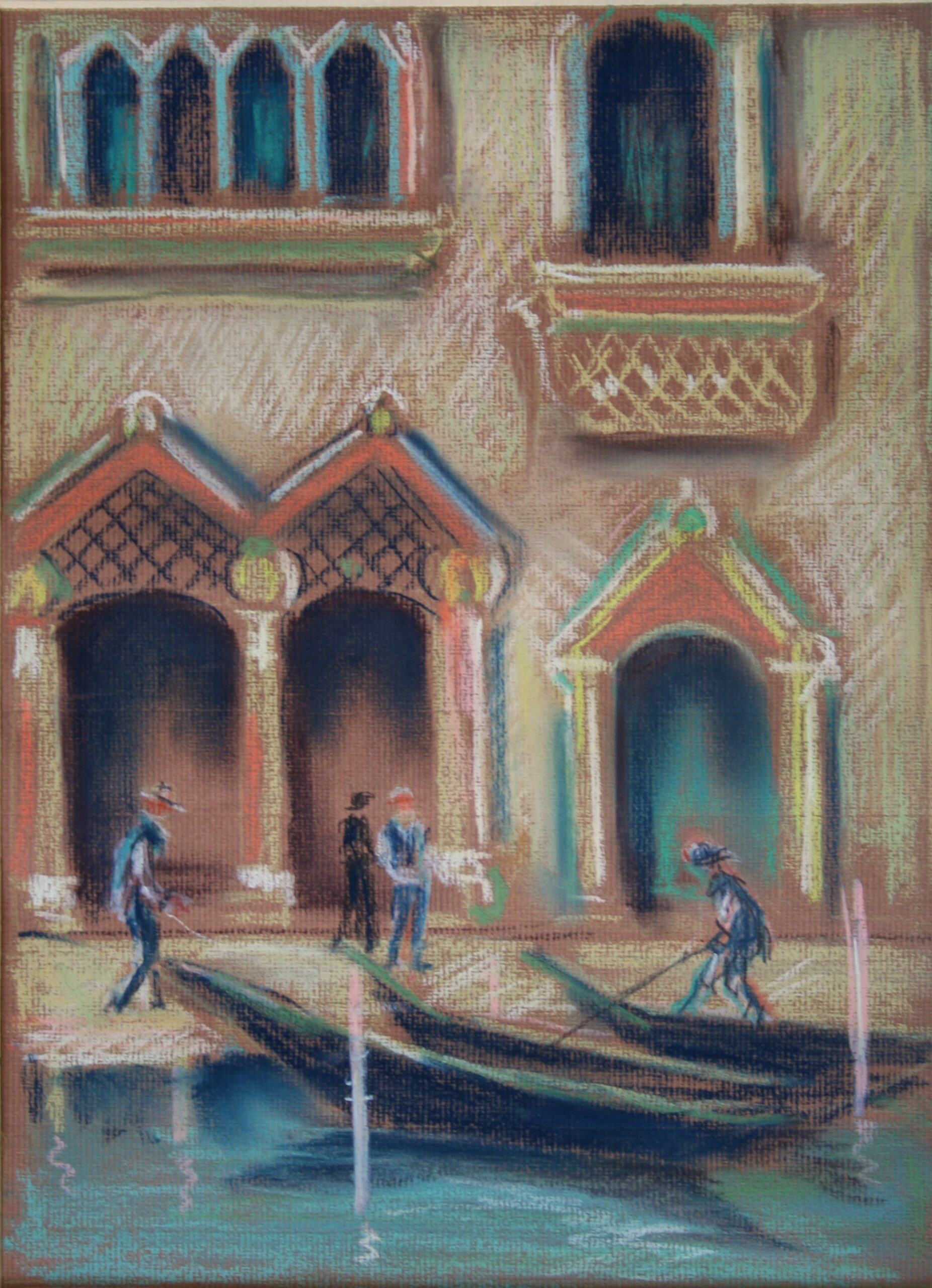
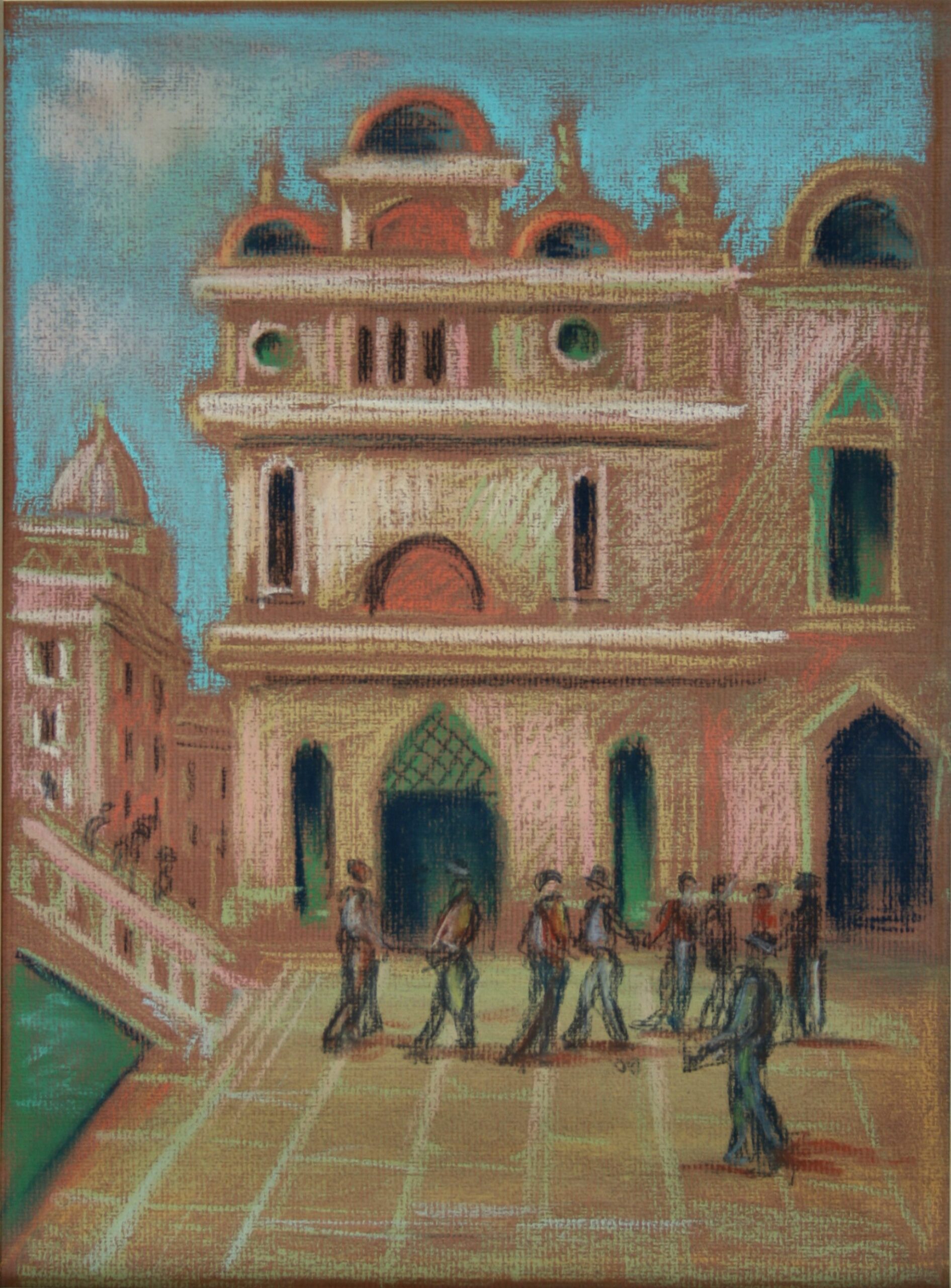
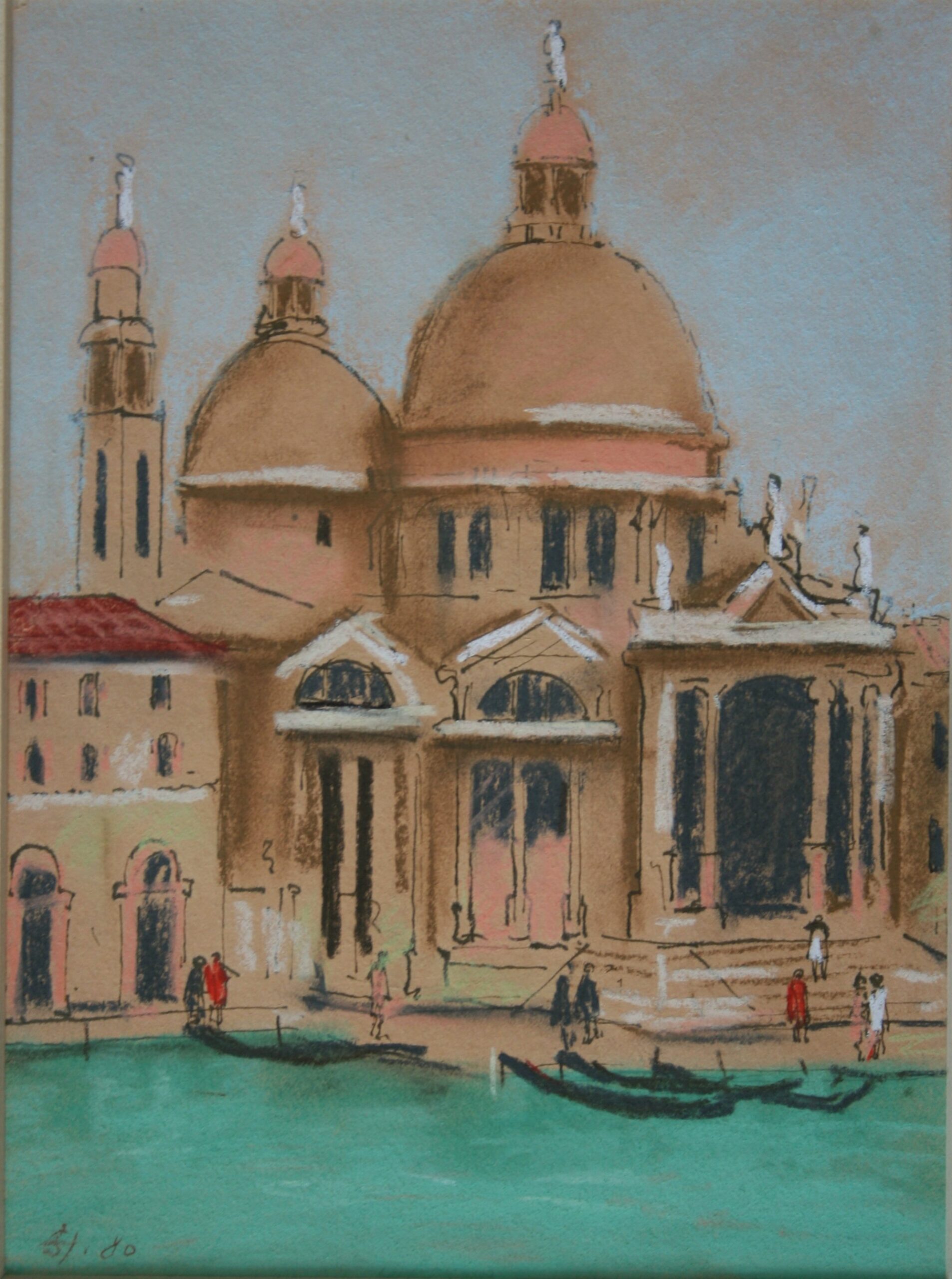
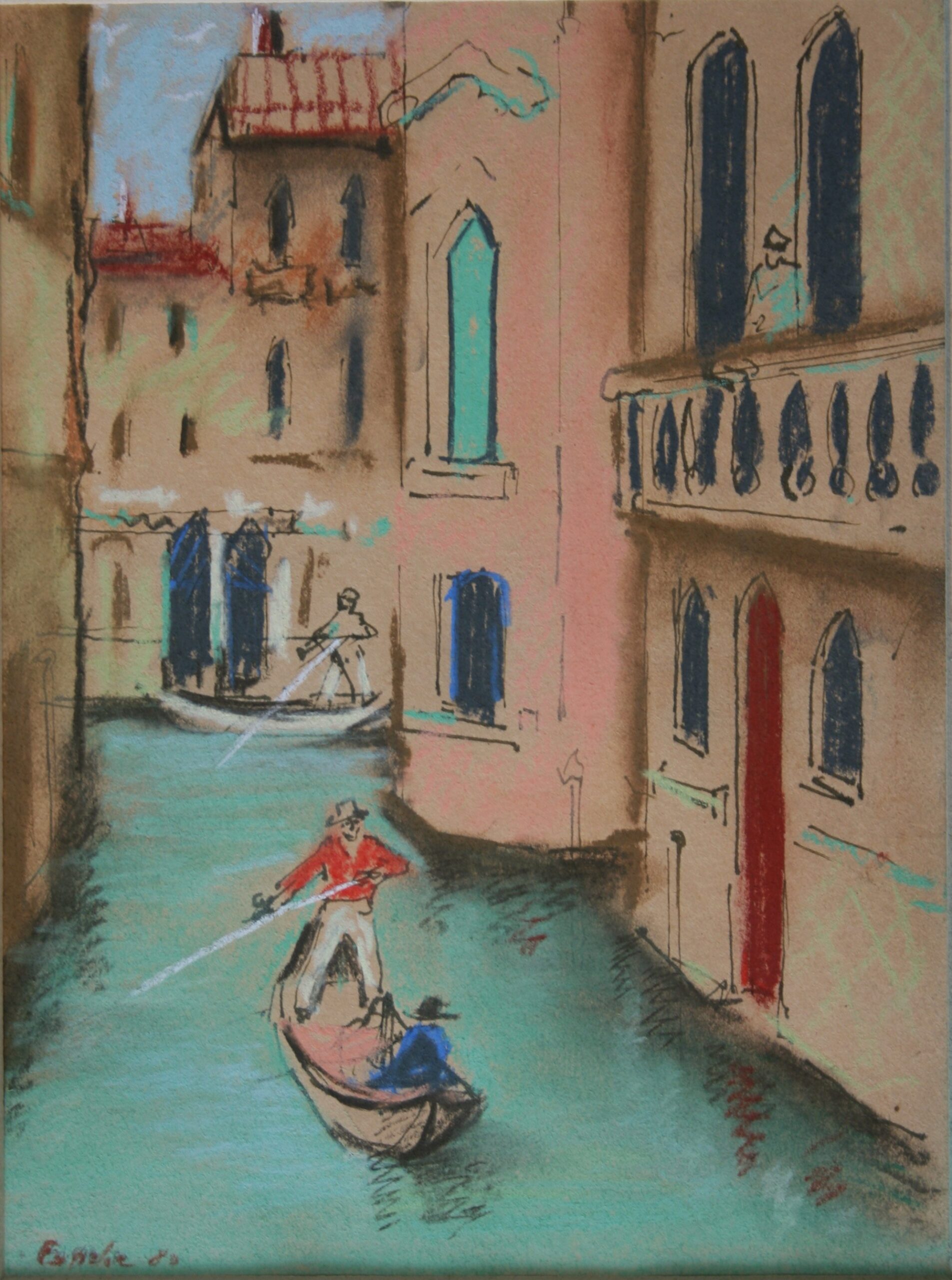
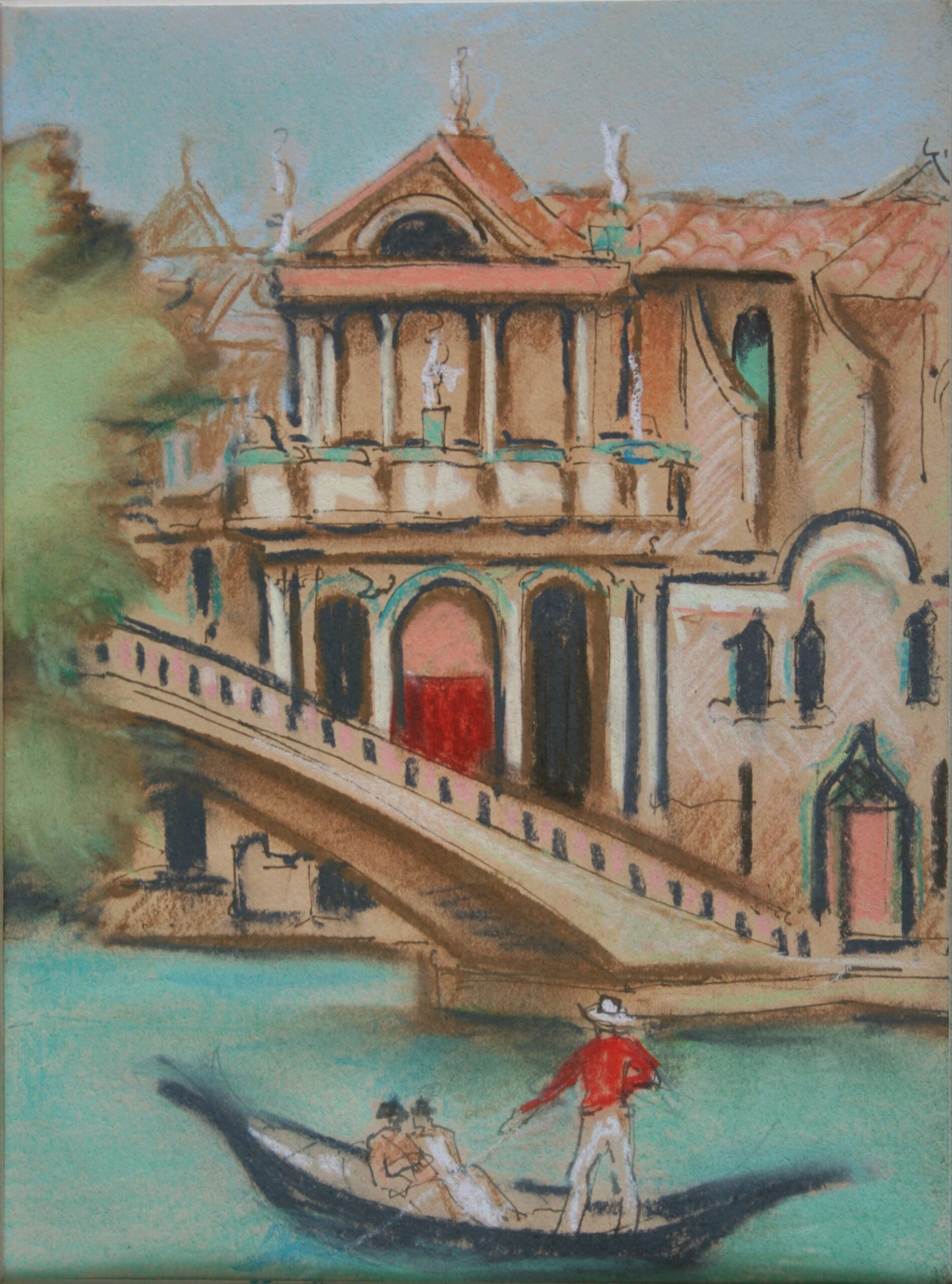
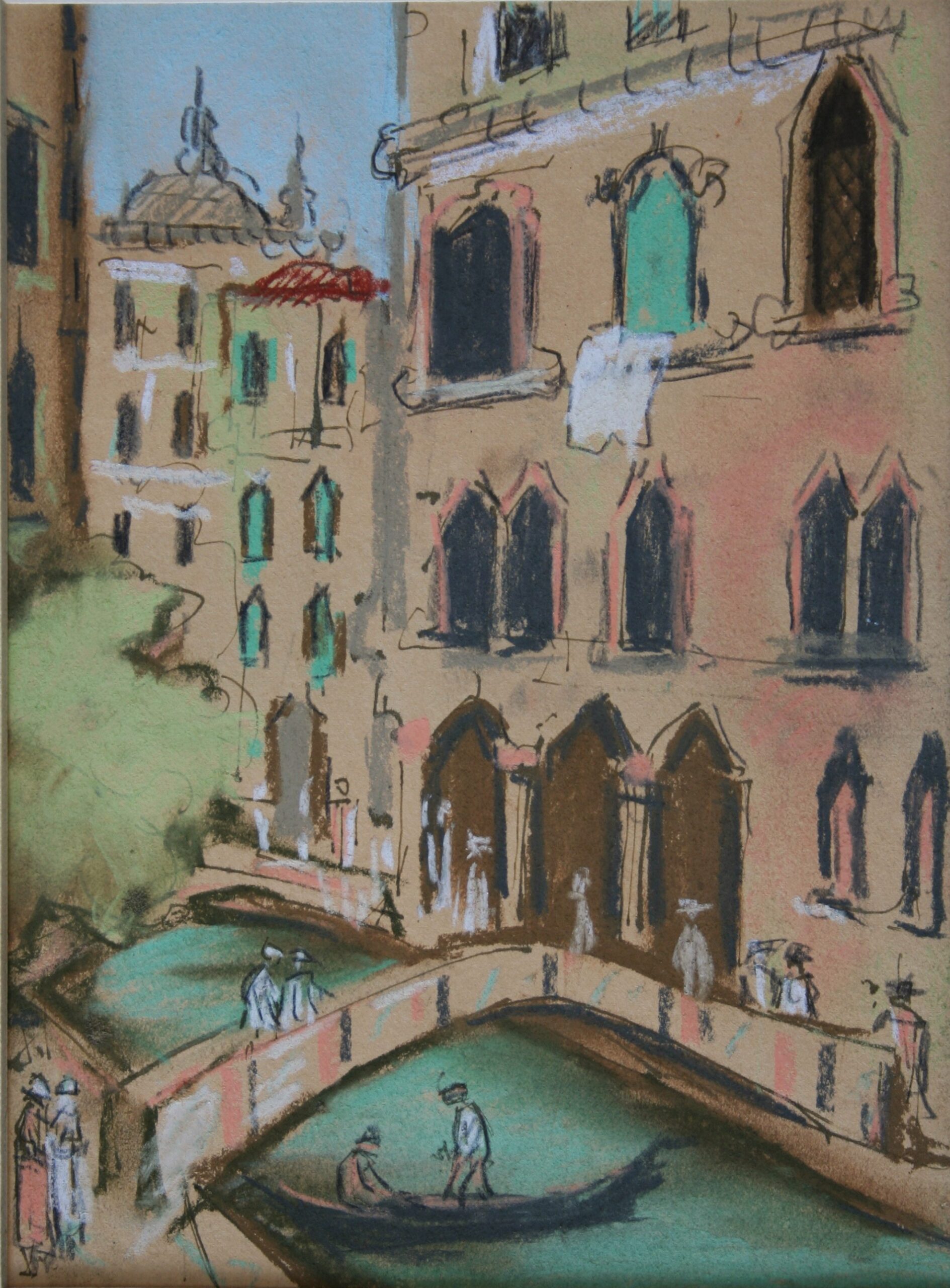
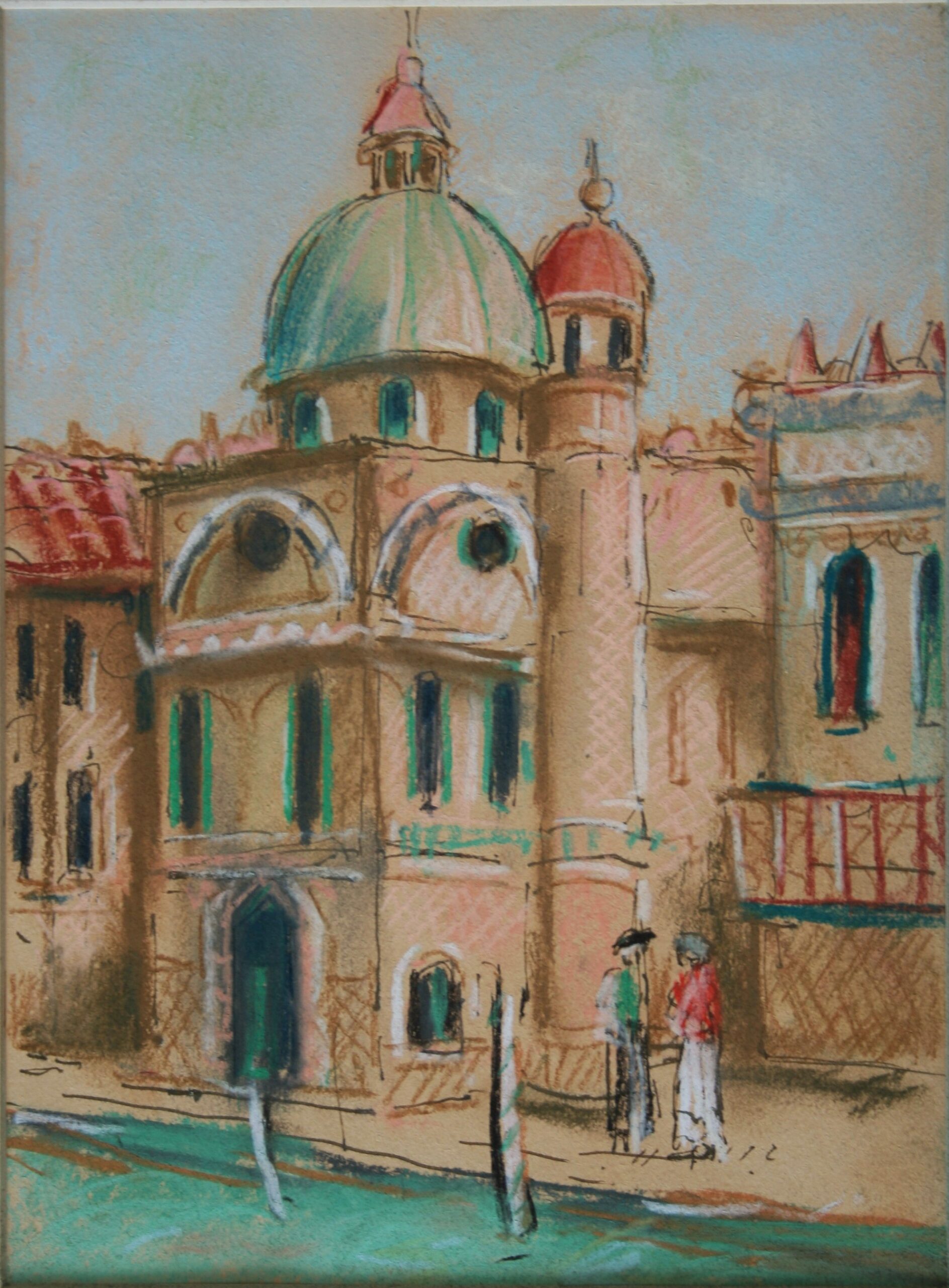
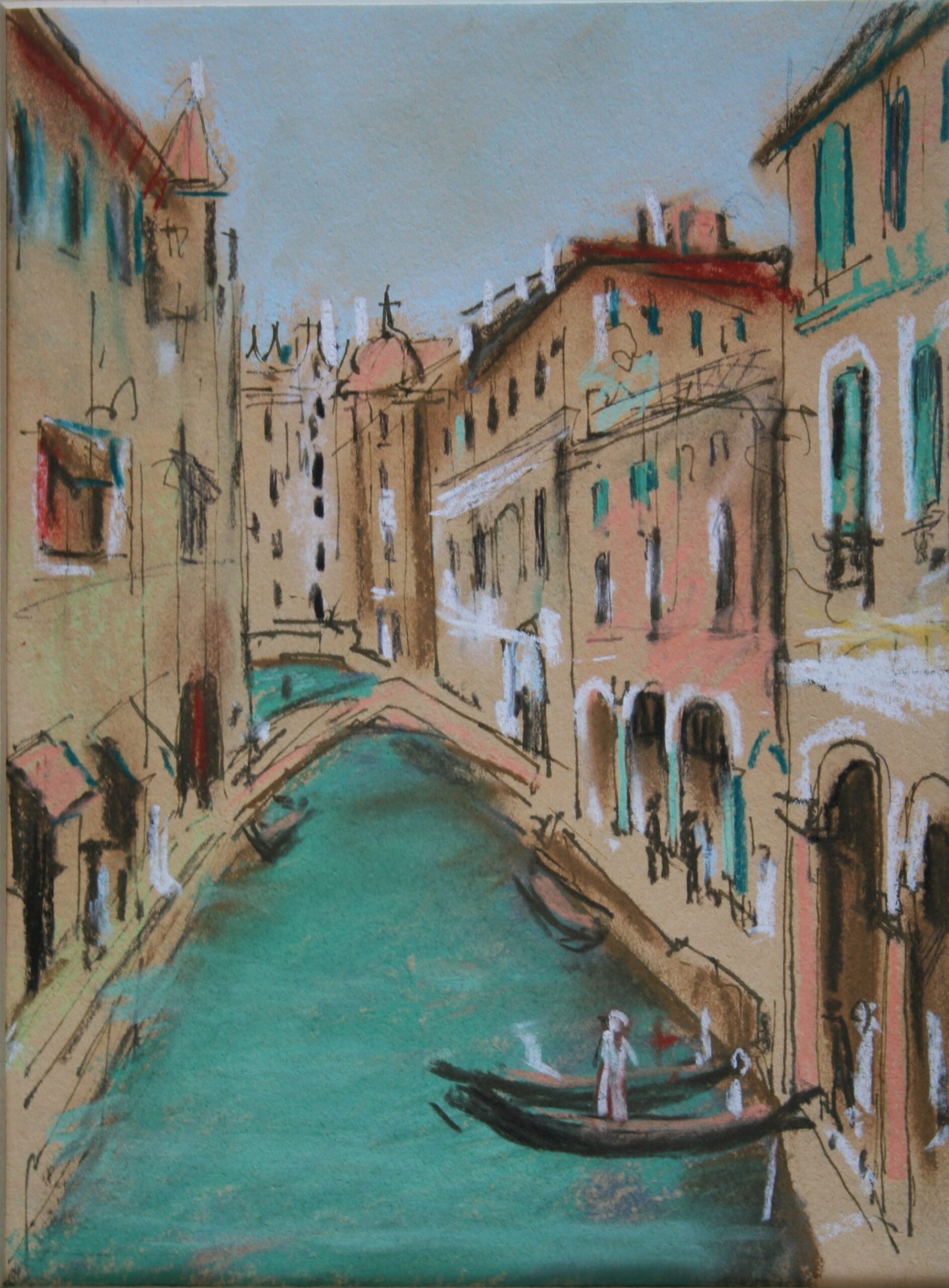
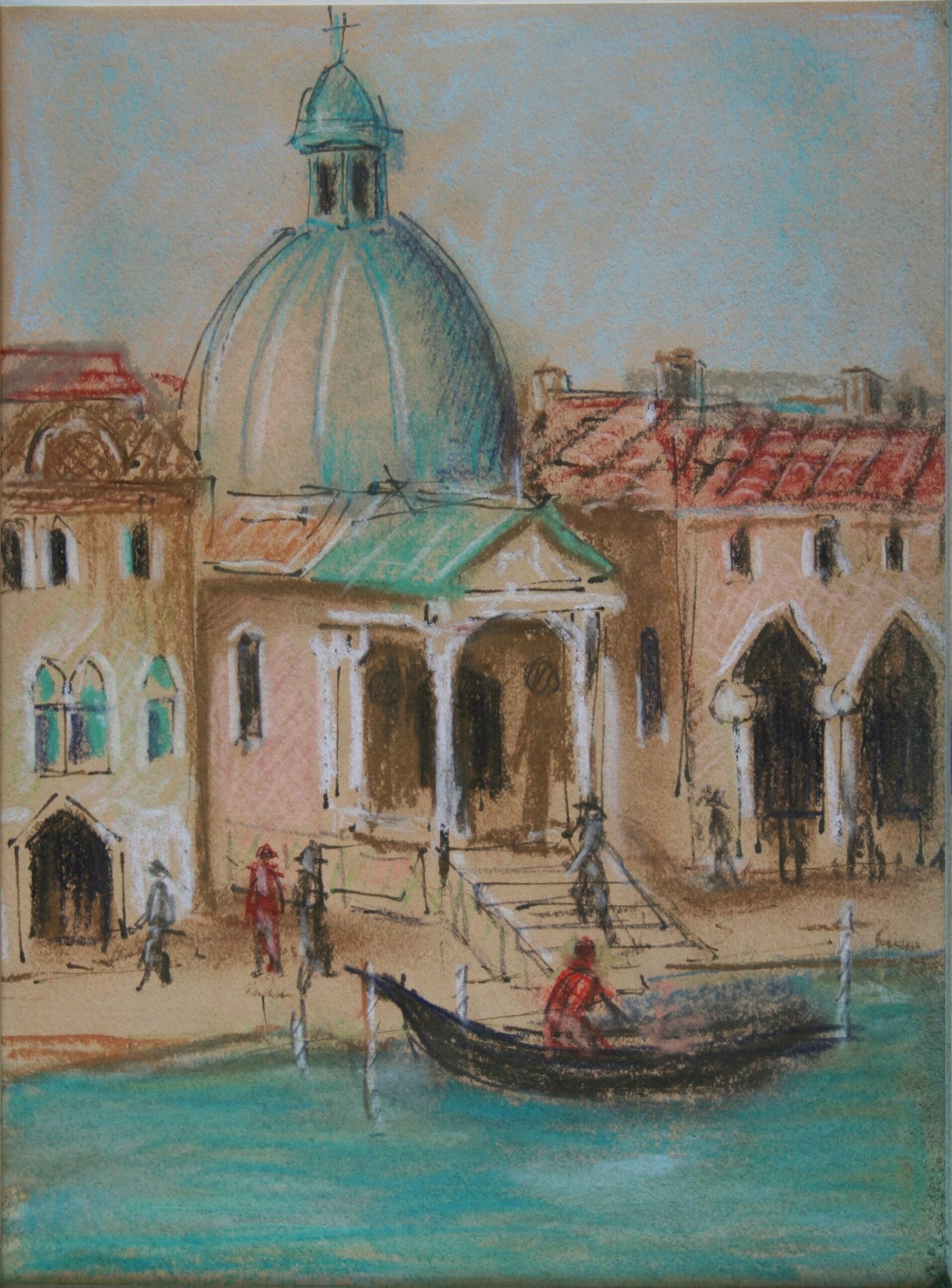
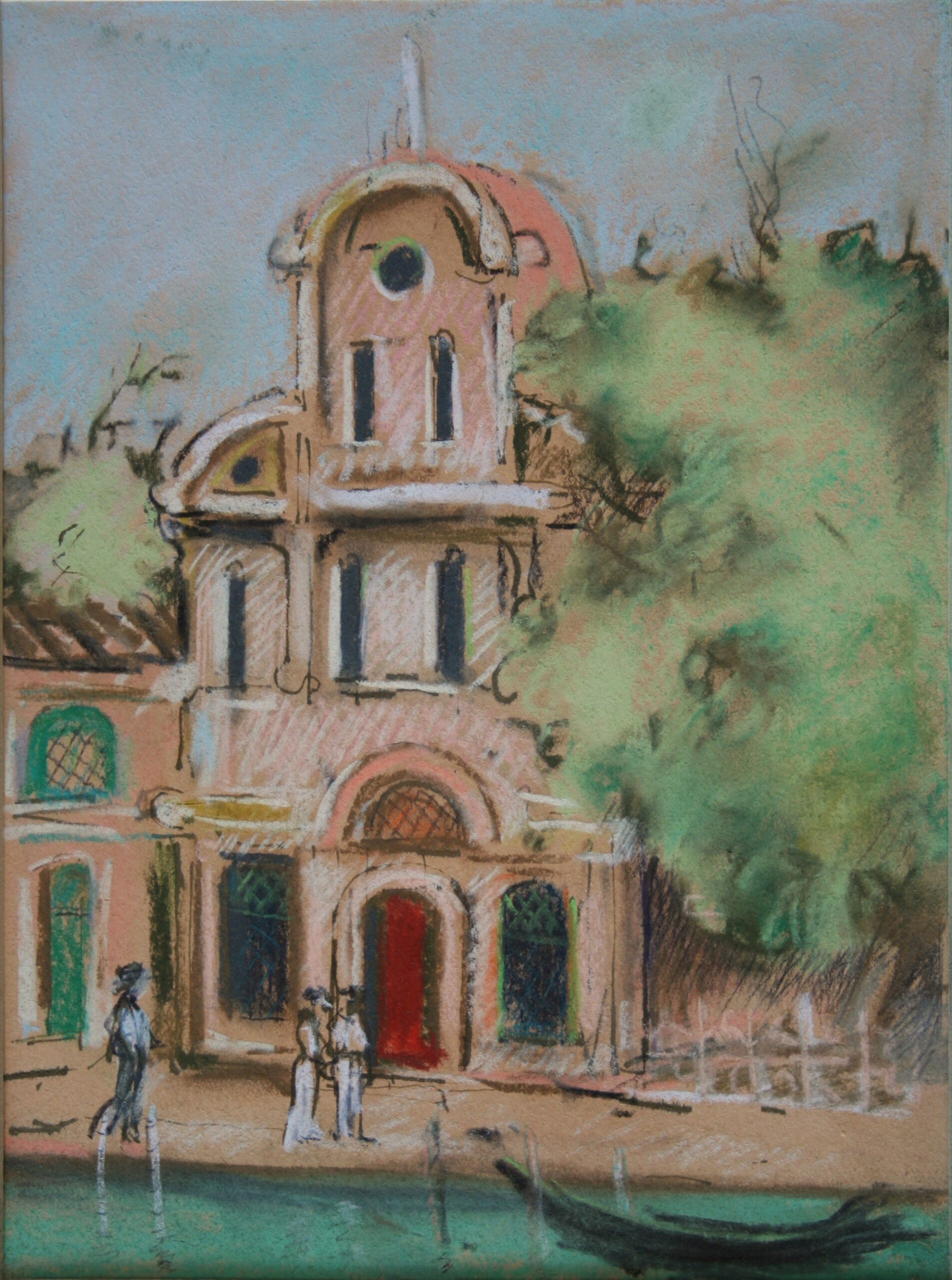
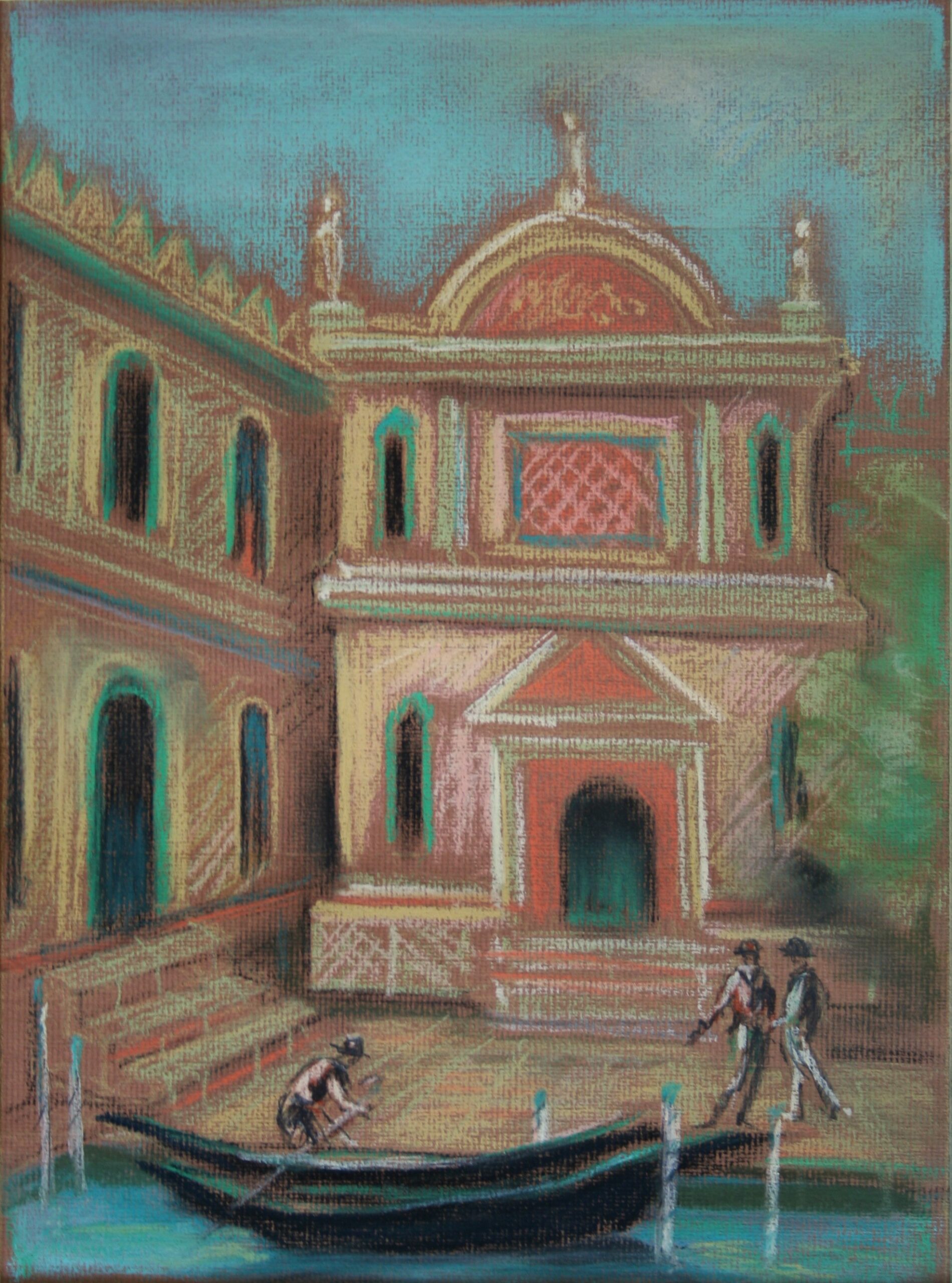
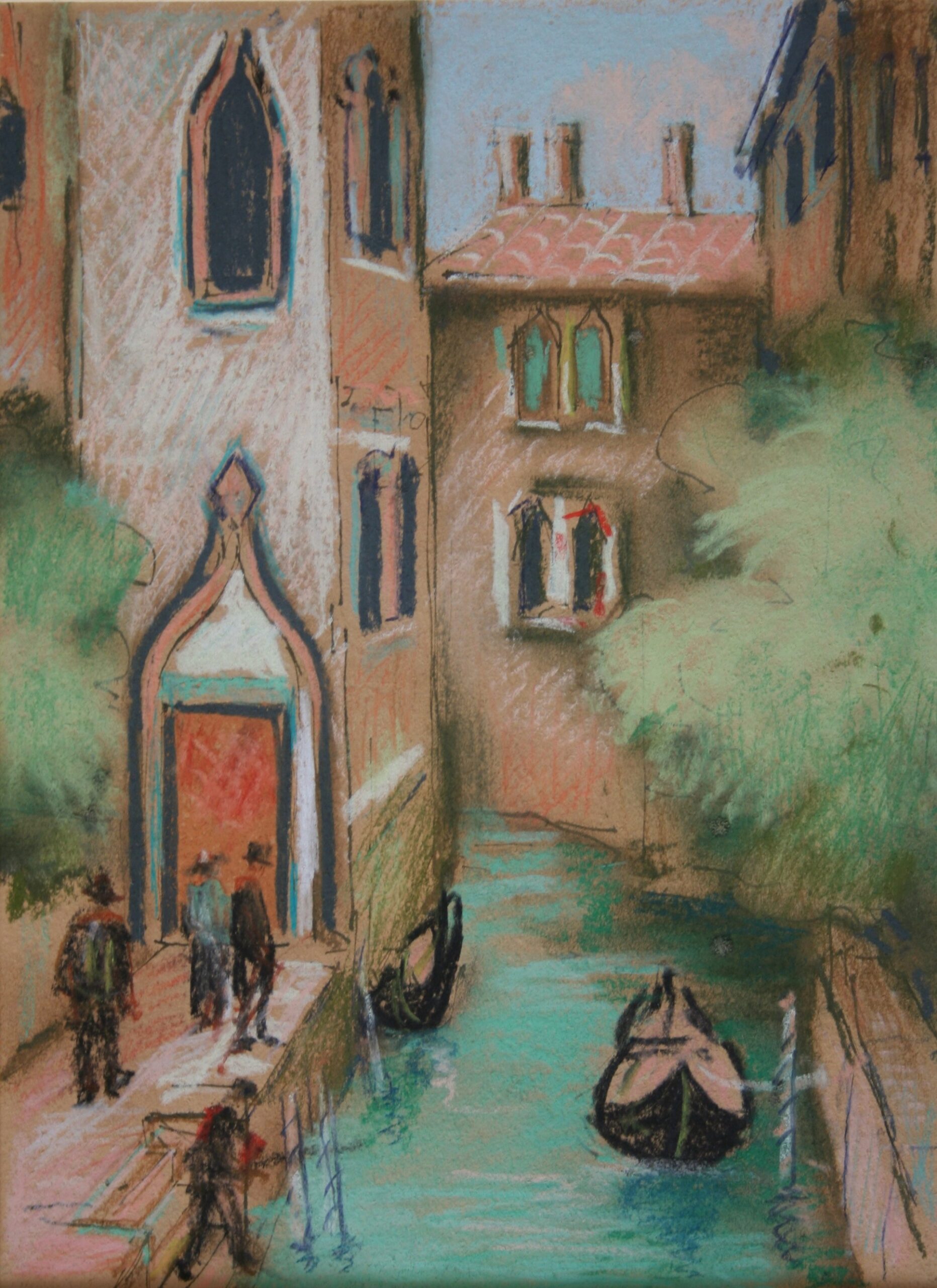
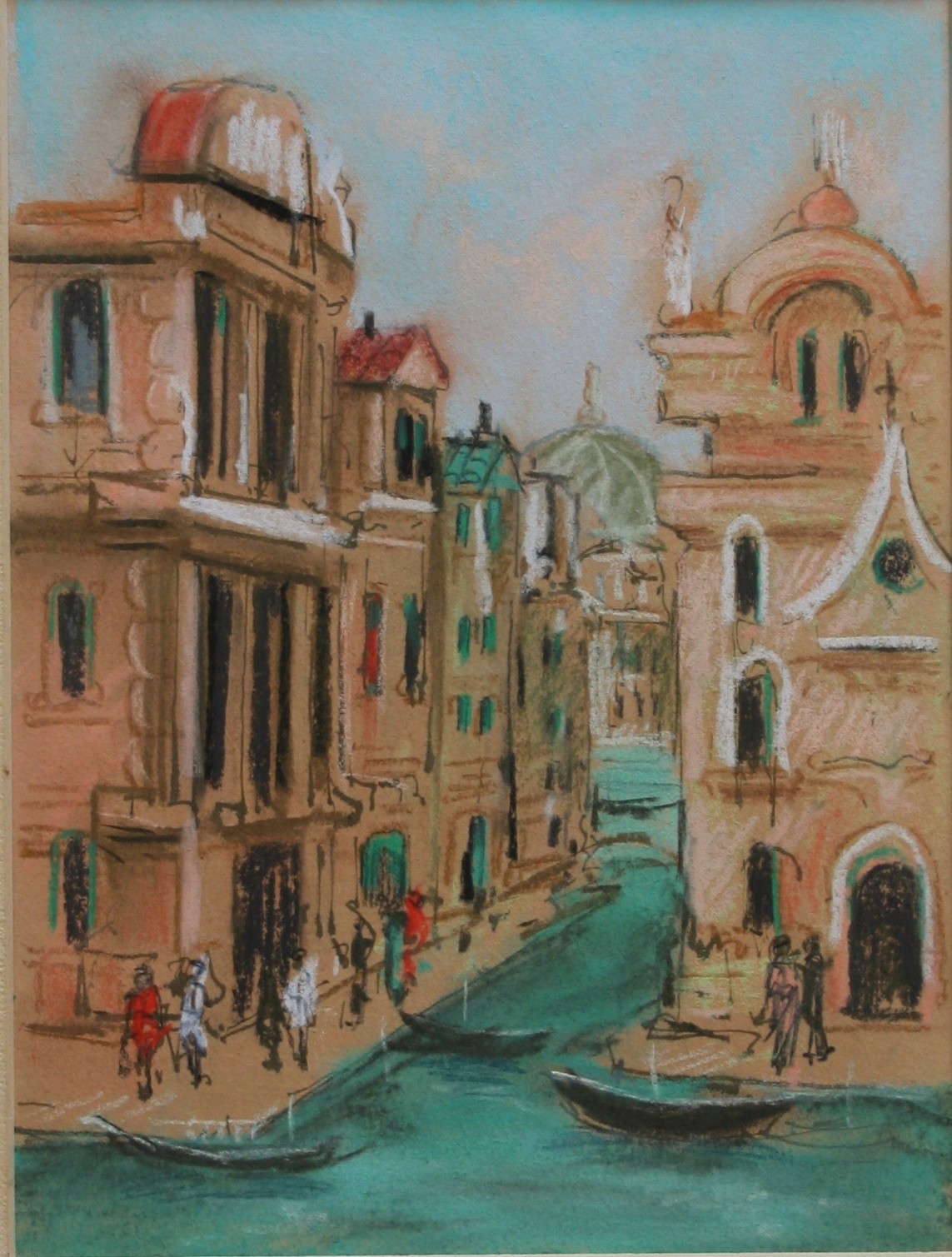
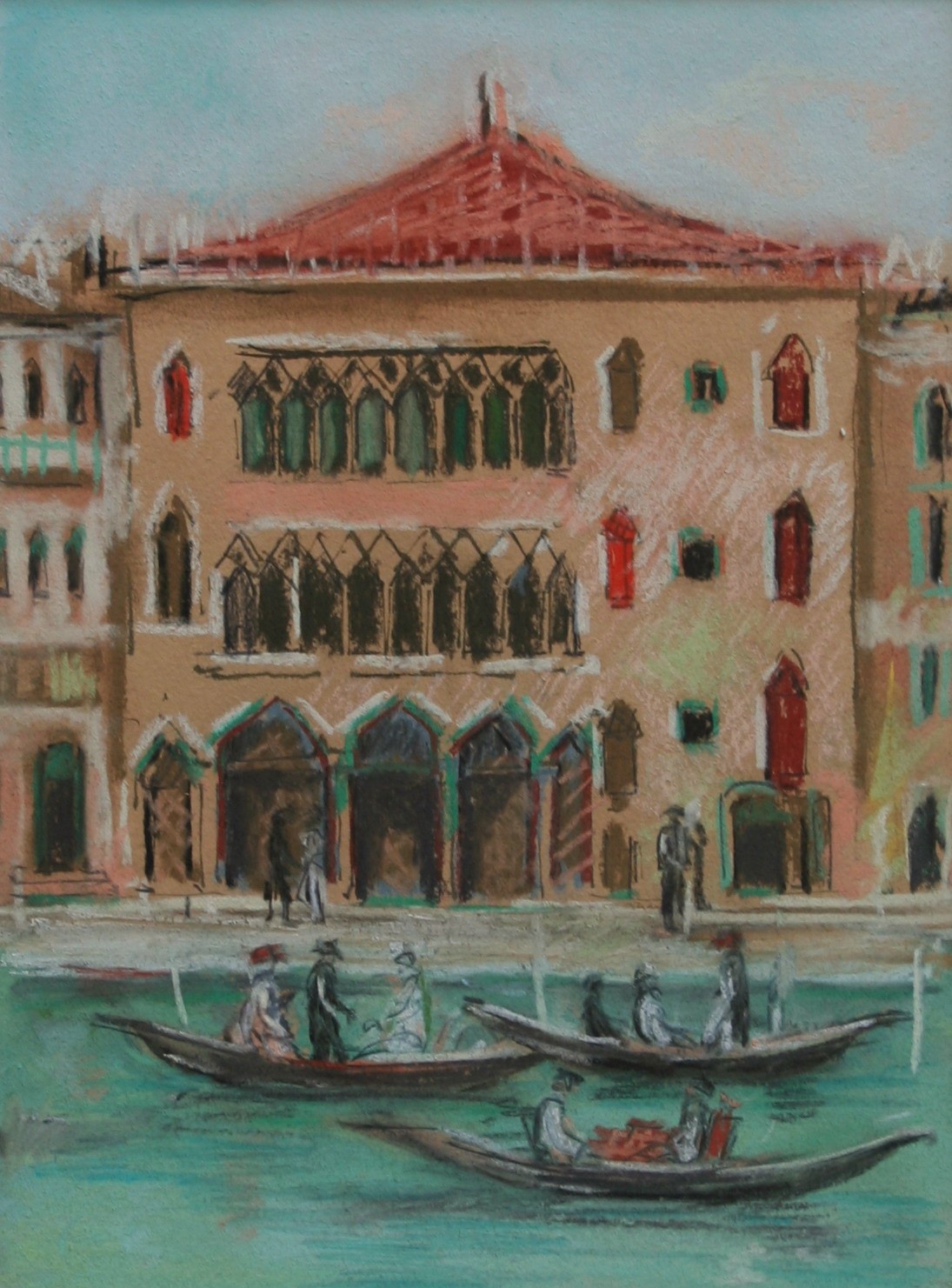
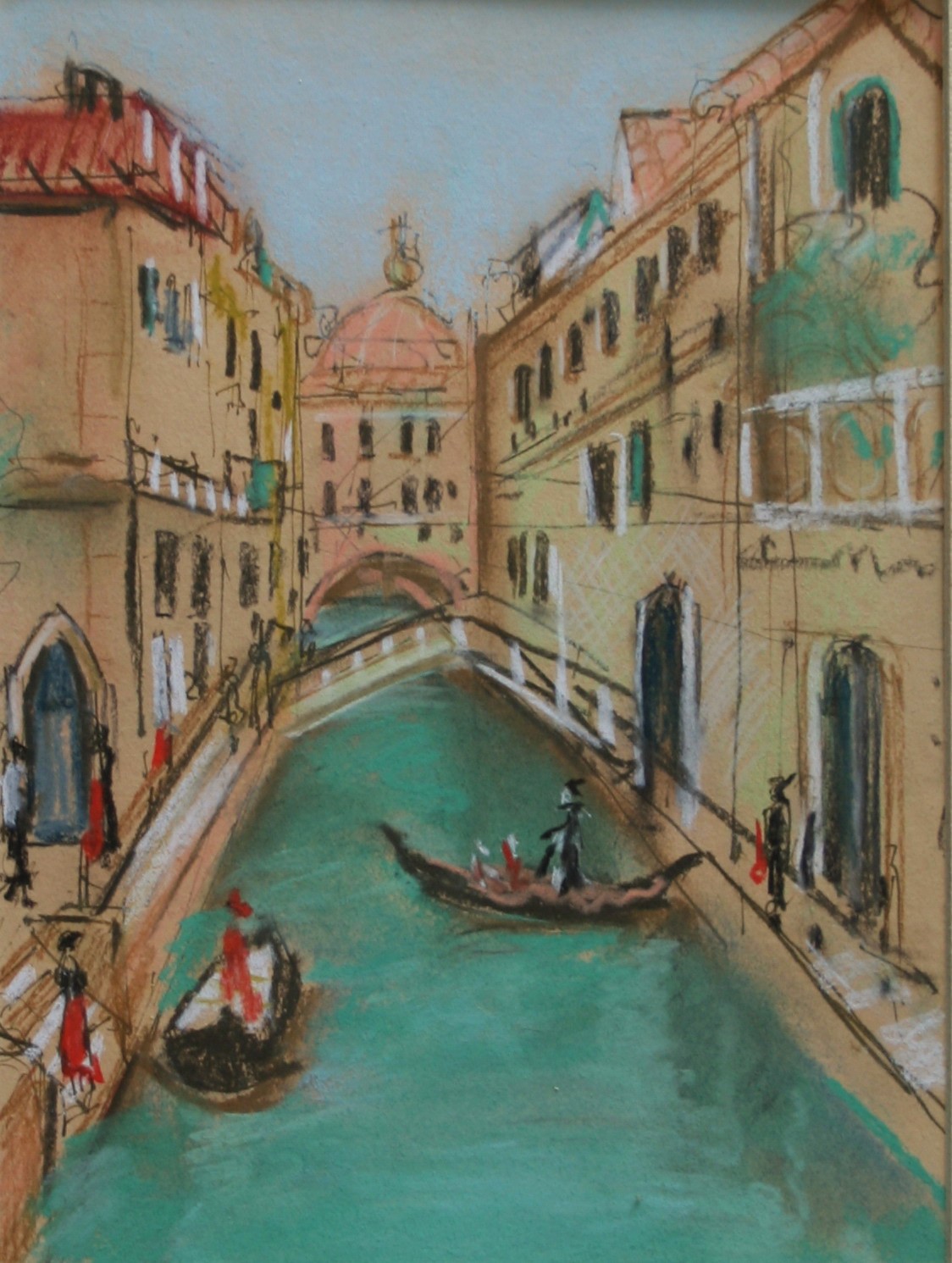
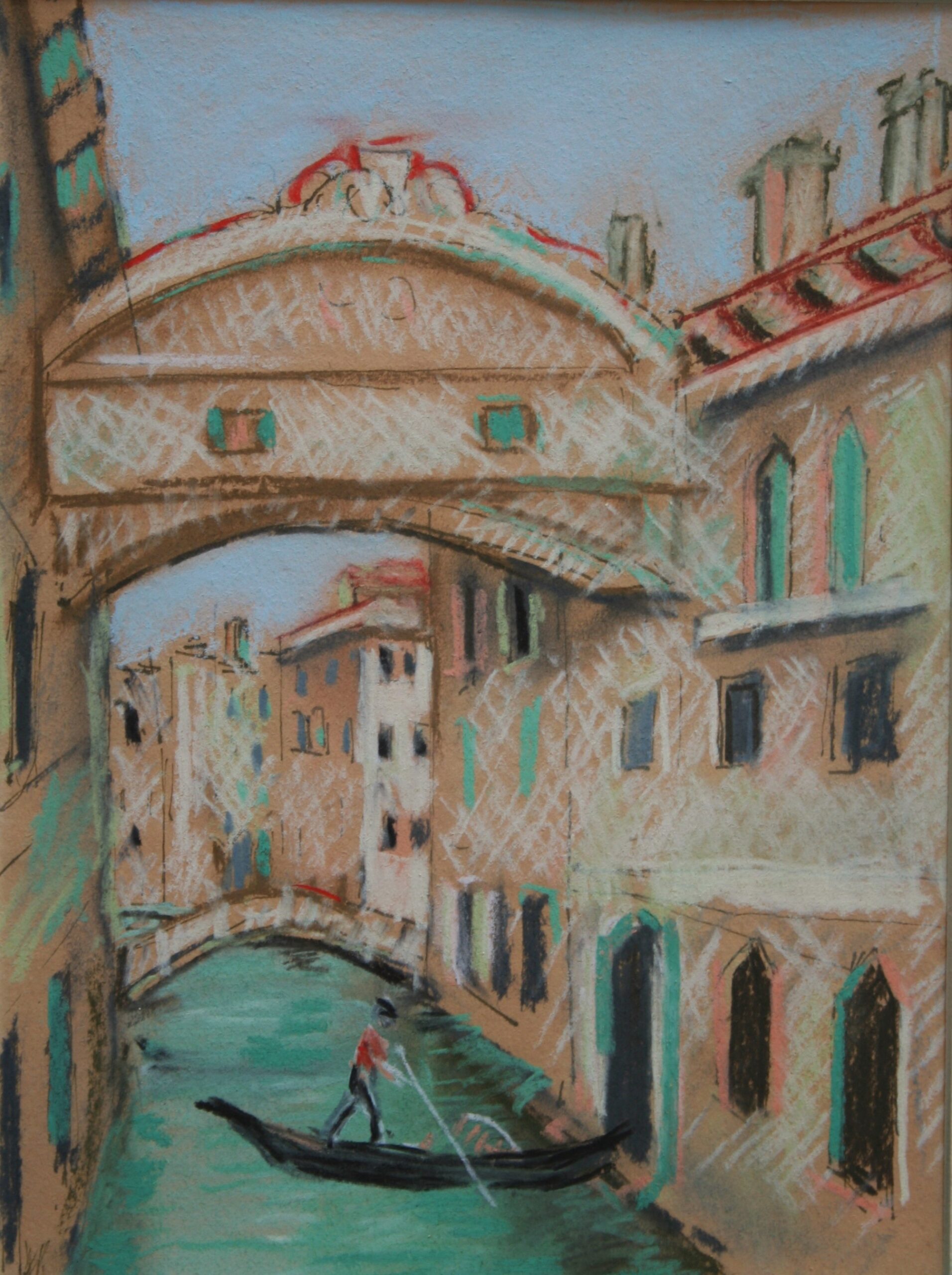
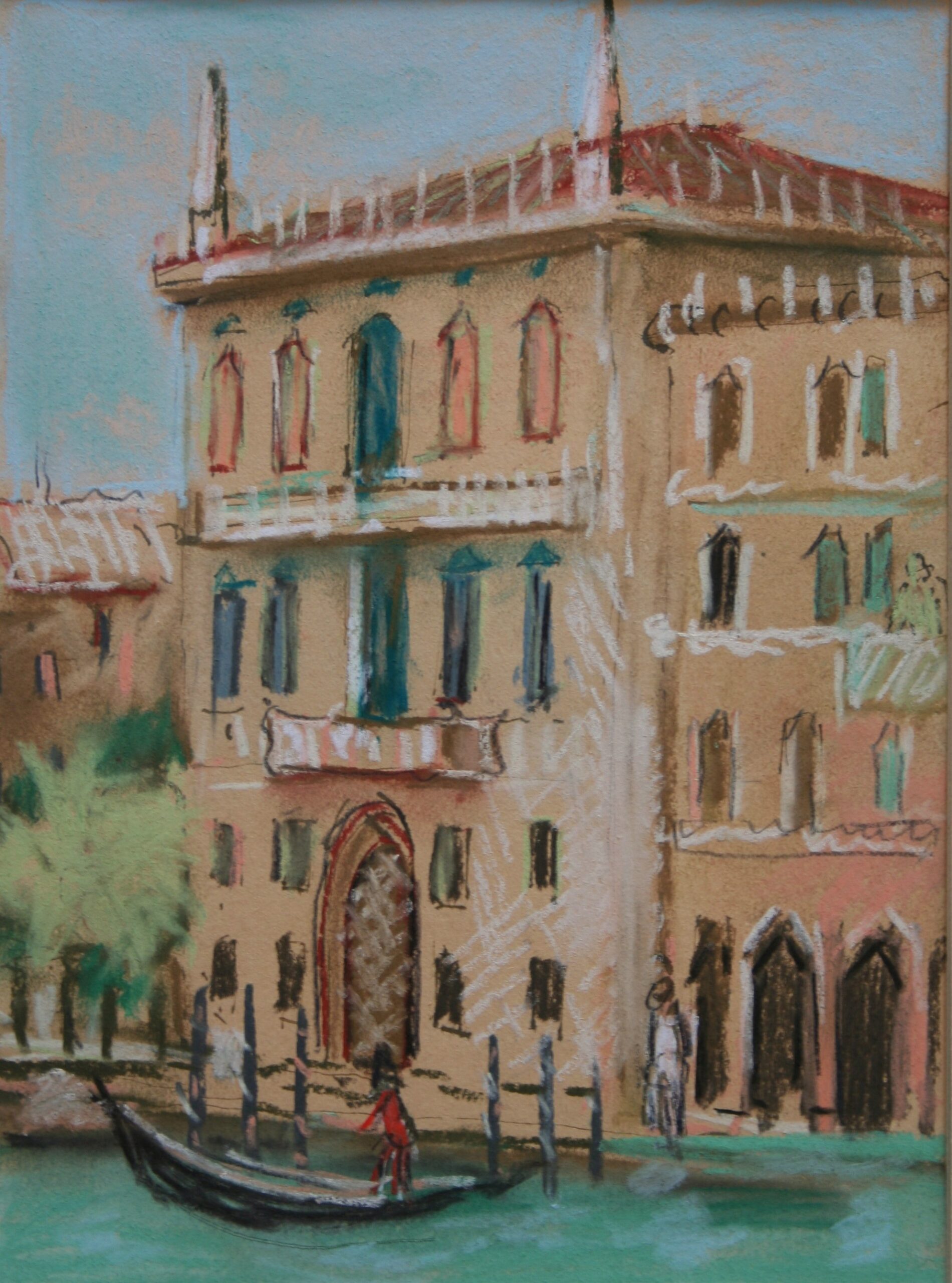
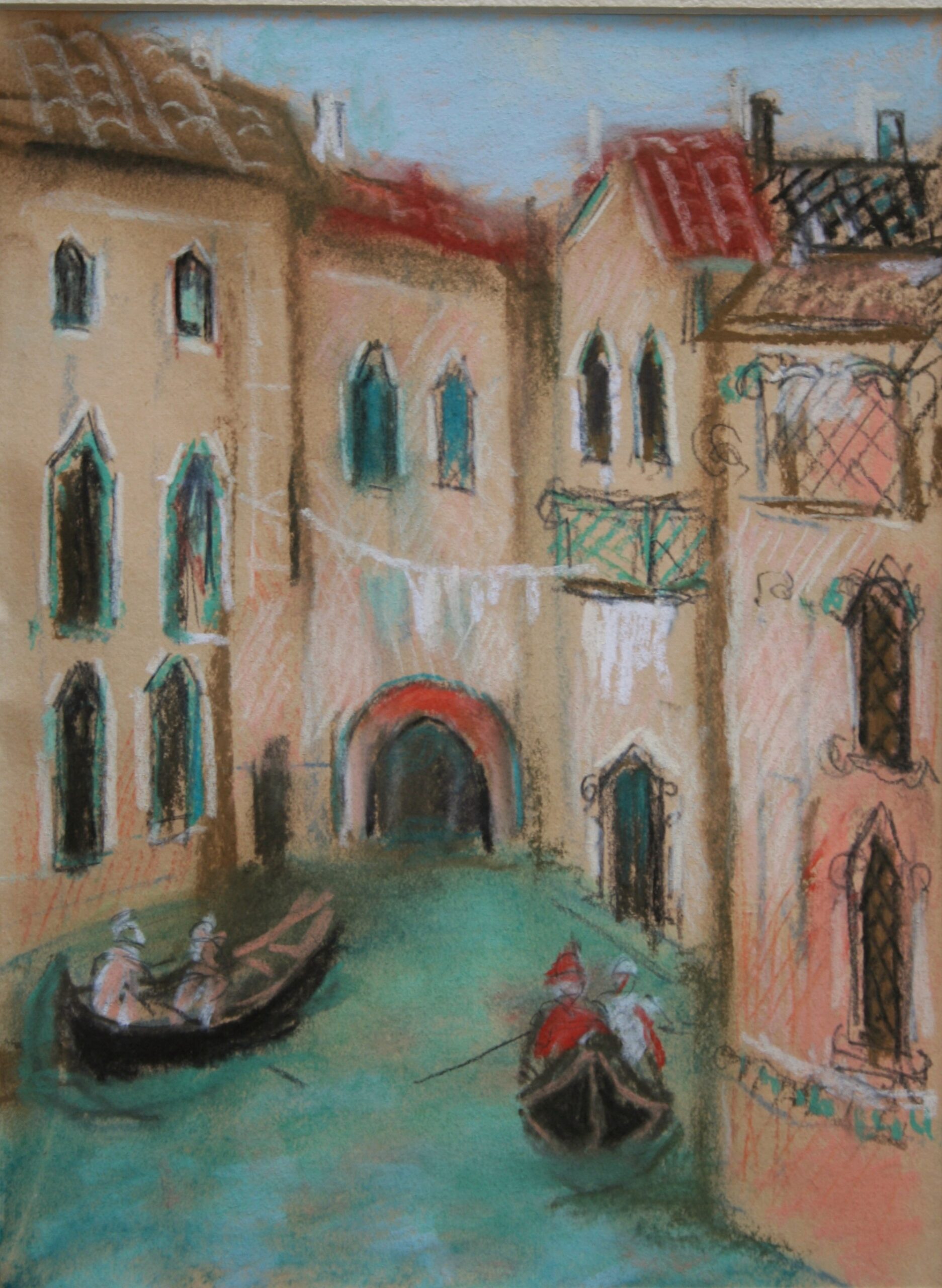
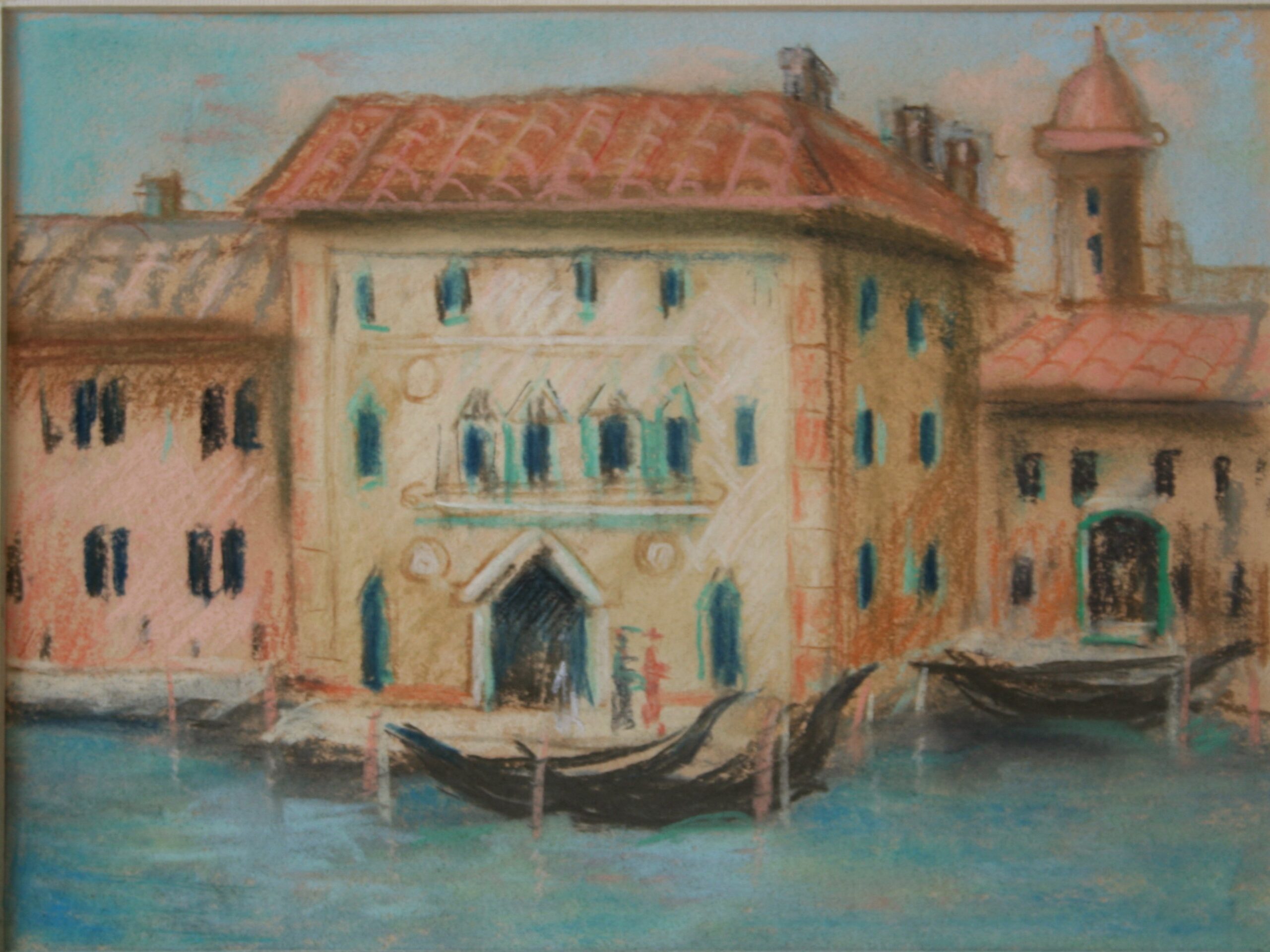
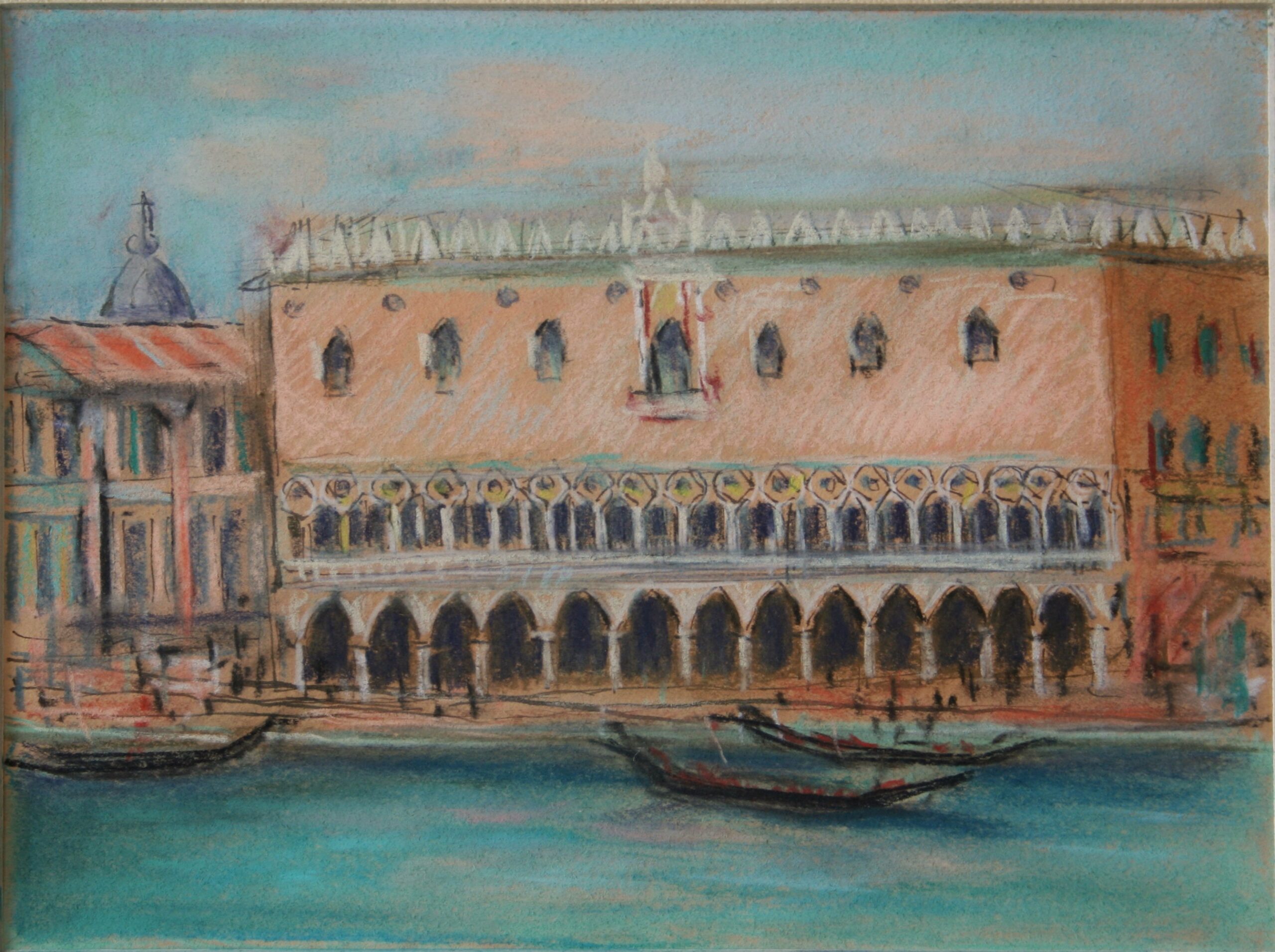
În aceste lucrări, Constantin Canache surprinde locuri întâlnite în călătoriile sale, printr-un limbaj spontan și viu. Peisajele marine, bărcile, străzile și arhitectura sunt construite din linii rapide și contraste cromatice. Pastelul îi oferă libertatea unei exprimări directe și spontane. Culoarea este așezată când în suprafețe ample și luminoase, când în tușe energice, aproape grafice, iar desenul rămâne permanent prezent, susținând arhitectura compoziției. Albastrurile, turcoazurile, rozurile, ocrurile și accentele intense se întâlnesc într-o cromatică personală, în care realitatea este deliberat trecută prin filtrul sensibilității artistului.
Privite împreună, aceste pasteluri alcătuiesc un veritabil jurnal vizual de călătorie, în care geografia reală se întâlnește cu geografia interioară a artistului.
********************************************************************************************************************************************************
Pastels – Travel Impressions
In these works, Constantin Canache captures places encountered on his travels through a spontaneous and vibrant visual language. Seascapes, boats, streets, and architecture are constructed from swift lines and chromatic contrasts. Pastel gives him the freedom of direct and spontaneous expression. Colour is applied sometimes in broad, luminous areas, sometimes in energetic, almost graphic strokes, while drawing remains present throughout, supporting the architecture of the composition. Blues, turquoises, pinks, ochres, and intense accents come together in a distinctive palette, in which reality is deliberately filtered through the artist’s sensitivity.Viewed together, these pastels form a true visual travel journal, in which real geography meets the artist’s inner geography.